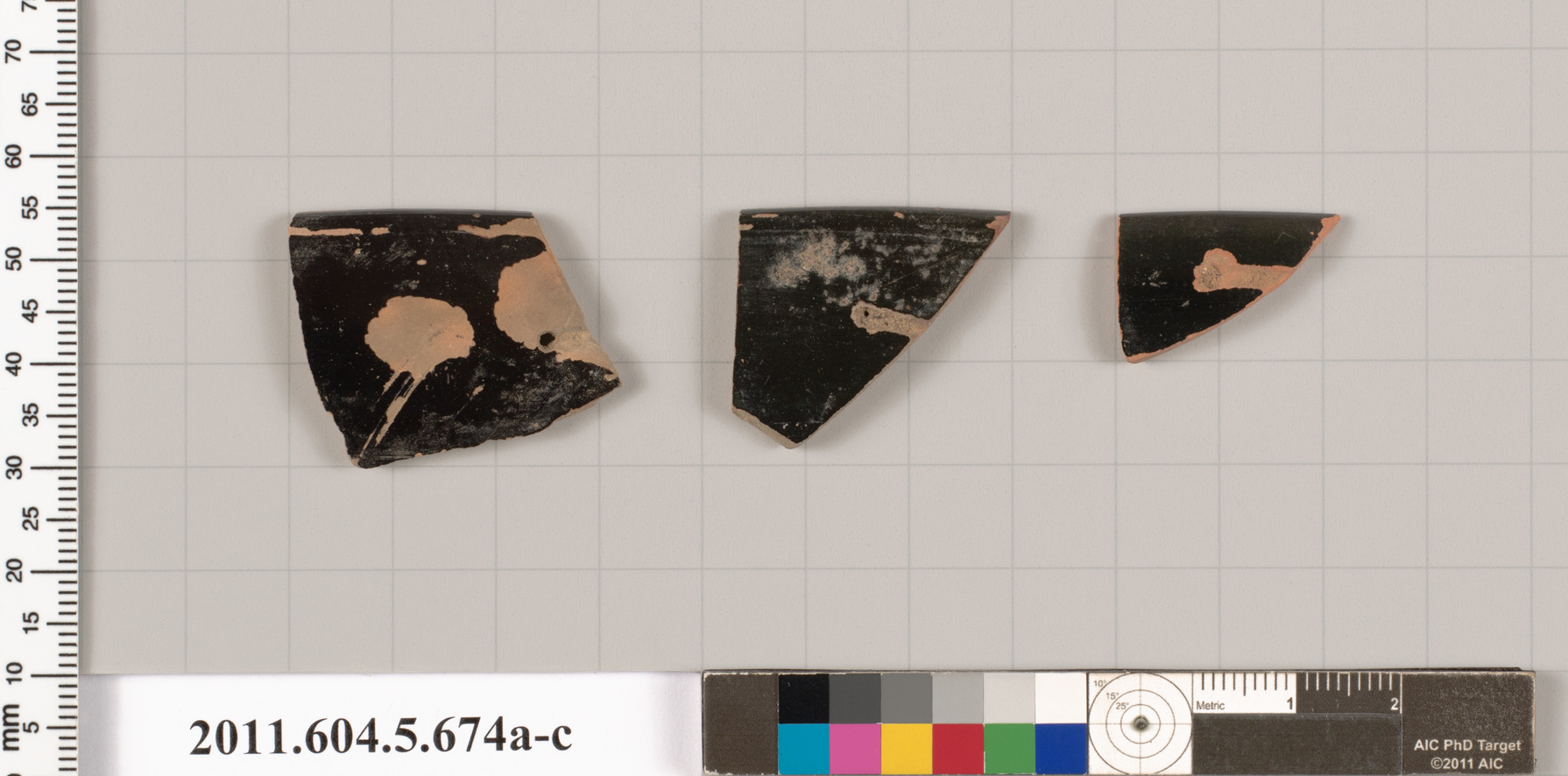
From Fragments to Form: The Terracotta Kylix and the 2026 Old Money Silhouette
The Lauren Fashion Heritage Lab’s internal genetic code, which posits a dialectic between the sacred and the secular—between the “Udumbara Flowers” temple plaque and the painted garment chest—finds an unexpected yet profound echo in a seemingly disparate artifact: the terracotta rim fragments of Attic kylikes (drinking cups). These shards, unearthed from the Greek classical period, are not merely remnants of convivial libation; they are a material testament to a philosophy of restraint, proportion, and the quiet dignity of the everyday. For the 2026 Old Money silhouette, these fragments offer a foundational aesthetic grammar: one that privileges structural clarity, tactile honesty, and the paradox of permanence within fragility.
The Aesthetic of the Fragment: Imperfection as Inheritance
The kylix fragments, like the temple plaque’s carved Udumbara flower, operate within a temporal paradox. The flower, eternally poised at the brink of bloom, symbolizes a moment frozen in sacred time. The terracotta shards, conversely, are the physical residue of use and breakage—a history of hands holding, lips touching, and the inevitable shattering that follows. In the context of Old Money heritage, this is not a flaw but a signature. The 2026 silhouette does not seek the pristine, the newly minted. Instead, it draws from the patina of the fragment: a jacket’s shoulder line may be subtly asymmetrical, mimicking the irregular edge of a broken rim; a trouser’s hem may fall with a deliberate weight that recalls the dense, fired clay.
Where the garment chest’s painted flowers celebrate abundance and the temple plaque’s single bloom evokes transcendence, the kylix fragments speak to the beauty of what remains. The Old Money aesthetic, in its 2026 iteration, rejects the fast-fashion obsession with newness. It embraces the “already-lived” quality of a garment—a softly worn collar, a slightly faded dye—as a marker of lineage and taste. Just as the Greek symposiast would have seen the kylix as a vessel for shared stories, the modern wearer sees a garment as a vessel for inherited memory. The terracotta’s warm, earthy hue—a deep, unglazed orange-brown—becomes a key color note for the season, grounding the collection in a palette of terracotta, ochre, and burnt sienna, colors that speak of earth, antiquity, and understated luxury.
Structural Integrity: The Geometry of the Rim
The rim of a kylix is a masterclass in functional design. It is neither purely decorative nor purely utilitarian; it is a transitional zone between the vessel’s interior (the wine) and its exterior (the hand). In the 2026 Old Money silhouette, this translates into a renewed focus on the shoulder and collar of a garment. The kylix’s rim is often slightly everted, flaring outward to guide the drinker’s lip. Similarly, a jacket’s collar may be cut with a subtle, outward curve—a “kylix shoulder”—that frames the neck and shoulders with quiet authority. This is not the aggressive padding of power dressing, but a sculptural precision that honors the body’s natural architecture.
The fragments also reveal the Greek potter’s mastery of proportional harmony. The rim’s thickness, its curve, and its relationship to the bowl below follow a mathematical logic that feels both inevitable and effortless. For the 2026 silhouette, this means a return to tailoring as architecture. Jackets are cut with a “fragmentary” seam—a deliberate, visible construction line that echoes the broken edge of the terracotta. Trousers are pleated with a geometric precision that recalls the kylix’s radial symmetry. The silhouette is not merely draped; it is constructed, with every line and angle serving a purpose. This is the antithesis of the slouchy, unstructured shapes that dominated previous seasons. The 2026 Old Money silhouette is rigorous, disciplined, and quietly monumental.
Material Honesty: The Unadorned Surface
The terracotta kylix is unglazed on its exterior, its surface a direct expression of the clay’s nature. This material honesty is a core tenet of the Old Money aesthetic, which abhors synthetic shine or deceptive finishes. In the 2026 collection, this translates into a preference for raw, unprocessed textures: heavy linen, matte wool, and unpolished cotton. The garments do not shout; they whisper through touch. A coat’s surface may be left with a slight slub, a visible weave that speaks to its handcrafted origins. This is the fabric equivalent of the terracotta’s porous, tactile surface—a reminder that true luxury lies in substance, not spectacle.
Yet, the kylix fragments also bear the traces of black-figure painting—a thin, glossy slip applied to the interior. This interior decoration, hidden from the casual observer, mirrors the Old Money philosophy of “inside-out” luxury. A 2026 jacket may be lined in a rich, unexpected silk—a flash of deep burgundy or forest green—visible only when the garment is opened. A trouser’s waistband may be finished with a hand-stitched herringbone, a detail meant for the wearer alone. This is the ethics of the fragment: what is broken or hidden is not lesser; it is, in fact, the site of the most intimate meaning.
The Silhouette as Vessel: Containing and Revealing
Just as the temple plaque and garment chest negotiate the dialectic between “containing” and “revealing,” the kylix fragments inform a silhouette that holds the body with both structure and grace. The kylix is a vessel for wine, a liquid that both nourishes and intoxicates. The 2026 Old Money garment is a vessel for the self—a second skin that both protects and presents. The silhouette is columnar yet fluid, with a strong vertical line that elongates the body, much like the kylix’s stem. Shoulders are defined but not exaggerated; waists are hinted at but not cinched. The overall effect is one of poised containment—a body held in a state of quiet readiness.
The kylix’s two handles, often broken off in the fragments, suggest a final design principle: the gesture of offering. A garment, like a cup, is meant to be shared—passed from generation to generation, from wearer to observer. The 2026 silhouette is designed for this exchange. Its clean lines and understated details invite the gaze, not to consume, but to contemplate. The wearer becomes a living artifact, a custodian of a beauty that transcends the fleeting moment.
Conclusion: The Eternal Fragment
The terracotta rim fragments of the Attic kylix, when read through the lens of the Udumbara flower and the garment chest, reveal a unified aesthetic philosophy for the 2026 Old Money silhouette. It is an aesthetic of the fragment as whole, of imperfection as heritage, and of material honesty as the highest form of luxury. The flower on the temple plaque is eternal because it never blooms; the garment chest’s painted garden is eternal because it never fades. The kylix fragment is eternal because it has already broken—and in its breaking, it has become a permanent witness to the human hand. The 2026 silhouette, born from these shards, offers the wearer not a new look, but a new way of seeing: one that finds the sacred in the shattered, the infinite in the finite, and the timeless in the terracotta.