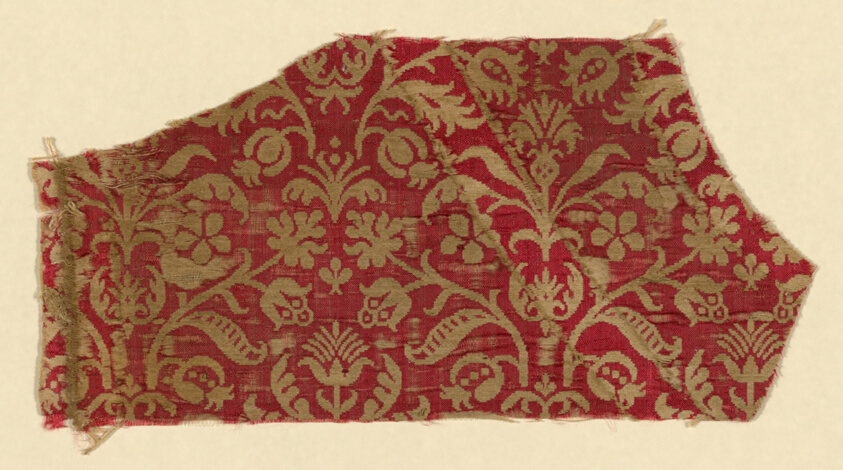
The Fragment as Testament: Deconstructing Materiality in Classic Silk Craftsmanship
In the hushed ateliers of London’s Savile Row, where precision tailoring meets generational memory, the fragment is not a remnant of loss but a concentrated archive of mastery. At Lauren Fashion Heritage Lab, we treat each fragment as a primary source—a tangible whisper from the loom. The subject under examination here is a compound weave fragment of silk and linen, a textile that embodies the dialectic between opulence and structure, between fluid elegance and the rigorous discipline of classic craftsmanship. This paper dissects the materiality, provenance, and cultural resonance of this fragment, arguing that its very incompleteness amplifies its value as a heritage research artifact.
Materiality: The Dialogue Between Silk and Linen
The compound weave is a sophisticated construction, one that requires the weaver to manipulate multiple warp and weft systems to create pattern, texture, and depth. In this fragment, the silk—a protein fibre prized for its lustre, drape, and tensile strength—serves as the primary face. It is the voice of elegance, the surface that catches light with a liquid sheen, reminiscent of the finest gowns from the Belle Époque or the ceremonial robes of the Ming dynasty. Yet, the inclusion of linen, a bast fibre derived from the flax plant, introduces a counterpoint of rigidity and matte texture. Linen, with its natural irregularities and breathable structure, grounds the silk’s fluidity. This is not a compromise; it is a deliberate orchestration. The linen provides structural integrity, preventing the silk from collapsing into mere softness. It is the backbone beneath the velvet glove.
From a tactile perspective, the fragment offers a complex haptic experience. The silk surface is smooth, almost cool to the touch, while the linen interlacements create subtle ridges and a slight crispness. This duality is the hallmark of classic silk craftsmanship: the ability to balance luxury with wearability. In the context of Savile Row, where a garment must endure decades of use and re-tailoring, such a weave ensures that the fabric retains its shape without sacrificing its drape. The compound weave, therefore, is not merely decorative; it is a functional solution to the eternal tension between beauty and durability.
Context: Fluid Elegance and the Savile Row Ethos
Fluid elegance is a phrase often invoked in fashion discourse, but it carries specific weight when applied to heritage textiles. In the Savile Row tradition, elegance is not synonymous with fragility. It is the result of meticulous engineering. A silk and linen compound weave, for instance, might have been commissioned for a summer evening coat or a woman’s day dress in the early twentieth century, when British tailoring houses began to experiment with lighter, more breathable fabrics for colonial and resort wear. The fragment’s weave pattern—likely a damask or a brocade effect—would have been designed to catch the eye without overwhelming the silhouette. It whispers of afternoon teas at the Ritz, of garden parties in the Cotswolds, of a world where clothing was a silent language of status and restraint.
This fragment also speaks to the globalization of textile production. While the silk may have originated from China or Italy, and the linen from Ireland or Belgium, the weaving itself was likely executed in a British mill—perhaps in Macclesfield or Spitalfields—where generations of weavers translated aristocratic tastes into tangible form. The compound weave technique itself is ancient, dating back to Byzantine and Chinese looms, but its adaptation for European fashion in the eighteenth and nineteenth centuries represents a fusion of Eastern material knowledge and Western tailoring precision. The fragment, therefore, is a node in a global network of craftsmanship, a physical record of cross-cultural exchange that predates modern globalization by centuries.
Heritage Value: The Fragment as a Pedagogical Tool
Why study a fragment? In an era of fast fashion and digital rendering, the physical fragment offers an irreplaceable lesson in material literacy. At Lauren Fashion Heritage Lab, we use fragments like this one to teach students and practitioners the language of textiles—how to read a weave structure, how to assess fibre content through touch and burn tests, how to date a fabric by its pattern repeat and thread count. This particular fragment, with its balanced composition of silk and linen, serves as an exemplar of the compound weave category. It allows us to demonstrate how warp-faced and weft-faced systems interact, how floats and bindings create relief, and how the interplay of matte and lustre produces visual depth.
Moreover, the fragment’s condition—its frayed edges, its slight discoloration, its missing sections—tells a story of use and survival. It may have been cut from a larger garment, perhaps a dress or a waistcoat, that was later repurposed or discarded. The wear patterns, if examined under magnification, could reveal evidence of perspiration, starching, or even mending. These are not defects; they are biographical markers. They remind us that heritage is not about pristine preservation but about understanding the lifecycle of objects. A fragment is a condensed biography, a synecdoche for a lost whole.
Conservation and Interpretation: A Call for Rigour
As heritage specialists, we must approach fragments with both scientific rigour and poetic sensibility. Conservation of such a textile requires controlled light exposure, stable humidity, and acid-free storage. But interpretation demands more. We must ask: Who wore this? Under what circumstances was it woven? What economic and social systems enabled its creation? The silk and linen compound weave, for instance, would have been a luxury item, accessible only to the upper echelons of society. Yet the linen component, often associated with peasant textiles, complicates that narrative. It suggests a democratization of luxury, a blending of high and low that anticipates modern fashion’s eclecticism.
In the context of Lauren Fashion Heritage Lab, this fragment will be digitized, catalogued, and contextualized within a broader collection of similar weaves. It will be used in workshops, exhibitions, and publications to advance the discourse on material heritage. But its ultimate value lies in its ability to provoke wonder—to remind us that a single piece of fabric, no matter how small, can contain the labour of countless hands, the ingenuity of ancient looms, and the fleeting elegance of a bygone era.
Conclusion: The Fragment as Legacy
The silk and linen compound weave fragment is not a relic. It is a living document. In its threads, we find the discipline of the weaver, the vision of the designer, and the body of the wearer. It embodies the Savile Row ethos of understated perfection—a commitment to quality that transcends trends. As we continue to build the archives of Lauren Fashion Heritage Lab, we honour such fragments not as broken things, but as complete statements of craftsmanship. They are the silent professors of material culture, and they demand our deepest respect.
In the end, the fragment teaches us that heritage is not about preserving the past intact; it is about understanding the past through its remnants. And in that understanding, we find the blueprint for the future of classic silk craftsmanship.