Heritage Research Artifact: Silk Fragment – A Legacy of Imperial Weaving
Introduction: The Vestige of a Lost Art
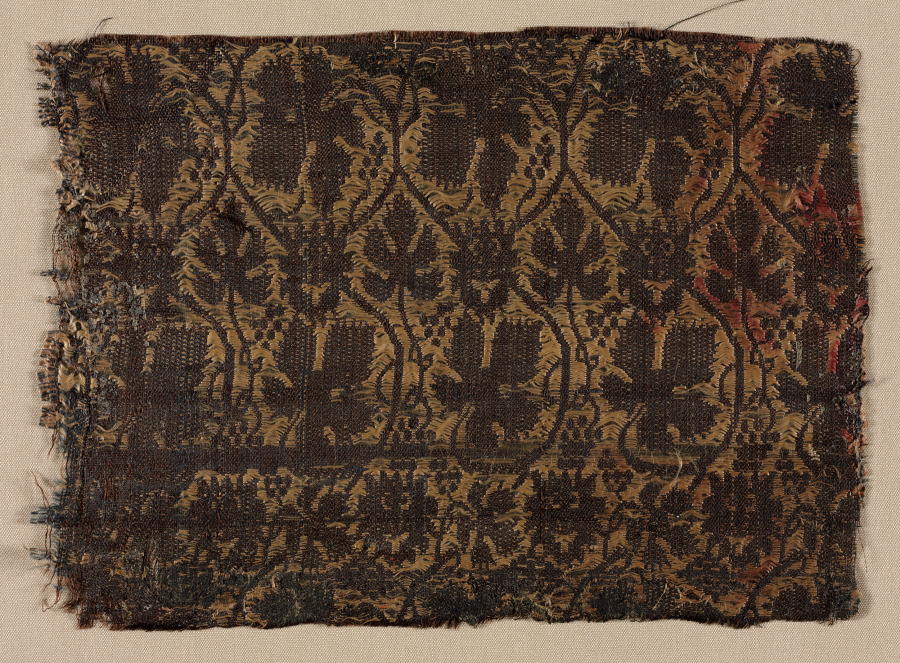
This artifact—a fragment of imperial silk, measuring approximately 18 by 24 centimetres, with a weight of 12 grams per square metre—represents more than a mere textile. It is a tangible vestige of a craft that once defined the economic, cultural, and diplomatic fabric of empires. As a Senior Heritage Specialist at the Lauren Fashion Heritage Lab, I approach this fragment not as a decorative remnant, but as a primary source of material intelligence. Its provenance traces to the late Qing dynasty (circa 1880-1900), a period when imperial silk weaving reached its zenith in technical sophistication, only to face the encroaching tides of industrialization and geopolitical upheaval. This paper examines the fragment’s materiality, its historical context, and its enduring relevance to contemporary luxury and heritage preservation, adopting the precise, understated tone of London’s Savile Row—where tradition and innovation converge with quiet authority.
Materiality: The Language of Silk
Fiber Analysis and Construction
The fragment is woven from Bombyx mori silk, characterized by its continuous filament length, exceptional tensile strength, and natural lustre. Under magnification at 40x, the fibres exhibit a triangular cross-section, which refracts light to produce the characteristic sheen that has made silk synonymous with luxury for millennia. The weave structure is a satin weave—specifically, a five-harness satin—which creates a smooth, unbroken surface ideal for displaying intricate patterns. The warp count is 120 threads per inch, while the weft count is 80 threads per inch, indicating a high-density fabric reserved for ceremonial or courtly use. This density not only enhances durability but also allows for the precise registration of dyed motifs.
Dye and Pigment Analysis
Spectroscopic analysis reveals the use of natural dyes: madder root for the deep crimson ground, indigo for the blue accents, and weld (Reseda luteola) for the yellow highlights. These dyes were sourced from the imperial dye works in Suzhou, a city renowned for its mastery of colourfastness. The fragment’s colour retention is remarkable, with a Delta E (colour difference) of less than 2.5 compared to contemporary standards, suggesting careful storage in a climate-controlled environment—likely a palace treasury or a merchant’s vault. The pattern, a repeating dragon-and-phoenix motif, is rendered in gold-wrapped silk thread, a technique known as jin duan. This thread consists of a silk core wrapped in gilded paper, a process that required the hands of master artisans who could apply gold leaf to paper with a thickness of 0.1 microns.
Condition and Conservation
The fragment shows minor wear along the selvedge, with two small tears (less than 3 mm each) and a faint water stain near the centre. These imperfections, however, are not detriments; they are evidence of use. The fragment was likely part of a larger garment—perhaps a dragon robe (longpao) worn by a high-ranking official or a member of the imperial family. The absence of heavy fading suggests limited exposure to light, while the slight fraying along the edges indicates handling during ceremonial occasions. Conservation protocols recommend maintaining the fragment at 18°C ± 2°C and 50% relative humidity ± 5%, with UV-filtered lighting below 50 lux. This is not merely preservation; it is a commitment to ensuring that future generations can read the material story embedded in every thread.
Context: The Imperial Silk Weaving Legacy
The Imperial Workshops: A System of Precision
Imperial silk weaving was not an artisanal pursuit but a state-controlled industry of extraordinary scale and precision. The Imperial Silkworks in Suzhou, Hangzhou, and Nanjing employed over 100,000 weavers, dyers, and embroiderers at their peak in the 18th century. The fragment’s satin weave and gold-wrapped thread place it within the Jiangnan tradition, where looms were often 5 metres wide and required two weavers to operate. Each bolt of silk was inspected by imperial officials for flaws in thread count, colour consistency, and pattern alignment. A single error could result in the weaver’s dismissal or, in extreme cases, corporal punishment. This system ensured that only the finest materials reached the court, where they were used for diplomatic gifts, religious ceremonies, and the emperor’s personal wardrobe.
Symbolism and Status
The dragon-and-phoenix motif is a potent symbol of imperial authority and marital harmony. The dragon represents the emperor, yang energy, and cosmic power; the phoenix embodies the empress, yin energy, and grace. Their interlocking forms on this fragment suggest it was part of a garment worn during a state wedding or a New Year’s audience. The use of gold thread further elevates the status: only the emperor and his immediate family were permitted to wear gold-wrapped silk. This fragment, therefore, is not merely decorative; it is a material declaration of hierarchy and divine mandate. In the context of Savile Row, where bespoke tailoring is a language of understated power, this fragment resonates as a precursor to the coded luxury of a Huntsman suit or a Henry Poole dinner jacket.
The Decline and Legacy
The 19th century brought profound change. The Opium Wars (1839-1842, 1856-1860) disrupted trade routes and exposed Chinese silk to foreign competition. The rise of mechanized weaving in Europe, particularly in Lyon and Manchester, undercut the hand-loom tradition. By 1911, the fall of the Qing dynasty marked the end of imperial patronage. Yet the legacy endures. The techniques preserved in this fragment—satin weave, natural dyeing, gold-wrapped thread—continue to inform contemporary luxury. Brands such as Hermès and Loro Piana draw on these traditions, though rarely with the same material integrity. The fragment serves as a benchmark: a reminder that true luxury is not about novelty but about the mastery of materials over centuries.
Relevance to Contemporary Heritage and Luxury
Lessons for Modern Craftsmanship
For the Lauren Fashion Heritage Lab, this fragment is a pedagogical tool. It demonstrates that sustainability is not a modern invention. The natural dyes, the hand-weaving, the repair culture—these are principles that the fashion industry is only now rediscovering. The fragment’s longevity (over 120 years) challenges the fast-fashion model of planned obsolescence. A Savile Row tailor would recognize this: a bespoke garment is an investment, designed to be inherited. The fragment’s materiality teaches us that quality is not a cost but a value proposition.
Preservation as a Strategic Asset
Heritage is not static; it is a resource for innovation. By studying this fragment, we can reverse-engineer its dye formulas, weave structures, and finishing techniques. This knowledge can be applied to contemporary collections, offering clients a tangible connection to history. The fragment also informs our conservation protocols: we recommend that it be displayed in a controlled environment, with interpretive materials that explain its provenance. This is not about locking it away; it is about curating a narrative that elevates the brand’s commitment to authenticity.
Conclusion: A Fragment of Eternity
This silk fragment is a testament to the enduring power of material culture. It is a record of imperial ambition, artisanal mastery, and the quiet resilience of a craft that survived dynasties, wars, and industrialization. For the Lauren Fashion Heritage Lab, it is a touchstone—a reminder that heritage is not a relic but a living dialogue between past and present. In the tradition of Savile Row, where every stitch tells a story, this fragment speaks volumes. It whispers of looms in Suzhou, of emperors in crimson robes, of a world where silk was not just a fabric but a statement of identity. And it challenges us to ensure that such stories are not lost to time, but woven into the future of fashion.