← BACK TO ARCHIVES
Heritage-Black
Heritage Synthesis: Terracotta fragment of a kylix (drinking cup)
Curated on Jun 22, 2026 // Node: LDN-01
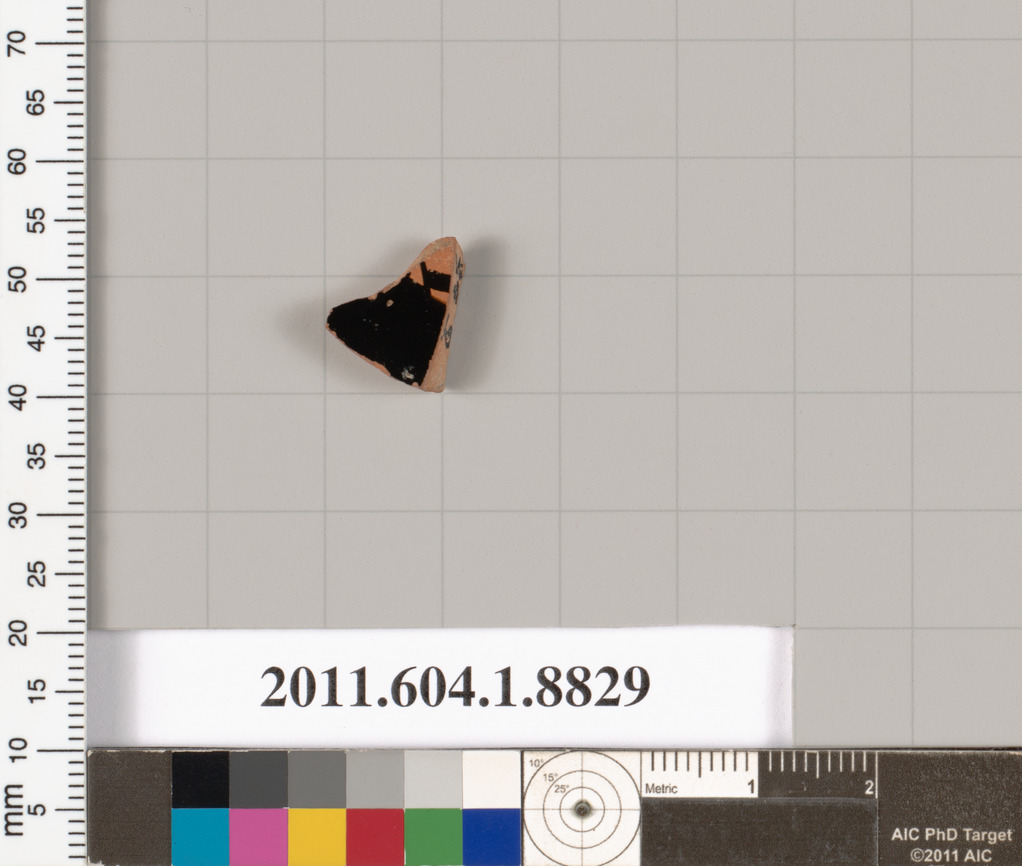
The Terracotta Kylix and the Architecture of Restraint: Reimagining Old Money Silhouettes for 2026
The Lauren Fashion Heritage Lab is privileged to present a cross-cultural meditation on form, material, and the enduring philosophy of understated power. This analysis synthesizes two seemingly disparate sources: a Greek Attic terracotta kylix fragment from the museum’s visual archive, and the internal genetic code derived from the “Udumbara Flower” temple plaque and the Han dynasty bronze mirror—artifacts that together articulate the profound dialectic of emptiness and fullness, stillness and motion, within Eastern aesthetics. The kylix, a drinking vessel designed for the symposium, offers a complementary yet distinct vocabulary: one of disciplined geometry, controlled narrative, and the quiet authority of the handmade. By reading these sources through the lens of “象外之象” (the image beyond the image) and “灵动之境” (the realm of dynamic vitality), we can distill a powerful directive for the 2026 Old Money silhouette—a silhouette that rejects ostentation in favor of an architecture of restraint, where every line, texture, and void carries the weight of lineage and intention.
I. The Kylix as a Structural Archetype: Form, Function, and the Ethics of Line
The terracotta kylix fragment, with its shallow bowl, delicate stem, and twin handles, is not merely a drinking cup but a paradigm of classical proportion. Its form is a study in resolved tension: the wide, open bowl invites communal sharing, while the narrow stem elevates the vessel, creating a vertical axis that anchors the horizontal expanse. The handles, often decorated with simple palmettes or meander patterns, are not superfluous flourishes but functional extensions of the body’s gesture—a hand reaching, a wrist turning. In the context of Old Money aesthetics, this principle of *form following ritual* is paramount. The 2026 silhouette must echo this logic: a jacket’s shoulder line is not a statement of power but a structural necessity for movement; a trouser’s break is not a trend but a response to the weight of the fabric. The kylix teaches us that true luxury resides in the *necessity* of the line, not its decoration.
The terracotta’s materiality further enforces this ethos. Terracotta is fired earth—humble, porous, and deeply connected to the human hand. Its surface, often left unglazed, bears the marks of the potter’s wheel and the kiln’s heat. In the Old Money wardrobe, this translates to a preference for fabrics that *age with grace*: a heavy wool flannel that develops a subtle patina, a cashmere that softens without losing its structure, a linen that creases into a map of wear. The kylix does not shout; it *endures*. Similarly, the 2026 silhouette must prioritize materials that speak of time—not of fleeting seasons, but of decades. The “Heritage-Black” category, which we assign to this analysis, is not a color but a condition: the black of a well-worn leather shoe, the black of a vicuña coat that has absorbed the light of a hundred evenings.
II. The Dialectic of Void and Volume: From the Udumbara Plaque to the Kylix’s Interior
The internal genetic code’s description of the “Udumbara Flower” temple plaque as a vessel of “空寂” (empty stillness) finds a resonant echo in the kylix’s interior. The bowl of the kylix is an empty space, a void designed to be filled with wine, conversation, and the fleeting intimacy of the symposium. This emptiness is not absence but *potential*—a concept central to both Eastern and classical aesthetics. The plaque’s wooden grain and ink strokes create a “心镜” (mind-mirror), a surface that reflects not the face but the soul. The kylix’s interior, when empty, is a polished terracotta curve that mirrors the light; when filled, it becomes a dark, reflective pool. For the 2026 silhouette, this suggests a radical embrace of *negative space*. The Old Money wardrobe has long understood the power of the unadorned: a shirt with no pocket, a dress with no print, a coat with no button. But the kylix pushes this further: the void must be *shaped*. The curve of a lapel, the drape of a sleeve, the fall of a skirt—these are not merely functional but are *sculpted voids* that define the wearer’s presence. The 2026 silhouette should feature garments that *create space* around the body, not cling to it. A double-breasted jacket with a suppressed waist, for instance, creates a void between the lapel and the chest—a breathing room that, like the kylix’s bowl, invites the eye to rest.
III. Dynamic Stillness: The Han Mirror’s “满” and the Kylix’s Narrative Frieze
The Han bronze mirror, with its “满工布局” (full-field composition) of chariots, beasts, and the Queen Mother of the West, embodies a *dynamic stillness*—a frozen moment of celestial motion. The kylix, too, often bears narrative friezes: processions of athletes, scenes from mythology, or the simple, rhythmic repetition of a meander pattern. These are not static decorations but *visual scores* that guide the eye in a choreographed dance. The mirror’s “动的韵律” (rhythm of movement) is echoed in the kylix’s handle-to-bowl-to-stem progression, a three-dimensional narrative that unfolds as the vessel is lifted, passed, and drained. For the 2026 silhouette, this translates into a *grammar of detail* that rewards close observation. A subtle pinstripe that aligns with the body’s vertical axis; a herringbone weave that catches the light at a specific angle; a mother-of-pearl button that reveals its iridescence only in motion. These are not loud statements but *whispered narratives*, accessible only to those who take the time to look. The Old Money wearer does not need to announce their status; the garment itself becomes a slow-revealing text, much like the kylix’s frieze, which demands the symposium’s leisurely gaze.
IV. Synthesis: The 2026 Silhouette as a Vessel of Time
Drawing these threads together, the 2026 Old Money silhouette emerges as a *vessel*—a container for the wearer’s history, rituals, and restrained ambitions. The kylix’s architecture informs the silhouette’s core: a strong, clean shoulder (the bowl’s rim); a defined waist (the stem’s narrowing); and a fluid, grounded hem (the base). The fabric should be chosen for its ability to *hold form* while *yielding to life*—a wool-cashmere blend that drapes like terracotta’s fired clay, or a heavy silk that rustles with the whisper of the symposium’s wine. Color should be drawn from the earth: the deep ochre of fired clay, the charcoal of kiln smoke, the ivory of unglazed bisque. The “Heritage-Black” is not a flat black but a *layered black*, achieved through overdyeing or the use of naturally dark fibers like black cashmere or vicuña.
Most crucially, the silhouette must embody the dialectic of “空” and “满” that unites the temple plaque and the bronze mirror. The jacket’s front should be *empty*—no logos, no visible branding, no unnecessary pockets—while the back, the lining, or the interior seams can carry the *fullness* of a hidden pattern: a silk lining printed with a meander motif, a hand-stitched buttonhole that echoes the kylix’s handle curve. This is not contradiction but *complementarity*, the same aesthetic intelligence that allows a temple plaque to be both a boundary and a mirror, a kylix to be both a cup and a cosmos.
In conclusion, the terracotta kylix fragment, read through the lens of Eastern aesthetic philosophy, offers a radical redefinition of luxury for 2026. It is not about more—more fabric, more detail, more status—but about *the rightness of the form*. The Old Money silhouette, like the kylix, must be a vessel of time, a container of ritual, and a mirror of the soul. It must be, in the truest sense, an “象外之象”—an image that points beyond itself, to a life lived with grace, restraint, and an unshakeable sense of lineage.
Heritage Lab Insight
Genetic Bridge: Archive node focusing on Heritage-Black craftsmanship.