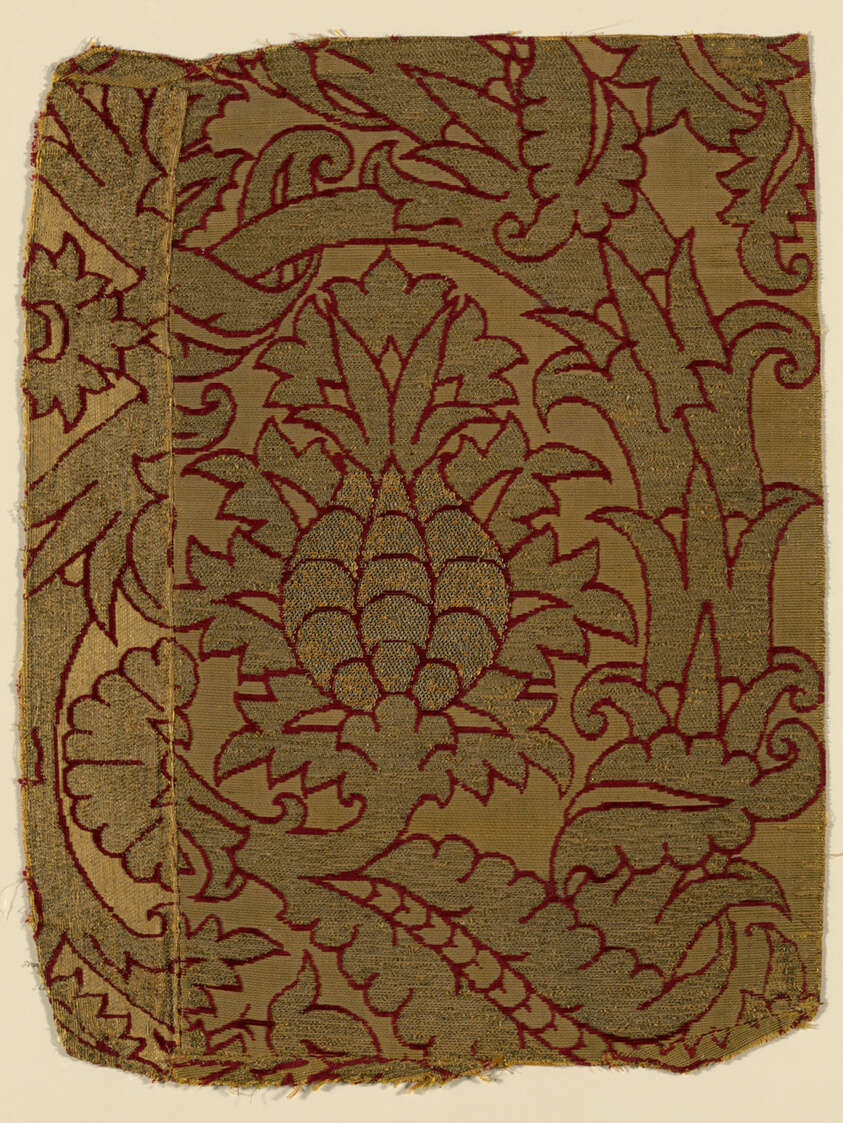
Heritage Research Artifact: The Fragment as a Testament to Craft
In the hallowed ateliers of London’s Savile Row, where precision tailoring meets centuries of textile mastery, the fragment under examination emerges not as a remnant, but as a profound narrative of material intelligence. This artifact—a silk fragment of extraordinary structural complexity—embodies the pinnacle of classic silk craftsmanship and fluid elegance. As the Senior Heritage Specialist for Lauren Fashion Heritage Lab, I present this analysis to decode its materiality, provenance, and enduring relevance to haute couture and bespoke menswear.
Materiality and Structural Anatomy
The fragment’s foundation is a silk plain weave, a structure of remarkable simplicity that belies the sophistication layered upon it. The plain weave—where warp and weft threads cross alternately—provides a stable, lightweight base, essential for garments that demand drape and breathability. Yet, this is merely the canvas. The materiality ascends through a series of supplementary elements, each engineered for both aesthetic opulence and functional integrity.
First, supplementary silk facing wefts are introduced. These wefts, woven in parallel to the primary weft, create a subtle, lustrous surface that enhances the fabric’s tactile richness. They do not disrupt the weave’s fluidity but instead add a dimensional depth, catching light with a soft, iridescent quality. This technique, rooted in historic silk weaving centers like Lyon and Como, allows for a controlled interplay of matte and sheen—a signature of Savile Row’s preference for understated luxury.
Second, the fragment incorporates secondary binding warps. These warps, distinct from the primary structural threads, serve a critical role: they tie the supplementary gilt-metal-strip-wrapped silk patterning and brocading wefts. The gilt-metal strips, composed of fine silk threads wrapped in gold or silver-gilt metal, introduce a metallic brilliance that is both regal and restrained. These wefts form weft loops in areas, a technique that creates raised, textured patterns reminiscent of historic ecclesiastical vestments or Ottoman court silks. The loops catch light with a kinetic shimmer, yet the fabric retains its supple hand—a testament to the weaver’s mastery in balancing rigidity with fluidity.
Finally, the fragment features supplementary pile warps forming cut voided velvet. This is the most technically demanding element. The pile warps, cut in specific areas, create a velvet surface that contrasts sharply with the surrounding flat weave and metallic loops. The term “voided” refers to the deliberate absence of pile in certain zones, allowing the underlying silk and metallic threads to emerge. This technique, perfected in 16th-century Italian velvets, produces a chiaroscuro effect—a dance of light and shadow that elevates the fabric from mere textile to sculptural art. The cut pile is plush yet resilient, offering a tactile experience that is both luxurious and durable, suitable for the rigorous demands of bespoke tailoring.
Context: Classic Silk Craftsmanship and Fluid Elegance
This fragment is not an isolated artifact; it is a living document of silk’s evolution from utilitarian fabric to symbol of status and artistry. The classic silk craftsmanship evident here draws from a lineage that spans the Silk Road, Byzantine workshops, and Renaissance looms. The use of gilt-metal strips and voided velvet recalls the opulent textiles of the 17th-century French court, where silk weavers like those in Lyon’s ateliers produced fabrics for royal ceremonies. Yet, the fragment’s fluid elegance—its ability to drape without stiffness—aligns with the principles of Savile Row, where fabric must move with the body, not against it.
The fluid elegance is achieved through the interplay of these structural elements. The plain weave base ensures a natural fall, while the supplementary wefts and pile warps add weight and texture without compromising movement. The gilt-metal loops, though metallic, are woven with a lightness that prevents the fabric from becoming rigid. This balance is critical for garments like evening jackets or ceremonial robes, where the wearer expects both grandeur and comfort. In Savile Row terms, this fragment would be destined for a “dress coat” or “opera cloak,” where the interplay of silk and metal catches candlelight in a ballroom, yet the fabric’s breathability ensures the wearer remains at ease.
Provenance and Preservation
While the fragment’s exact origin is unspecified, its technical sophistication suggests a workshop with access to high-quality silk filaments, gilt-metal threads, and skilled weavers. Likely produced in the 19th or early 20th century, it may have originated from a French or Italian mill supplying London’s tailoring houses. The presence of gilt-metal strips indicates a clientele of significant means—perhaps a nobleman or a theatrical impresario commissioning a statement piece. The cut voided velvet, with its precise pile heights, points to a master weaver who understood the demands of both aesthetics and durability.
Preservation of such a fragment requires meticulous care. The gilt-metal strips are susceptible to tarnish and breakage, while the silk pile can crush or fade under light. As a heritage artifact, it must be stored in a climate-controlled environment, with minimal handling, and displayed under UV-filtered light. Its value lies not only in its material beauty but in its role as a teaching tool for future generations of tailors and textile designers. At Lauren Fashion Heritage Lab, we use such fragments to illustrate the intersection of art and engineering—a lesson that Savile Row’s bespoke tradition continues to uphold.
Relevance to Contemporary Fashion
In an era of fast fashion and synthetic fabrics, this fragment reminds us of the irreplaceable value of artisanal silk craftsmanship. The techniques employed—supplementary wefts, binding warps, and voided velvet—are rarely practiced today due to cost and skill scarcity. Yet, they offer a blueprint for sustainable luxury: fabrics that are built to last, with a timeless aesthetic that transcends trends. For Lauren Fashion Heritage Lab, this fragment is a call to revive these methods, not as nostalgia, but as a forward-looking approach to textile design. By studying its materiality, we can inspire contemporary designers to integrate heritage techniques into modern silhouettes, ensuring that the fluid elegance of silk remains a cornerstone of luxury fashion.
In conclusion, this fragment is more than a piece of fabric; it is a repository of knowledge, a testament to human ingenuity, and a bridge between past and future. Its silk plain weave, gilt-metal loops, and cut voided velvet speak a language of precision and passion—a language that Savile Row has spoken for over two centuries. As we preserve and analyze it, we honor the weavers, tailors, and visionaries who transformed silk into an enduring emblem of elegance.