← BACK TO ARCHIVES
Silk
Heritage Synthesis: Kasuga Deer Mandala
Curated on Jun 22, 2026 // Node: LDN-01
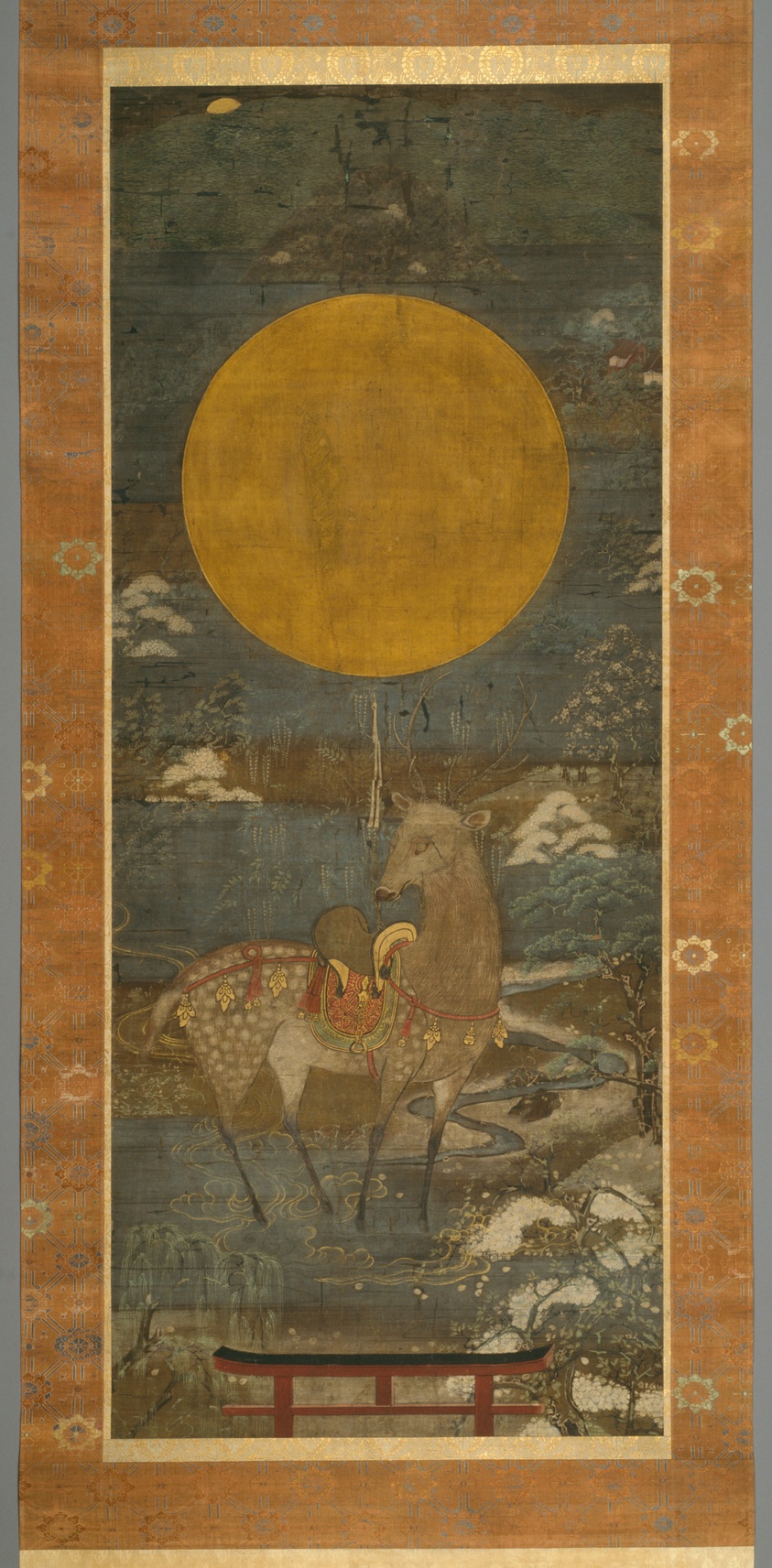
The Kasuga Deer Mandala: A Study in Materiality and Spiritual Craftsmanship
In the quiet corridors of heritage preservation, where the tactile meets the transcendent, few artifacts command the reverence of the Kasuga Deer Mandala. This extraordinary work, rendered in ink, colors, and gold on silk, stands as a testament to the confluence of artistic mastery and spiritual devotion. As a Senior Heritage Specialist at Lauren Fashion Heritage Lab, I approach this piece not merely as a religious icon but as a profound expression of material culture—a silk canvas that elevates the mundane into the sacred. The following analysis dissects its materiality, contextualizes its craftsmanship, and explores its enduring relevance to the world of luxury and heritage.
Materiality: The Silk Substrate as a Conduit for the Divine
The choice of silk as the foundational material for the Kasuga Deer Mandala is no accident. Silk, with its inherent luminosity and fluid elegance, has long been prized in East Asian art for its ability to capture light and movement. In this mandala, the silk serves as a translucent veil between the earthly and the celestial. The warp and weft of the fabric are meticulously prepared, likely through a process of degumming and stretching, to create a surface that is both resilient and receptive. The ink, derived from soot and animal glue, penetrates the silk fibers with a permanence that speaks to the artist’s intent—a desire for the divine to be indelibly inscribed.
The colors, sourced from mineral pigments such as azurite for blues, malachite for greens, and cinnabar for reds, are ground to a fine powder and mixed with a binder, often animal glue or gum arabic. These pigments are applied in thin, layered washes, allowing the silk’s natural sheen to radiate through. The gold leaf, applied with meticulous precision, is not merely decorative but symbolic. It represents the light of enlightenment, the immutable essence of the Buddha nature. The gold’s reflective quality interacts with ambient light, creating a dynamic visual experience that shifts with the viewer’s perspective—a reminder that the sacred is never static.
The materiality of this mandala is thus a dialogue between substance and spirit. The silk, with its delicate strength, mirrors the deer’s graceful form—a creature that, in Japanese mythology, is a messenger of the gods. The deer, depicted with antlers that echo the branching of trees, is rendered in fluid lines that seem to breathe across the silk. The gold, applied in intricate patterns, suggests a celestial aura, as if the deer itself is a vessel for divine radiance.
Context: Classic Silk Craftsmanship and Fluid Elegance
To fully appreciate the Kasuga Deer Mandala, one must understand the broader context of classic silk craftsmanship in Japan. During the Heian period (794–1185), silk production reached an apex of refinement, with techniques such as *shibori* (tie-dye) and *nishijin-ori* (brocade weaving) becoming hallmarks of aristocratic culture. However, the mandala’s silk is not woven but painted—a practice known as *kaiga*, where the fabric serves as a canvas for brushwork. This technique demands an intimate knowledge of silk’s behavior: its absorbency, its tension, its response to humidity. The artist must work with a lightness of touch, allowing the brush to glide without tearing the fibers.
The fluid elegance of the Kasuga Deer Mandala is evident in its composition. The deer, central to the mandala, is depicted in a dynamic posture—one hoof raised, head turned as if listening to the wind. The lines are sinuous, almost calligraphic, evoking the rhythm of nature. Surrounding the deer are abstract motifs: swirling clouds, stylized flames, and geometric patterns that reference the mandala’s cosmological structure. These elements are not merely decorative but serve as visual mantras, guiding the viewer’s meditation toward enlightenment.
The gold, applied in a technique known as *kinpaku* (gold leaf application), is layered to create depth. The artist uses a fine brush to apply adhesive, then carefully places the gold leaf, burnishing it to a mirror-like finish. The result is a surface that shimmers with a soft, ethereal glow. This technique, perfected in the workshops of Kyoto, requires immense patience and precision. A single misstep—a tear in the silk, a smear of adhesive—can ruin months of labor. The Kasuga Deer Mandala, therefore, represents the pinnacle of this craft, a union of technical mastery and spiritual intent.
Heritage Significance: From Temple to Luxury Archive
The Kasuga Deer Mandala is more than a historical artifact; it is a living document of cultural transmission. Originally housed in the Kasuga Taisha shrine in Nara, it was used in esoteric Buddhist rituals to invoke the protective powers of the Kasuga deities. The deer, as a sacred animal, was believed to carry the gods’ messages between realms. The mandala thus functioned as a portal—a tangible link between the human and the divine.
In the context of modern luxury, this mandala offers profound lessons. The silk, with its luminous quality, prefigures the high-gloss finishes of contemporary fashion. The gold leaf, with its reflective properties, anticipates the metallic threads and embellishments that define haute couture. The fluid elegance of the brushwork resonates with the draping techniques of master tailors on Savile Row, where fabric is manipulated to create movement and form.
For the Lauren Fashion Heritage Lab, the Kasuga Deer Mandala serves as a case study in material integrity. It reminds us that luxury is not about excess but about intention—the deliberate choice of materials, the mastery of technique, and the reverence for tradition. The mandala’s silk, preserved for centuries, speaks to the durability of craftsmanship when grounded in purpose. Its gold, still radiant, testifies to the enduring power of beauty.
Conclusion: The Eternal Dialogue of Silk and Spirit
The Kasuga Deer Mandala is a masterpiece of materiality and meaning. Its silk, colors, and gold are not mere components but active participants in a spiritual dialogue. As we study this artifact, we are reminded that heritage is not static; it is a living tradition that evolves with each generation. The mandala’s fluid elegance, its luminous gold, and its sacred deer continue to inspire, offering a blueprint for how luxury can transcend the temporal and touch the eternal.
In the halls of the Lauren Fashion Heritage Lab, we honor such artifacts not as relics but as teachers. They teach us that the finest craftsmanship is a form of devotion—a commitment to excellence that bridges the gap between the material and the divine. The Kasuga Deer Mandala, with its ink, colors, and gold on silk, stands as a timeless testament to this truth.
Heritage Lab Insight
Lab Insight: AIC Silk Archive Node #12032.