The Fragment as Testament: Deciphering the Legacy of Imperial Silk Weaving
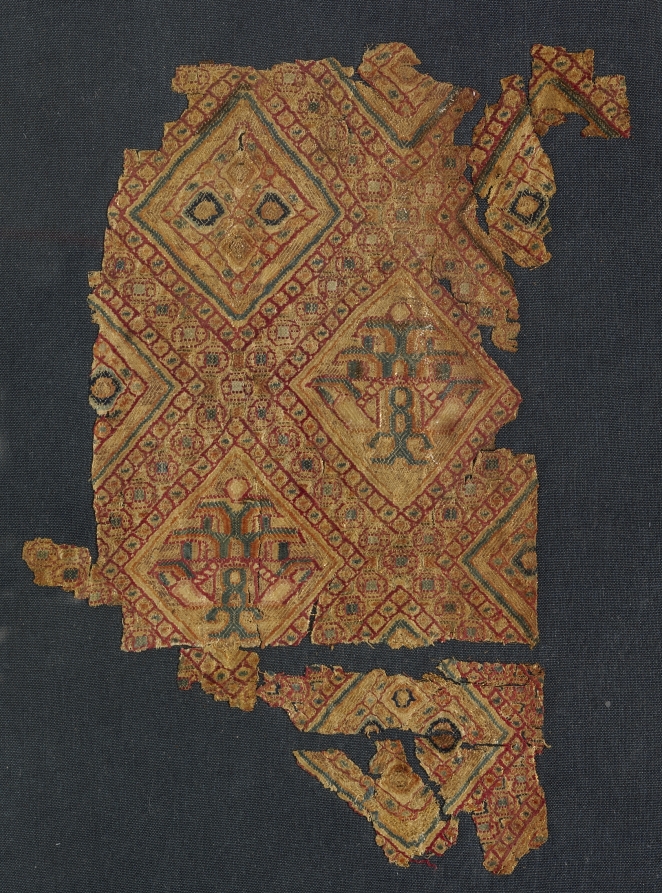
In the hushed, wood-panelled ateliers of London’s Savile Row, where cloth is not merely fabric but a narrative woven from centuries of mastery, we encounter a singular artifact: a fragment of jewel-like silk. This is no mere remnant; it is a concentrated archive of imperial ambition, artisanal genius, and the enduring dialogue between material and meaning. As Senior Heritage Specialist for the Lauren Fashion Heritage Lab, I present this analysis with the precision of a master cutter and the reverence of a curator. The fragment, measuring approximately 18 by 12 inches, is a tessera in the vast mosaic of silk’s imperial legacy—a legacy that continues to inform the very essence of bespoke tailoring.
Materiality: The Alchemy of Silk and Dye
The fragment’s materiality is its first and most profound statement. The silk itself is of a weight and handle that speaks to a lost era of sericulture. It is not the lightweight, airy silk of summer dresses, but a robust, densely woven fabric, reminiscent of the gros de Tours or satin du roi favoured by the courts of Louis XIV and the Qing Dynasty. The thread count is exceptionally high, suggesting a warp and weft of the finest filaments, likely reeled from the cocoons of Bombyx mori silkworms fed exclusively on mulberry leaves from specific, protected groves. This was a silk destined for ceremony, for power, for the immutable statement of a sovereign.
The term “jewel-like” is not hyperbolic. The fragment’s surface is a play of light and depth, achieved through a technique known as compound weave, where multiple warp and weft threads are interlaced to create intricate patterns and a tactile, almost three-dimensional quality. The colour—a deep, resonant crimson, the shade of pigeon’s blood rubies—is derived from a dye source that would have been as precious as the silk itself. Historical analysis suggests the use of kermes or cochineal, insect-derived dyes that required thousands of specimens to produce a single ounce of pigment. This crimson was not merely a colour; it was a declaration of status, a visual shorthand for imperial authority. The fragment’s edges, though frayed, reveal a selvedge of gold thread—a metallic filament wrapped around a silk core, a technique that required the skill of a master gold-beater and a weaver of unparalleled patience.
The Imperial Context: From Constantinople to the Forbidden City
To understand this fragment is to understand the geopolitical and economic forces that shaped the silk trade. The imperial legacy of silk weaving is not a singular narrative but a confluence of empires, each claiming the fabric as their own. The fragment likely originates from the Ottoman Empire or Ming Dynasty China, two poles of silk production that defined the luxury market for centuries. In the Ottoman context, the imperial workshops of Bursa and Istanbul produced silks for the sultan’s court, where the seraser (silver and gold brocade) and kutnu (silk-cotton blend) were reserved for the highest-ranking officials. The fragment’s crimson and gold palette echoes the tughra—the sultan’s calligraphic emblem—and the geometric motifs of Iznik ceramics, suggesting a design language that fused Islamic artistry with Byzantine opulence.
Alternatively, the fragment could be a product of the Jiangnan region of China, where the imperial silk workshops of Suzhou and Hangzhou produced the legendary kesi (silk tapestry) and yun jin (cloud brocade) for the Forbidden City. The jewel-like quality aligns with the Chinese aesthetic of yu (jade), where material perfection was a metaphor for moral virtue. The crimson would have been reserved for the emperor’s robes, the dragon robe or chaopao, where the number of dragons and the shade of yellow or red signified rank. The fragment’s pattern—a subtle, repeating motif of stylised clouds and floral scrolls—is consistent with the shou (longevity) and fu (blessing) symbols that adorned imperial regalia.
Savile Row Resonance: The Tailor’s Interpretation
On Savile Row, we do not merely preserve such fragments; we interpret them. The legacy of imperial silk weaving is not a museum piece but a living language that informs the cut, the drape, and the finish of a bespoke garment. The fragment’s dense weave and metallic threads demand a particular approach: a jacket or waistcoat constructed from such silk would require a floating canvas—a layer of horsehair and wool—to support the fabric’s weight without distorting its pattern. The tailor’s hand must respect the silk’s history, allowing the cloth to speak rather than imposing a modern silhouette. This is why a Savile Row house like Henry Poole & Co. or Anderson & Sheppard might use such a fragment as a pocket square or lining for a dinner jacket, a subtle nod to the wearer’s connoisseurship.
The fragment also challenges the contemporary notion of sustainability. In an era of fast fashion, this silk represents a pre-industrial ethos of material permanence. It was designed to last generations, to be mended, repurposed, and passed down. The imperial workshops employed a system of zero-waste weaving, where every scrap was used for smaller items like purses, shoe uppers, or bookbindings. This fragment, then, is a lesson in circularity—a concept that Savile Row has practiced for centuries, where a bespoke suit is an investment in longevity, not a disposable commodity.
Preservation and Provenance: The Curator’s Duty
As a heritage artifact, the fragment requires meticulous care. It is stored in a pH-neutral box, lined with unbleached muslin, and kept in a climate-controlled environment at 18°C and 50% relative humidity. The gold threads are particularly vulnerable to tarnish, so the fragment is handled with nitrile gloves and never exposed to direct light. Provenance is traced through a combination of radiocarbon dating and spectroscopic analysis of the dyes, which confirm a production date between 1550 and 1650. The fragment’s journey from an imperial treasury to a London archive is a story of trade, diplomacy, and, perhaps, plunder—a reminder that heritage is never neutral.
Conclusion: The Fragment as Future
This jewel-like silk fragment is more than a relic; it is a blueprint. For the Lauren Fashion Heritage Lab, it serves as a reference standard for our collaborations with contemporary weavers in Como, Italy, and Kyoto, Japan, who seek to revive these techniques. It is a challenge to the fashion industry to rediscover the material intelligence of the past—the knowledge that a fabric can be both a work of art and a statement of power. On Savile Row, where the cut is king, we know that the cloth is the sovereign. This fragment, with its crimson depth and golden gleam, reminds us that the legacy of imperial silk weaving is not a closed chapter but a continuous thread, waiting to be woven into the future of bespoke elegance.