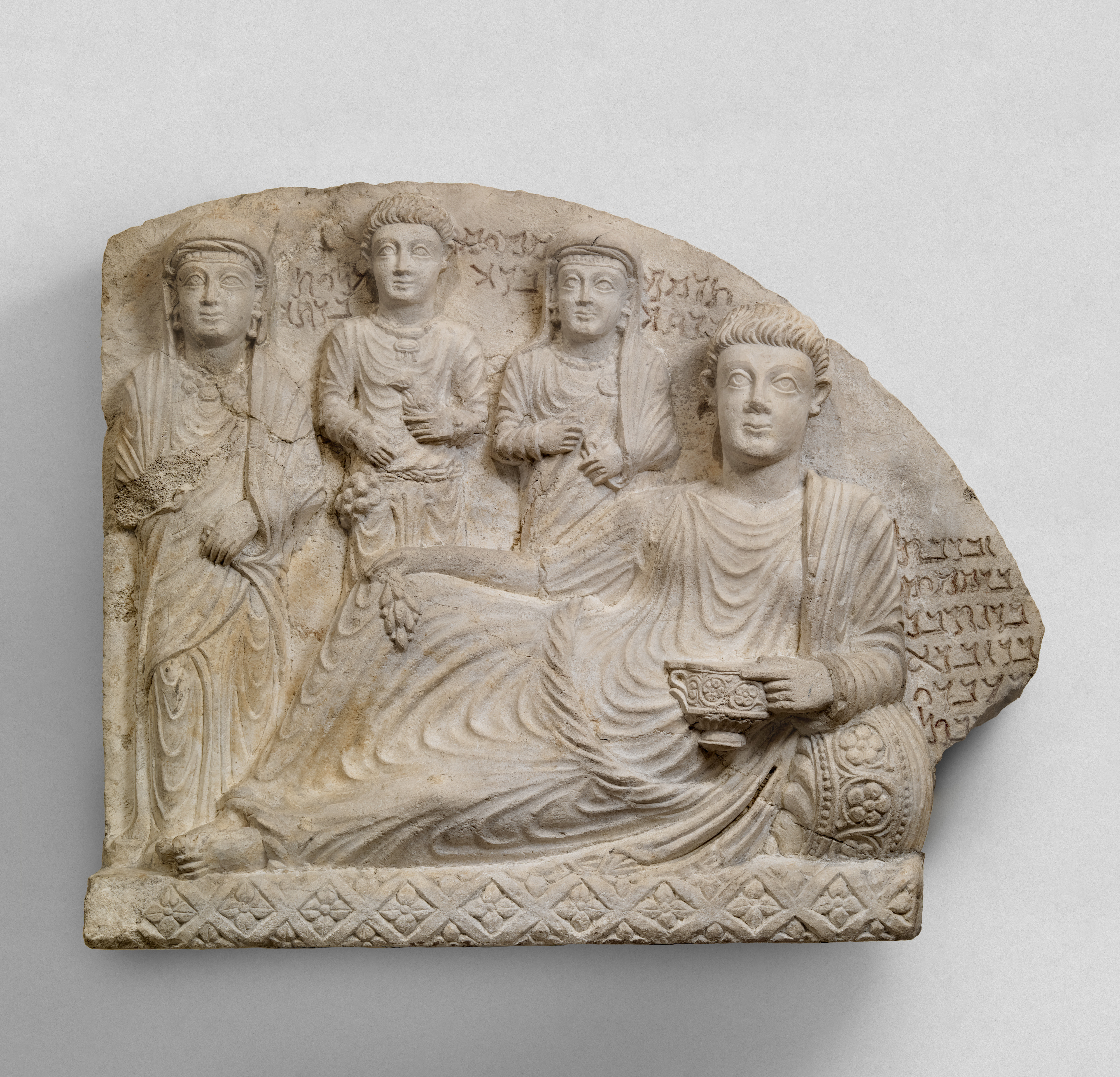
The Limestone Void: Funerary Relief and the Architecture of Absence in 2026 Old Money Silhouettes
In the Lauren Fashion Heritage Lab, we routinely confront a paradox: the most enduring expressions of luxury are often those that articulate absence rather than presence. The funerary relief, a limestone artifact carved to commemorate the departed, offers a profound meditation on this principle. Its chiseled surfaces, recessed figures, and deliberate emptiness are not signs of neglect but of a sophisticated visual language wherein the negative space defines the form. For the 2026 Old Money aesthetic, this artifact provides a critical counter-narrative to the prevailing obsession with surface embellishment. It instructs us that true heritage is not worn as a badge but is felt as a structural void—a silence that speaks louder than any embroidered crest.
From Commemorative Stone to Sartorial Structure
The funerary relief operates through a grammar of subtraction. The limestone is not built up; it is carved away. The figure of the deceased is rendered in shallow relief, their form emerging from the stone’s matrix only to recede again into the surrounding flatness. This is not a sculpture of the body but of the space around the body. The 2026 Old Money silhouette must adopt this same logic. We are moving away from the assertive, padded shoulders of the 1980s power suit or the overt logos of the 2010s. Instead, the new silhouette is defined by what is withheld: a jacket that drapes without a pronounced chest, a trouser that falls without a sharp crease, a coat that envelops without a defined waist. The garment’s structure is implied, not declared. Just as the funerary relief uses the negative space of the chisel mark to define the positive form of the ancestor, the 2026 silhouette uses the negative space between fabric and body to define the wearer’s presence. The luxury lies in the absence of assertion.
The Materiality of Limestone and the Weight of Wool
The tactile quality of the limestone—its granular surface, its cool density, its resistance to the touch—offers a direct material analogue for the 2026 Old Money wardrobe. The stone is not polished to a high gloss; it retains a matte, almost dusty finish that speaks of age and endurance. This is a direct challenge to the high-shine, synthetic finishes of fast fashion. The corresponding fabric for 2026 is not silk or satin, but a heavy, unglazed wool—a cashmere-wool blend with a dry hand, a felted tweed, or a worsted flannel that has been milled to a soft, matte finish. These fabrics carry a “limestone weight”: they hang with a gravitational pull that anchors the silhouette to the earth, refusing frivolity. The color palette must also echo the stone: not a stark white, but the nuanced greys of weathered limestone—Heritage-Black (a black that is not pure but contains the ghost of grey), charcoal, slate, and the pale, dusty beige of aged stone. These are not colors that shout; they are colors that have been “weathered” by time, suggesting a lineage that predates the current season.
The Recessed Silhouette: A Study in Negative Space
The most direct formal translation from the funerary relief to the 2026 silhouette is the concept of the recessed form. In the relief, the figure is often set back from the picture plane, creating a shallow cavity. This cavity is not empty; it is filled with the viewer’s gaze and the history of the stone. For the garment, this translates into a silhouette that is deliberately “hollowed out.” Consider a double-breasted overcoat where the lapels are not cut with aggressive points but are softly rolled, creating a shallow “V” of negative space at the chest. Or a trouser where the front pleats are not pressed flat but are left as soft, recessed folds, creating a subtle play of light and shadow. The shoulder line, too, must be “carved away.” The 2026 shoulder is not a power pad but a natural, sloping line that suggests the wearer’s own anatomy, much like the limestone figure emerges from the stone without a sharp break. The garment’s architecture is one of subtraction: every seam, every dart, every fold is a deliberate act of carving away excess, leaving only the essential form. This is the opposite of the “more is more” philosophy; it is the “less is the body” approach, where the garment becomes a second skin, a limestone shell that both protects and reveals.
Time as a Tailoring Tool: The Patina of Use
The funerary relief does not present a pristine surface. It bears the marks of time: cracks, chips, the subtle erosion of wind and rain. These are not flaws; they are the patina of authenticity. For the 2026 Old Money silhouette, this principle mandates a rejection of the “new.” The garment must appear as if it has been inherited, not purchased. This is achieved through specific tailoring techniques: hand-felled seams that will soften with wear, horn buttons that will develop a warm luster, and a deliberate lack of stiff interfacing that allows the fabric to “live” and develop its own creases and folds. The silhouette itself should be slightly relaxed, not tight. A jacket that is a half-size too large, a trouser that breaks just a little too long over the shoe—these are not errors but intentional gestures toward a garment that has been “lived in.” The 2026 customer does not want a garment that looks new; they want a garment that looks like it has already witnessed a century of quiet, dignified existence. This is the ultimate luxury: the illusion of a past that cannot be bought, only inherited through the cut.
The Void as the Ultimate Signifier
Finally, the funerary relief teaches us about the power of the void. The empty space where the figure’s eyes would be, the smooth plane where an inscription has worn away—these are the most potent elements of the composition. They invite the viewer to complete the image, to project their own memory and meaning onto the stone. In the 2026 silhouette, the void is the absence of branding. There is no logo, no monogram, no visible label. The garment’s value is not declared; it is inferred from the quality of the cut, the weight of the fabric, the precision of the stitching. The void is also the silence of the silhouette. It does not shout for attention. It does not perform. It simply exists, a quiet presence in a noisy world. This is the essence of Old Money: the confidence to be unseen, the power of the unmarked, the luxury of the void. The funerary relief, in its stony permanence, reminds us that the most enduring statement is often the one that is left unsaid, carved into the very fabric of being.