The Lithic and the Lyric: Terracotta Fragments and the Re-Scripting of Old Money Silhouettes for 2026
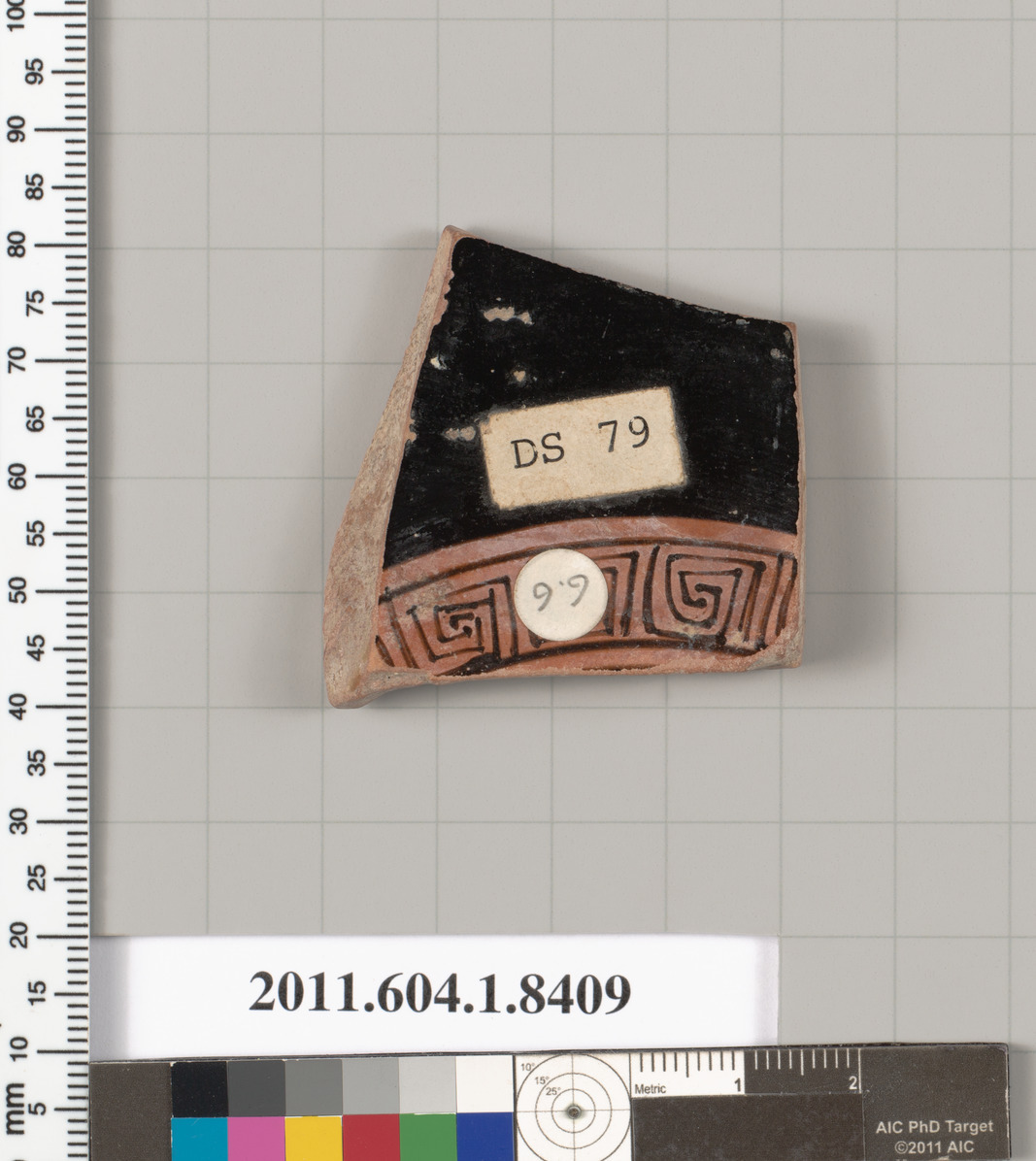
The terracotta fragment of a Greek Attic kylix, a drinking cup from the 5th century BCE, presents a paradox for the heritage fashion scholar. It is a broken vessel, a shard of a once-whole object used in symposia—rituals of aristocratic leisure and philosophical discourse. Yet, within its fractured geometry and earthen materiality lies a profound blueprint for the 2026 Old Money silhouette. The internal genetic code of the Lauren Fashion Heritage Lab, grounded in the Chinese literati stone (Rock in the form of a fantastic mountain) and the Seated luohan with a servant, teaches us that true luxury is not about pristine surfaces but about the sculptural articulation of time, space, and spiritual depth. The kylix fragment, when read through this lens, becomes not a relic of antiquity but a generative force for a new, deeply intellectual form of tailored elegance.
The Fragment as a Design Principle: From Symposia to Silhouette
The kylix, in its complete form, was a vessel of communal engagement. Its shallow bowl and wide handles facilitated the passing of wine, a lubricant for poetry, politics, and philosophical debate. The fragment, however, isolates a single moment of that ritual. It is a synecdoche of a lost whole, a visual echo of a gesture. For the 2026 Old Money wardrobe, this translates into a deliberate rejection of the “total look” in favor of architectural fragments that imply a larger, unseen narrative. Consider a jacket cut with an asymmetrical hem that recalls the broken edge of the terracotta. The shoulder line, instead of a smooth, continuous curve, might feature a sharp, angular drape—a “fragment” of a classical chiton reimagined in a heavy, matte wool. The silhouette is no longer about a seamless, uninterrupted line from shoulder to hem; it is about discontinuity as a signifier of history. The wearer’s body becomes the kylix’s missing piece, completing the form through presence and movement. This aligns with the literati stone’s principle of “漏” (lou, or penetration)—the voids and gaps that allow light and space to pass through, creating a dynamic, ever-changing form. The 2026 silhouette must have its own voids: a cut-out at the collarbone, a slit that reveals a flash of a contrasting underlayer, a sleeve that ends abruptly to expose the forearm. These are not mere design details; they are apertures into a deeper, more contemplative self.
The Materiality of Time: Terracotta’s Patina and the New Black
The terracotta fragment’s surface is not smooth. It bears the marks of its creation—the potter’s wheel, the burnishing tool—and its subsequent history: scratches, mineral deposits, the subtle wear of millennia. This is the antithesis of the glossy, frictionless luxury of the recent past. The 2026 Old Money palette, which I term Heritage-Black, is not a single shade but a family of deep, earthen tones that mimic the patina of ancient clay. Think of a black that is not pure, but flecked with iron oxide reds, ochres, and umbers—a black that has “weathered” through a process of controlled oxidation. This is achieved through innovative dyeing techniques that layer pigments, creating a depth that shifts in different light, much like the “皴纹” (cun wen, or texture strokes) on the Chinese scholar’s stone. The fabric itself—a dense, double-faced cashmere or a tightly woven wool—must possess a tactile gravity, a weight that suggests permanence. The drape should not be fluid and ephemeral; it should be monumental and grounded, like a fragment of a temple pediment. The seams are not hidden but articulated with a subtle, raw edge, a deliberate “unfinished” quality that speaks to the object’s history of breakage and repair. This is the “无用之用” (wu yong zhi yong, or the usefulness of the useless) of the literati stone applied to fashion: the garment’s value lies not in its pristine newness but in its capacity to absorb and display the marks of a life lived.
The Dialectic of Stillness and Gesture: The Kylix Handle as a Structural Motif
The kylix’s handles, often painted with intricate scenes, are its most dynamic elements. They are functional yet ornamental, projecting outward from the bowl’s calm interior. In the 2026 silhouette, this dialectic is expressed through the reimagining of the sleeve and the collar. The sleeve is no longer a simple tube but a structural extension—a “handle” that can be worn up or down, draped or folded, creating a new geometry with each gesture. A coat might feature a wide, sculpted cuff that echoes the kylix’s lip, a detail that is both protective and ceremonial. The collar, too, becomes a site of tension. A high, stiff mandarin collar, reminiscent of the luohan’s robe, might be paired with a deep, open back, creating a visual “break” that mirrors the fragment’s edge. This interplay between the static (the bowl, the torso) and the dynamic (the handle, the limb) is central to the aesthetic. It is a form of embodied philosophy, where the garment does not simply clothe the body but orchestrates its movement through space. The wearer becomes a living sculpture, their gestures activating the garment’s hidden geometries. This echoes the luohan painting’s balance of “静穆与生动” (jingmu yu shengdong, or serene stillness and vivid life). The silhouette must be capable of both—a quiet, monumental presence when at rest, and a dramatic, narrative unfolding when in motion.
The Viewer as Participant: The Fragment’s Invitation to Completion
Ultimately, the terracotta fragment is an incomplete object that demands completion by the viewer. It is a prompt for the imagination, a catalyst for a personal reconstruction of the past. The 2026 Old Money silhouette, informed by this principle, is not a finished statement but an invitation to interpretation. The wearer, like the scholar contemplating the fantastic mountain stone, must engage with the garment’s voids, its textures, its asymmetries. The silhouette is a meditative object, a piece of “精神山水” (jingshen shanshui, or spiritual landscape) that the wearer inhabits. The luxury lies not in the garment’s cost or brand but in its capacity to generate a private, contemplative experience. This is the ultimate expression of “器以载道” (qi yi zai dao, or the vessel carrying the Way). The kylix fragment, the literati stone, and the luohan painting all teach us that the most profound beauty arises from the tension between what is present and what is absent, what is material and what is spiritual. The 2026 silhouette, forged from this heritage, will not be a trend. It will be a philosophical artifact, worn by those who understand that true elegance is a form of archaeology—an excavation of meaning from the fragments of time.