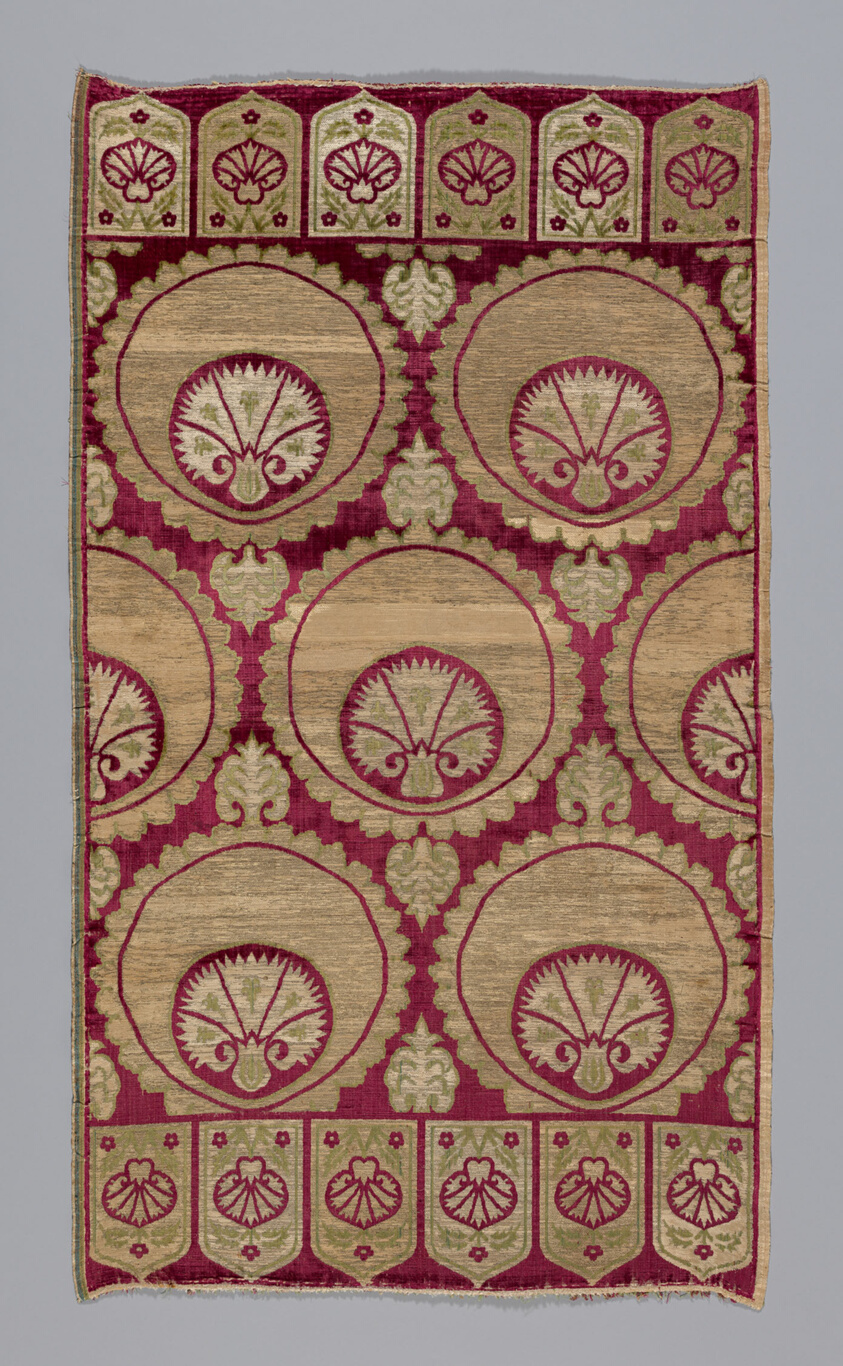
An Analysis of Material Sophistication: The Cushion Cover as a Testament to Hierarchical Weaving
In the considered appraisal of heritage objects, one must look beyond mere utility to discern the narrative of craftsmanship encoded within. The cushion cover, so often relegated to the realm of the incidental, here presents itself not as an accessory, but as a consummate exercise in textile engineering and aesthetic philosophy. Its material constitution—silk, cotton, and “silver” metal-wrapped silk—coupled with its technical execution, speaks of a hierarchy of values, a deliberate layering of effort and effect that demands a forensic appreciation. This artifact stands as a quiet manifesto of fluid elegance, achieved not through happenstance, but through the rigorous application of classic silk craftsmanship.
The Architectural Foundation: Warp-Float Faced Satin Weave
Any analysis must begin with the ground, the very foundation upon which all further complexity is built. Here, we have a warp-float faced satin weave. This is not a mere background; it is the essential canvas, chosen with intent. The satin structure, characterised by long, unbroken warp floats on the surface, is the progenitor of that most coveted tactile and visual property: a sublime, uninterrupted lustre. The silk warp threads, meticulously aligned and scarcely interrupted by weft intersections, create a surface that captures and reflects light with a continuous, liquid sheen. This is the first principle of fluid elegance—a ground that possesses inherent visual liquidity. It provides a serene, opulent base, a demonstration of mastery in achieving perfection in what a lesser atelier might consider merely preparatory work.
The Embellishment: Brocading and the Illusion of Solid Metal
Upon this luminous ground, the narrative gains its articulate voice through the introduction of supplementary brocading wefts. These are not ordinary threads. Each is a “silver” metal strip, meticulously wound around a core of silk. This construction is pivotal. The silk core provides necessary flexibility and strength, allowing the thread to be woven without snapping, while the metal sheath delivers uncompromising metallic radiance. The technique of brocading—where these supplementary wefts are inserted only where the pattern demands, floating on the reverse when not required—is an exercise in disciplined extravagance. It speaks of resourcefulness married to opulence; precious material is deployed with strategic precision, creating motifs that appear to be crafted from solid metal plate, yet retain the pliability of cloth. The contrast between the deep, liquid shine of the satin ground and the sharp, celebratory gleam of the metal brocade establishes a dialogue of textures, a central tenet of sophisticated materiality.
The Pinnacle of Complexity: The Velvet Element
If the satin ground represents mastered foundation and the brocade represents articulate ornament, the incorporation of cut and voided velvet represents the apex of technical ambition. This is where the artifact transitions from the merely excellent to the extraordinary. The introduction of supplementary warps to form the pile is a significant complication of the loom’s architecture. These additional warp threads are raised over rods during weaving to create loops, which are later cut to yield the plush, light-absorbing surface of velvet. The term “voided” is particularly consequential: it indicates that this velvet pile is not a continuous field, but is itself patterned. Areas of sumptuous, tactile pile are juxtaposed against the smooth satin ground, creating a pattern in relief through the absence and presence of the pile itself.
The coordination required is formidable. The weaver must simultaneously manage the ground satin weave, the discontinuous brocading wefts, and the supplementary velvet warps, each obeying a separate pattern sequence. The binding of this velvet pile, achieved through the noted supplementary binding wefts, is a critical technical nuance, ensuring the structural integrity of the delicate pile. The result is a triumvirate of surfaces: the luminous satin, the gleaming metal, and the light-capturing, shadowed velvet. This is fluid elegance redefined—not as a single note, but as a harmonious chord of contrasting yet complementary sensations.
Material Hierarchy and Contextual Intelligence
The choice of cotton for the unseen portions of the weave, likely in the weft or backing, is a stroke of contextual intelligence often overlooked by the amateur. It demonstrates a profound understanding of material hierarchy—the appropriate allocation of resource where it most meaningfully contributes to the whole. The cotton provides robustness, body, and stability, acting as the unseen infrastructure that supports the public-facing splendour of the silk and metal. This is the sartorial equivalent of a superbly canvassed jacket: the internal architecture that ensures the beautiful exterior maintains its form and dignity over time.
In totality, this cushion cover is an object lesson in the grammar of classic silk craftsmanship. It obeys a strict syntax of materials—silk for luminosity, metal-wrapped thread for punctuated brilliance, velvet for tactile drama, cotton for structural integrity. Its fluid elegance is not a vague aesthetic term, but the direct result of this hierarchical material and technical orchestration. It embodies a principle that transcends disciplines: that true luxury lies not in uniform expense, but in the expert and intentional deployment of varied resources to create a cohesive, resonant, and enduring whole. It is, in its essence, a silent treatise on the art of woven distinction.