The Fragment as a Testament to Craft: Deconstructing a Voided Velvet with Gold Foil
Introduction: The Fragment as a Complete Narrative
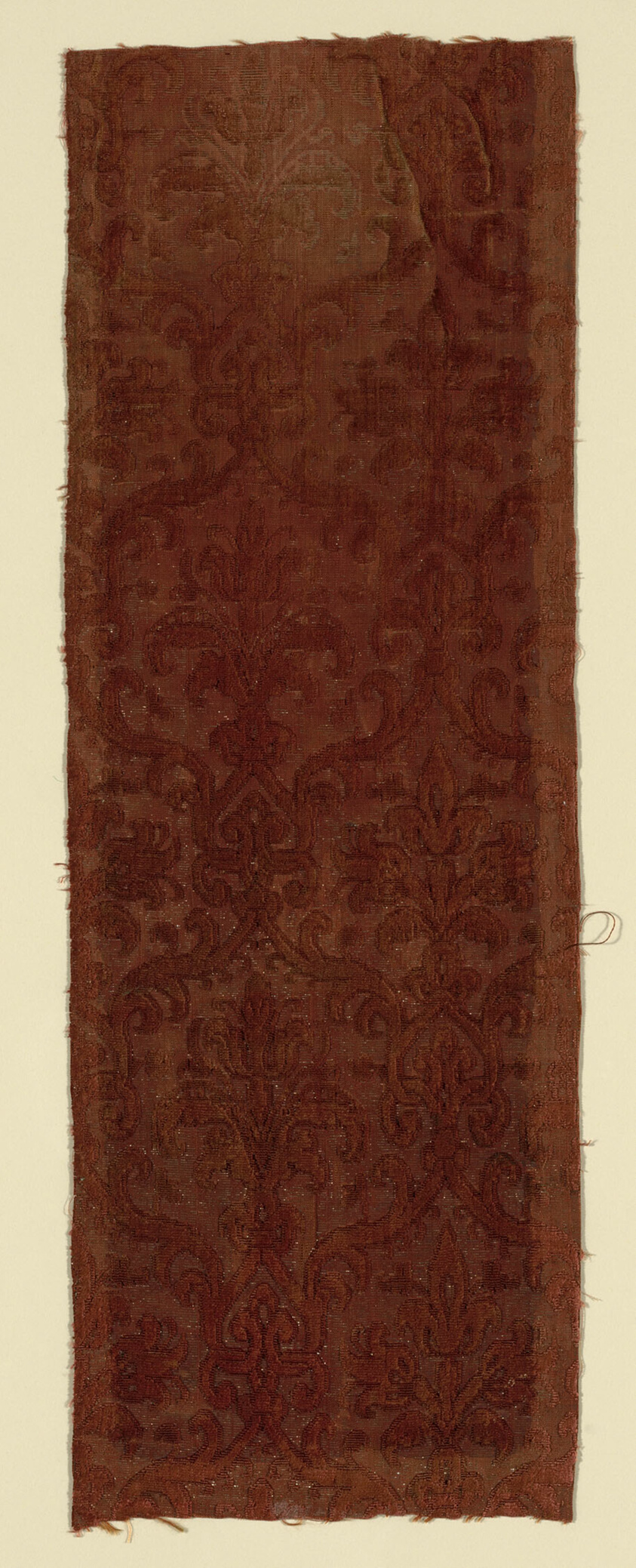
In the lexicon of luxury, a fragment is rarely considered a mere remnant. At the Lauren Fashion Heritage Lab, we treat fragments not as leftovers, but as concentrated archives of technical mastery and aesthetic intent. The artifact under examination—a segment of silk, cut, uncut, and voided velvet, further enriched with additional patterning wefts in gold foil against a plain weave foundation—is a case in point. This is not a piece of cloth; it is a microcosm of classic silk craftsmanship, a frozen moment of fluid elegance that speaks to the highest standards of Savile Row and the ateliers of Lyon. The fragment’s materiality, its construction, and its tactile presence offer a profound lesson in the tension between structure and grace, between the rigid discipline of the loom and the supple drape of the finished textile.
Materiality and Construction: The Anatomy of Opulence
The foundation of this artifact is a plain weave silk, a deceptively simple structure that provides the canvas for the velvet’s sculptural drama. The voided velvet technique—whereby areas of pile are deliberately omitted to create a pattern—is executed with precision. The “cut” and “uncut” loops of the velvet create a dynamic interplay of light and shadow. The cut loops, sheared to a uniform height, produce a dense, lustrous surface that absorbs and reflects light with a deep, plush intensity. The uncut loops, left as continuous threads, offer a softer, more matte texture, creating a subtle, almost architectural relief. This juxtaposition is not merely decorative; it is a study in contrast, a dialogue between the tactile and the visual.
The inclusion of additional patterning wefts in gold foil elevates the textile from luxurious to extraordinary. Gold foil, a material historically reserved for ecclesiastical vestments and royal regalia, is here woven into the plain weave foundation with the same discipline as the silk. The foil is not applied as a surface embellishment but integrated into the fabric’s very structure, ensuring that the metallic gleam is not a fleeting accent but a permanent, integral element. This technique demands an extraordinary level of skill: the weaver must maintain the tension of the silk threads while introducing the delicate, non-elastic foil, a process that requires both mechanical precision and an artist’s intuition. The result is a fabric that shimmers with a restrained, almost liquid gold, never overwhelming the silk’s natural sheen but complementing it with a quiet, authoritative opulence.
The Art of the Void: Negative Space in Velvet
The term “voided” is critical. In this artifact, the absence of pile is as significant as its presence. The voided areas—the negative spaces in the velvet—reveal the plain weave foundation, creating a pattern that is both graphic and fluid. This is not a solid field of velvet with occasional interruptions; it is a deliberate, choreographed interplay of pile and ground. The voids allow the gold foil wefts to become visible, their metallic threads catching the light in the un-piled areas, creating a subtle, shimmering contrast against the velvet’s deeper tones. This technique, perfected in 16th-century Italian and French workshops, is a testament to the weaver’s ability to control both the density of the pile and the visibility of the ground. The fragment’s pattern—likely a floral or arabesque motif, given the era and context—is rendered with a fluidity that belies the rigidity of the loom. The curves of the design are not forced but flow naturally, as if the velvet itself were a liquid medium.
Fluid Elegance: The Paradox of Structure and Drape
Classic silk craftsmanship is often characterized by a paradox: the fabric must be structurally robust enough to hold its shape, yet supple enough to drape with fluid elegance. This fragment embodies that paradox. The plain weave foundation provides the necessary stability, preventing the velvet from distorting under its own weight. The cut and uncut loops add volume and texture without compromising the fabric’s ability to fall in soft, graceful folds. The gold foil, despite its metallic nature, does not stiffen the textile; it is woven with a lightness that preserves the silk’s inherent fluidity. When handled, the fragment feels substantial yet airy, a quality that is the hallmark of the finest silk velvets. This is a fabric designed for movement—for the sway of a gown, the drape of a curtain, the fold of a ceremonial vestment. It is not static; it is alive.
Context and Legacy: From Lyon to Savile Row
This fragment can be situated within the grand tradition of European silk weaving, particularly the workshops of Lyon, which dominated the luxury textile trade from the 17th to the 19th centuries. The combination of voided velvet and gold foil was a specialty of these ateliers, commissioned by royal courts and the aristocracy for garments that signified power and refinement. The fluid elegance of the design—its organic, almost botanical motifs—reflects the Rococo and later Neoclassical influences that defined the era’s aesthetic. However, the fragment’s relevance extends beyond historical curiosity. For a house like Lauren, which draws inspiration from the enduring principles of classic craftsmanship, this artifact is a masterclass in material integrity. It reminds us that true luxury is not about excess but about the disciplined application of technique, the thoughtful use of materials, and the creation of a fabric that transcends its function to become art.
Conclusion: The Fragment as a Living Archive
In the hands of a heritage specialist, this fragment is not a relic but a living archive. It teaches us that the void is as important as the fill, that the interplay of cut and uncut loops can create a symphony of texture, and that gold foil, when woven with restraint, can elevate silk to a realm of quiet majesty. The fragment’s materiality—silk, cut, uncut, voided velvet with gold foil against a plain weave foundation—is a testament to the enduring power of classic craftsmanship. It is a reminder that elegance is not a trend but a discipline, and that the most profound expressions of luxury are often found in the smallest, most concentrated artifacts. For the Lauren Fashion Heritage Lab, this fragment is not merely a piece of history; it is a blueprint for the future of fluid, opulent design.