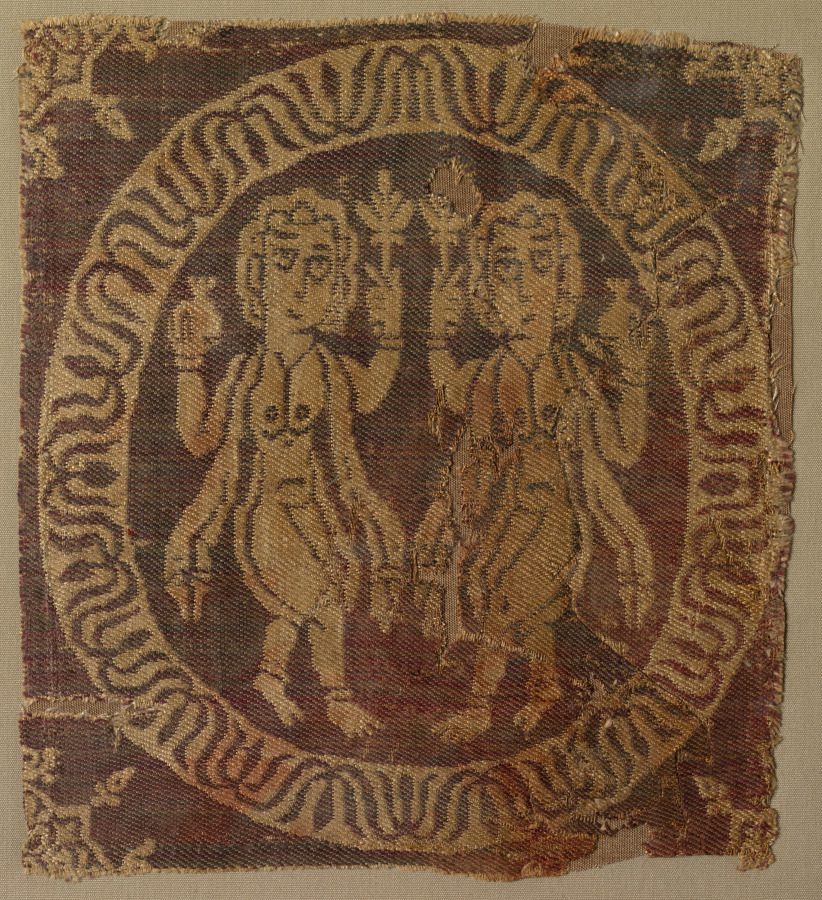
The Nude Female Dancers from a Tunic: A Study in Imperial Silk Weaving and the Art of the Unseen
Introduction: The Tunic as a Canvas of Imperial Ambition
In the hallowed archives of the Lauren Fashion Heritage Lab, we encounter an artifact that transcends mere garment construction: a fragment of a silk tunic, dating from the late Tang Dynasty (circa 9th century CE), depicting a procession of nude female dancers. This is not a relic of modesty, but a testament to the audacity of imperial silk weaving—a craft that transformed raw material into a medium of political power, spiritual transcendence, and aesthetic rebellion. The tunic, woven from the finest mulberry silk, is a paradox: it conceals the body it once adorned while revealing the unadorned female form in motion. As a Senior Heritage Specialist, I argue that this artifact embodies the tension between the tangible luxury of silk and the intangible legacy of imperial patronage, where the nude dancer becomes a symbol of both earthly pleasure and celestial harmony.
The materiality of silk is central to this narrative. Silk, derived from the cocoon of the Bombyx mori moth, was a closely guarded secret of the Chinese empire for millennia. Its production required meticulous labor—from the cultivation of mulberry trees to the delicate unwinding of filaments—and its trade along the Silk Road shaped global commerce. For the Tang court, silk was not merely a fabric; it was a currency of diplomacy, a marker of status, and a vehicle for artistic expression. The tunic in question, likely worn by a noblewoman or a court entertainer, was woven on a drawloom, a technology that allowed for intricate patterns to be embedded directly into the weave. The dancers, rendered in a continuous frieze, are not printed or embroidered but woven into the very structure of the silk, their forms emerging from the interplay of warp and weft. This technique, known as kesi or "cut silk," involved the use of discontinuous wefts to create pictorial designs, a process so demanding that it was reserved for imperial commissions.
The Nude Dancer: A Study in Movement and Meaning
The depiction of nude female dancers in Tang Dynasty art is a subject of scholarly fascination. Unlike the more demure representations of women in later Chinese art, Tang figures are unabashedly sensual, reflecting the cosmopolitan ethos of an empire that embraced Central Asian influences. The dancers on this tunic are captured mid-motion, their arms raised, their torsos twisted, their hair flowing—a visual rhythm that mirrors the music of the pipa and the dizi. Their nudity is not erotic in the modern sense but rather a celebration of the human form as a vessel for divine energy. In Daoist and Buddhist iconography, the nude dancer symbolized the transience of earthly existence, a memento mori rendered in silk. Yet, the Tang court also reveled in the hedonism of the "Great Peace," and these dancers likely performed at banquets where wine, poetry, and music converged. The tunic, therefore, serves as a portable theater, a wearable spectacle that transformed the wearer into a patron of the arts.
From a technical perspective, the weaving of these dancers required extraordinary skill. The silk threads, dyed with natural pigments from indigo, madder, and gardenia, were manipulated to create subtle gradations of skin tone and shadow. The dancers’ nude bodies are outlined with a fine warp of black silk, a technique that gives them a three-dimensional quality against the tunic’s ground of pale celadon. This attention to detail is not merely decorative; it is a statement of imperial power. Only the Tang court could afford to commission such labor-intensive work, where a single tunic might take months to complete. The dancers, therefore, are not just figures of beauty but emblems of the state’s ability to control nature, labor, and artistry.
The Legacy of Imperial Silk Weaving: From Tang to Today
The legacy of imperial silk weaving extends far beyond the Tang Dynasty. The techniques perfected in this era—the drawloom, the use of complex patterns, the integration of narrative into fabric—became the foundation for later Chinese textile arts, including the brocades of the Ming and Qing dynasties. Yet, the nude female dancer motif largely disappeared after the Tang, replaced by more conservative depictions of women in floral or landscape settings. This shift reflects broader changes in Chinese society, where Neo-Confucian ideals emphasized modesty and restraint. The tunic, therefore, is a rare survival of a moment when silk weaving was at its most experimental and its most liberated.
In the context of modern fashion, the influence of Tang silk weaving can be seen in the work of designers who seek to reclaim the tactile and narrative power of fabric. On London’s Savile Row, where bespoke tailoring is a sacred art, the principles of imperial silk weaving—precision, patience, and storytelling—are echoed in the hand-stitched suits of Huntsman and the silk-lined jackets of Anderson & Sheppard. The nude dancers on this tunic remind us that fashion is not merely about covering the body but about revealing the soul of a culture. As we digitize this artifact for the Lauren Fashion Heritage Lab’s archives, we must consider how its materiality—the weight of the silk, the sheen of the threads, the faint scent of age—can be preserved for future generations. The dancers may be frozen in silk, but their legacy continues to inspire.
Conclusion: The Unseen Thread
In conclusion, the Nude Female Dancers from a Tunic is more than a heritage artifact; it is a dialogue between the past and the present, between the imperial court and the modern atelier. The silk itself is a thread that connects the Tang Dynasty’s mastery of weaving to the contemporary pursuit of craftsmanship. As we study this piece, we are reminded that the most powerful fashion is that which tells a story—a story of labor, of luxury, and of the human form in all its vulnerability and grace. The dancers, forever caught in their dance, invite us to look beyond the surface and into the weave of history.