The Pastoral Symphony in Attic Clay: A Terracotta Kylix and the 2026 Old Money Silhouette
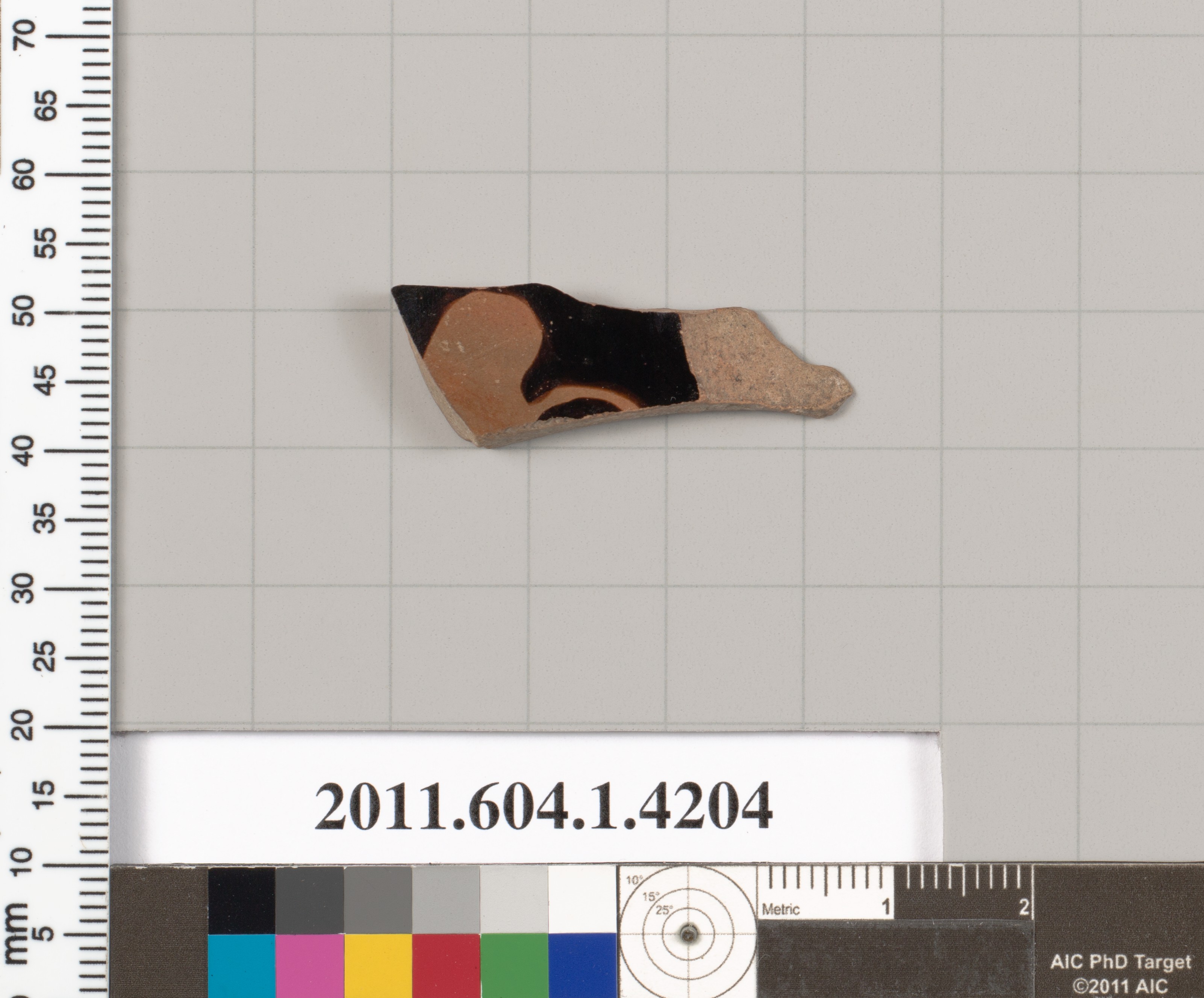
The Lauren Fashion Heritage Lab has long recognized that the most profound design innovations emerge not from novelty, but from a deep, scholarly dialogue with the past. The museum artifact under consideration—a terracotta fragment of a Greek Attic kylix, a drinking cup from the 5th century BCE—offers a compelling lens through which to interpret the internal genetic code of our heritage. This code, articulated through the comparative aesthetic analysis of the Chinese Herdboys and Buffalos and the Dutch Wine Cup with Children at Play, reveals a universal human yearning for harmony, innocence, and a return to an idealized state of being. The kylix, though geographically and temporally distinct, resonates with the same pastoral symphony. Its terracotta medium, its fragmentary state, and its function as a vessel for communal pleasure directly inform the materiality, structure, and philosophical underpinning of the 2026 Old Money silhouette, particularly within the Heritage-Black category.
I. The Kylix as a Vessel of Shared Ideals: Echoing the Internal Genetic Code
The kylix fragment, like the Chinese scroll and the Dutch cup, is a container of collective memory. In ancient Athens, the kylix was not merely a drinking vessel; it was the centerpiece of the symposium, a ritualized space for philosophical discourse, poetry, and social bonding. The interior of the cup, often decorated with scenes of revelry, mythology, or everyday life, was revealed only as the drinker tilted the vessel. This act of revelation mirrors the aesthetic principle found in Herdboys and Buffalos: the “empty space” is not absence but potential, a moment of discovery. The kylix’s imagery—frequently depicting youths, athletes, or satyrs—celebrates a state of unselfconscious joy, a direct parallel to the “童戏” (children at play) on the Dutch cup. Both artifacts affirm the secular, humanist value of pleasure as a legitimate and noble pursuit, a cornerstone of the Old Money ethos that values lived experience over ostentatious display.
Furthermore, the kylix’s terracotta materiality speaks to the “天人合一” (unity of heaven and humanity) found in the Chinese scroll. Terracotta is earth—fired, shaped, and made enduring. It is a material that does not pretend to be precious in the way of gold or silver. Its value lies in its authenticity, utility, and connection to the natural world. This is the very essence of the Old Money aesthetic: a quiet, unforced confidence that derives from substance, not surface. The kylix’s fragmentary state—broken, worn, yet still possessing its essential form—is a powerful metaphor for the 2026 silhouette. It is not about pristine perfection; it is about patina, lineage, and the beauty of a well-lived life. The cracks and missing pieces are not flaws but narratives, testaments to time and use. This aligns perfectly with the internal code’s emphasis on “意境” (artistic conception) over “写实” (realism). The fragment invites the viewer to complete the picture, to imagine the whole, and to participate in the creation of meaning.
II. Materiality and Silhouette: Translating Terracotta into Textile
For the 2026 Old Money collection, the terracotta kylix dictates a specific material and structural language. The Heritage-Black category, which serves as the foundational palette for the collection, is not a void but a “虚室生白” (emptiness that gives rise to light). It is the blank space of the Chinese scroll, the negative space that allows the form to breathe. The terracotta’s warm, earthy undertone—a spectrum from burnt sienna to deep umber—will be translated into the collection’s core fabrics: a heavy, matte-finish wool suiting; a densely woven, brushed cashmere; and a raw, unpolished silk twill. These materials possess a tactile gravity that mirrors the kylix’s fired clay. They are substantial, weighty, and grounded, rejecting the ephemeral sheen of synthetic luxury.
The silhouette itself is an exercise in fragmentation and reconstruction. The kylix’s broken rim and missing handle inspire a design language of asymmetry and deliberate incompleteness. Jackets will feature a single, exaggerated shoulder that drops into a fluid, unconstructed sleeve, echoing the cup’s lost handle. Trousers will be cut with a wide, almost columnar leg, tapering slightly at the ankle to suggest the kylix’s stable foot. The waistline will be defined not by a belt but by a subtle, integrated drape—a nod to the kylix’s tondo, the circular interior decoration that is the cup’s focal point. The overall effect is one of monumental simplicity, a silhouette that is both ancient and modern, recalling the “出世的、哲学的、与天道共鸣的宁静” (transcendent, philosophical tranquility resonating with the cosmic order) of the Chinese pastoral ideal.
III. The 2026 Old Money Silhouette: A Dialogue Between the Fragment and the Whole
The 2026 Old Money silhouette, as informed by the kylix, is a direct challenge to the prevailing trends of maximalism and logo-driven luxury. It is an anti-trend, a return to the core principles of proportion, balance, and material integrity. The key pieces include:
- The “Kylix” Coat: A floor-length, single-breasted coat in heavy wool. The collar is a simple, folded band, reminiscent of the kylix’s lip. The back is cut in a single, unbroken panel, while the front features a subtle, asymmetrical closure that creates a dynamic line. The color is a deep, Heritage-Black with a visible, warm brown undertone—the color of fired clay.
- The “Symposium” Tunic: A fluid, knee-length tunic in matte silk twill. It is cut with a dropped shoulder and a wide, dolman sleeve. The neckline is a simple, round cut, and the hem is left raw, a deliberate “fragment” that speaks to the kylix’s broken edge. The tunic is meant to be worn untucked, over slim trousers, creating a layered, “入世的、人文的、与人情共舞的欢欣” (worldly, humanistic joy that dances with human connection).
- The “Tondo” Trousers: Wide-legged, high-waisted trousers in a densely woven cashmere. The front is flat, with no pockets or belt loops, while the back features a single, hidden pocket. The hem is cut to break just above the ankle, revealing a simple leather loafer. The silhouette is columnar and grounded, echoing the kylix’s stable base.
IV. Conclusion: The Eternal Pastoral
The terracotta kylix fragment, the Chinese Herdboys and Buffalos, and the Dutch Wine Cup with Children at Play are not disparate artifacts. They are nodes in a global network of human longing, each expressing the same fundamental desire: to hold onto a moment of unbroken harmony. The 2026 Old Money silhouette, born from this dialogue, is not a costume or a historical pastiche. It is a philosophical garment, a wearable meditation on time, material, and the enduring power of the pastoral ideal. It is a reminder that true luxury is not about acquisition but about presence, authenticity, and the quiet confidence of a lineage well understood. The fragment is not a loss; it is an invitation. And the silhouette, like the kylix’s tondo, reveals its deepest meaning only to those who take the time to look, to feel, and to remember the eternal song of the herdboys and the children at play.