The Aesthetics of Mortal Grace: Terracotta Fragments and the 2026 Old Money Silhouette
Introduction: The Paradox of the Broken Vessel
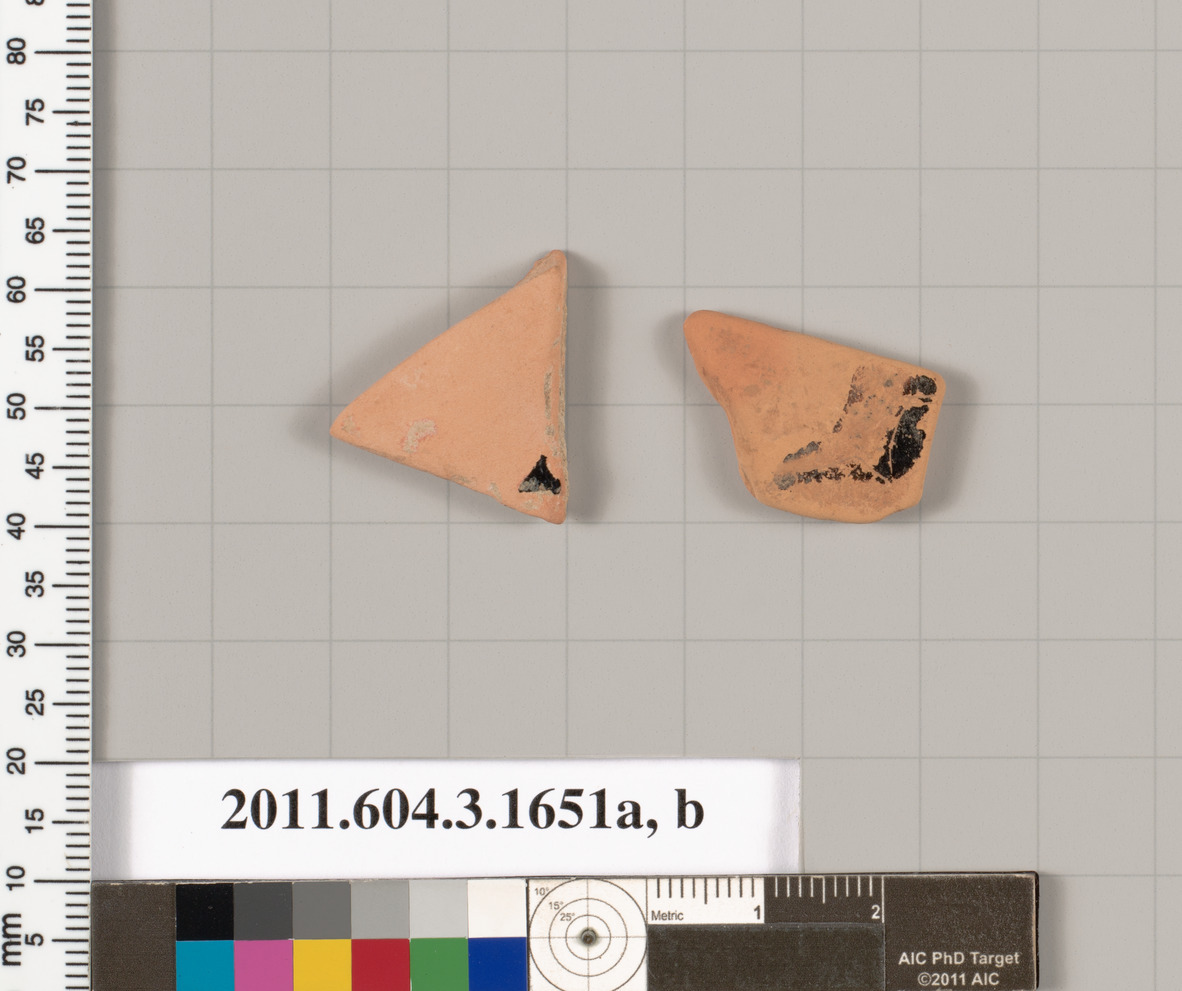
In the Lauren Fashion Heritage Lab, we do not merely archive garments; we excavate the philosophical substrates that underpin enduring style. The museum artifact before us—a collection of terracotta fragments from Attic Greek kylikes, or drinking cups—appears, at first glance, to be a relic of conviviality, a shattered witness to ancient symposia. Yet, when read through the internal genetic code of our heritage—the Socratic death, the Davidian canvas, the silent Jar—these shards reveal a profound aesthetic logic. They are not remnants of ruin, but fragments of a philosophy that the 2026 Old Money silhouette must embody: the grace of impermanence, the dignity of the broken, and the quiet power of that which does not strive for immortality but simply holds its contents with unadorned integrity.
The 2026 Old Money silhouette, as we are developing it, is not a return to the gilded opulence of the 1980s or the minimalist austerity of the 1990s. It is a Heritage-Black response to the contemporary crisis of meaning—a crisis that mirrors the tension between David’s Death of Socrates and the mute Jar. Where David’s painting is a heroic, rational attempt to conquer death through aesthetic sublimation, the terracotta fragments represent the opposite: an acceptance of decay, a celebration of the tactile, and a refusal to perform transcendence. This paper argues that the 2026 silhouette must synthesize these two poles: the aspirational structure of classical form and the humble, mortal texture of the broken vessel.
The Kylix as Philosophical Object: From Symposium to Silhouette
The Attic kylix was not merely a drinking vessel; it was a stage for philosophical dialogue. At the symposium, men reclined, drank wine, and debated the nature of the good life. The cup’s shallow bowl and wide handles facilitated a communal, horizontal exchange—a stark contrast to the vertical, hierarchical gaze of David’s painting. The terracotta fragments we study are not pristine; they are chipped, worn, and cracked. Their surfaces bear the patina of use, the marks of hands that held them, the stains of wine that once flowed. This is not a flaw; it is a testament to lived experience.
For the 2026 Old Money silhouette, this translates into a rejection of the “new” as a value in itself. The silhouette must feel as though it has been inherited, worn, and loved. Fabrics should drape with the weight of history—think of a heavy wool overcoat that falls like a weathered stone, or a cashmere sweater whose fibers have softened over decades. The Heritage-Black palette, in this context, is not the black of mourning or of high-fashion nihilism; it is the black of the void that the Jar contains—a receptive, silent black that does not shout but invites contemplation. The silhouette’s lines should echo the kylix’s geometry: rounded shoulders, a softened waist, and a hem that falls without sharpness, like the lip of a cup that has been smoothed by countless hands.
The Socratic Tension: Structure vs. Fragility
David’s Death of Socrates is a masterpiece of rational composition. The figures are arranged in a rigid, almost architectural geometry: Socrates’s pointing hand creates a diagonal that leads the eye upward, toward the light of reason. The bodies are idealized, muscular, and eternal. This is the Old Money aspiration—the desire to project permanence, control, and lineage. Yet, as our internal code notes, this is a “violent” aesthetic: it erases the messiness of death, the trembling of the hand, the stench of hemlock.
The terracotta fragments offer a corrective. They are not idealized; they are real. Their edges are jagged, their surfaces porous. They do not pretend to be immortal. In the 2026 silhouette, this tension manifests in the interplay between structure and softness. A jacket may have the sharp, architectural shoulder of a Savile Row cut—the Socratic gesture—but its fabric might be a raw silk that wrinkles with every movement, or a wool that pills slightly after a season. The silhouette should not be rigid; it should be held together by grace, not by force. The waistline, for instance, might be cinched not by a tight belt but by a drape that falls naturally, like the curve of the kylix’s bowl. The hemline might be asymmetrical, suggesting a garment that has been repaired, mended, or simply worn down by time.
The Jar’s Silence: Materiality as Philosophy
The Jar from our internal code—the plain, unadorned ceramic vessel—is the silent partner to David’s theatricality. It does not tell a story; it is a story of containment. The terracotta fragments, similarly, are not narrative objects. They are fragments of a whole that we can only imagine. This is the essence of the 2026 Old Money silhouette: it must suggest a history without narrating it. The wearer should appear as though they have stepped out of a painting, but the painting is incomplete—a fresco that has been partially erased by time.
Materially, this means a return to tactile authenticity. The Heritage-Black palette is not a flat black; it is a black with depth, achieved through natural dyes, uneven weaves, and subtle variations in texture. A coat might be made of a wool that is slightly nubby, like the surface of unglazed terracotta. A dress might be cut from a linen that wrinkles easily, mimicking the cracks in the ancient pottery. The silhouette itself should be voluminous yet grounded—not billowing like a Romantic gown, but structured like a vessel that holds its shape while yielding to the body’s movement. The shoulders should be broad but soft, the sleeves full but not exaggerated, the skirt or trousers falling in a column that suggests both stability and the possibility of collapse.
Conclusion: The 2026 Silhouette as a Fragment of the Future
The 2026 Old Money silhouette, as informed by these terracotta fragments, is not a nostalgic revival. It is a philosophical garment—a wearable meditation on the tension between the Socratic will to transcendence and the Jar’s acceptance of finitude. The silhouette must be heroic yet humble, structured yet fragile, black yet luminous. It is the silhouette of a person who knows that their body will decay, their lineage will fade, and their legacy will be reduced to fragments—yet who dresses with the quiet dignity of one who has made peace with that truth.
In the Lauren Fashion Heritage Lab, we call this the “Kylix Principle”: the design philosophy that every garment should be a vessel for life, not a monument to death. The 2026 silhouette will be cut with the precision of a Greek cup, but its edges will be softened by time. It will be black, but not as an absence—as a presence that holds all colors within it. It will be old, but not as a relic—as a living fragment that carries the weight of the past into the future, without pretending that the future is eternal.
This is the heritage of Heritage-Black: not the black of the void, but the black of the fertile earth from which the terracotta was born, and into which it will one day return. The 2026 silhouette is that earth, shaped by hands that know both the ecstasy of creation and the sorrow of decay.