From Terracotta Fragment to Tailored Silence: The Greek Kylix as a 2026 Old Money Silhouette Blueprint
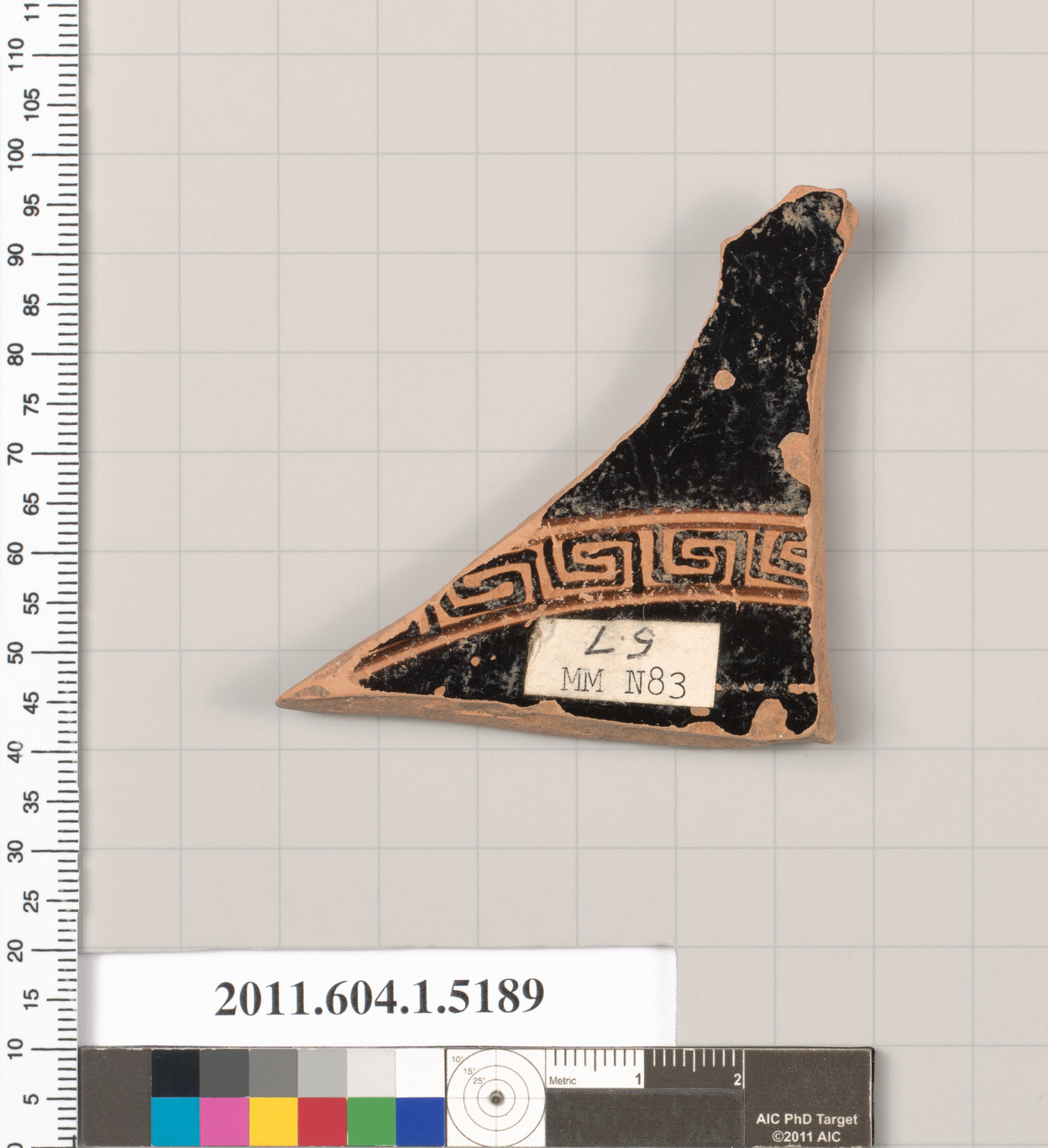
In the Lauren Fashion Heritage Lab, we do not merely archive garments; we decode the genetic material of timelessness. The museum artifact before us—a fragment of a Greek Attic kylix, a terracotta drinking cup—appears, at first glance, to belong to a world of symposiums and libations, far removed from the disciplined austerity of Old Money tailoring. Yet, a deeper synthesis with our internal genetic code reveals a profound resonance. The kylix fragment, like the 乐师纹陶范残片 (Musician Mold Fragment) and the 持桃罗汉·持拂犬罗汉 (Peach-Bearing Arhat and Dog-Bearing Arhat) paintings, is a vessel for the dialectic of dynamic stillness. It is precisely this tension—the frozen gesture of a reveler, the silent echo of a feast—that provides the conceptual foundation for the 2026 Old Money silhouette. We are not designing for the noise of the present; we are tailoring the quiet authority of a civilization’s echo.
I. The Kylix Fragment: A Study in Contained Dynamism
The Greek kylix, particularly in its Attic black-figure or red-figure form, is an object of profound paradox. Its function was social, communal, and kinetic—a vessel passed among reclining guests, its painted scenes animating the wine-drinking ritual. The fragment we examine, though broken, preserves a slice of this energy: a figure in mid-gesture, a fold of drapery caught in the act of falling, a line that suggests motion arrested. This is not the chaotic motion of the street; it is the choreographed dynamism of a symposium, a space of controlled pleasure and intellectual exchange.
This aligns directly with the internal genetic principle of “以有形探问无限” (using the tangible to explore the infinite). The kylix’s painted figures do not merely depict movement; they contain it within the strict geometry of the cup’s circular rim and the disciplined curve of its stem. The reveler is held in the cup’s architecture. For the 2026 Old Money silhouette, this translates into a fundamental rule: dynamism must be sheathed in structure. The 2026 silhouette will not embrace the fluid, unmoored drape of contemporary streetwear. Instead, it will borrow from the kylix’s logic: a sharp, sculptural shoulder line that anchors a subtly flared sleeve; a high, cinched waist that controls the fall of a pleated skirt; a tailored jacket whose lapel acts as the rim of the cup, framing the “figure” within. The movement is present—in the swing of a coat, the break of a trouser—but it is always contained by a precise, architectural cut.
II. The Aesthetic of the Fragment: “残缺” as a Marker of Lineage
Our internal code emphasizes the beauty of “残缺” (incompleteness) as a philosophical state. The kylix fragment is not a failure; it is a witness to time. Its broken edge tells a story of use, of burial, of rediscovery. It implies a whole that once was—a complete symposium, a full life, a vanished civilization. This is the essence of Old Money aesthetics: the garment that does not scream its newness, but whispers its heritage.
For 2026, this translates into a deliberate embrace of the “unfinished” finish. We are not speaking of deconstruction in the punk or grunge sense, which is a rebellion against form. Rather, we are speaking of a patina of intention. A raw hem on a cashmere scarf, not as a sign of poverty, but as a mark of the weaver’s hand. A slight, deliberate asymmetry in a jacket’s closure, echoing the irregularity of a broken pot. A subtle, almost imperceptible fading in a deep black wool, achieved through natural dyes, suggesting the garment has lived through seasons. The 2026 silhouette will be complete in its incompleteness, suggesting a lineage that extends beyond the wearer’s lifetime. It is the sartorial equivalent of the kylix’s broken edge: a silent testament to continuity.
III. The “Heritage-Black” Palette: From Symposium to Sanctuary
The category tag for this artifact is Heritage-Black, a color that is not a color but an absence of light, a void that contains all potential. The Greek kylix, in its terracotta state, is a warm, earthen red-orange. But the black-figure technique, where figures are painted in a glossy black slip against the red clay, creates a stark, powerful contrast. This black is not the black of mourning; it is the black of definition, of silhouette, of authority. It is the black that makes the red clay “speak.”
In the 2026 Old Money silhouette, Heritage-Black becomes the foundational ground. It is the dark field against which the “figures” of the garment—the lapel, the pocket, the seam—are defined. This black is not flat; it is a luminous darkness, achieved through dense weaves of wool, matte silk, or brushed cashmere. It absorbs light, creating a surface of profound stillness. This stillness is the sartorial equivalent of the 持桃罗汉’s meditative calm—a visual silence that commands attention without effort. The 2026 silhouette will use Heritage-Black as its primary field, allowing the wearer’s presence, not the garment’s color, to be the focal point. Accents—a white linen pocket square, a silver watch face, a single pearl—will function like the red clay of the kylix: rare, precise, and deeply meaningful.
IV. Silhouette Synthesis: The “Symposium Shoulder” and the “Kylix Waist”
From this synthesis, two key architectural elements emerge for the 2026 collection:
The “Symposium Shoulder”: Borrowing from the kylix’s broad, stable rim, the shoulder of the 2026 coat or jacket will be extended and slightly squared, but with a soft, rolled padding. It is not the aggressive, power-shoulder of the 1980s; it is a shoulder that suggests a foundation, a structure that can hold the weight of a legacy. It is the shoulder of a figure in a symposium: relaxed, yet poised; expansive, yet contained.
The “Kylix Waist”: The kylix’s stem is a narrow, elegant point of transition between the broad bowl and the base. For the 2026 silhouette, this translates into a defined, high waist—not cinched tight, but articulated through a subtle dart or a belt of the same fabric. This waist acts as the pivot point for the garment’s volume, whether in a flared skirt or a wide-legged trouser. It creates a silhouette that is both grounded and lifted, echoing the kylix’s poised balance between the symposium floor and the drinker’s hand.
V. Conclusion: The Eternal Echo in Tailored Form
The Greek kylix fragment, the 乐师纹陶范残片, and the 持桃罗汉 paintings are separated by millennia, geography, and material. Yet, they share a single, profound truth: the most powerful expression of life is found in the stillness that contains it. The kylix’s frozen reveler, the musician mold’s arrested melody, and the arhat’s timeless meditation are all variations on this theme. For the 2026 Old Money silhouette, the lesson is clear. We are not designing for the transient “now.” We are designing for the eternal echo. We are crafting garments that, like the kylix fragment, will be more beautiful with age, more authoritative in their silence, more resonant in their stillness. The 2026 silhouette is not a trend; it is a heritage artifact in the making. It is the symposium of the self, contained in a perfect, black, and quietly dynamic form.