← BACK TO ARCHIVES
Silk
Heritage Synthesis: Kasuga Deer Mandala
Curated on Jun 25, 2026 // Node: LDN-01
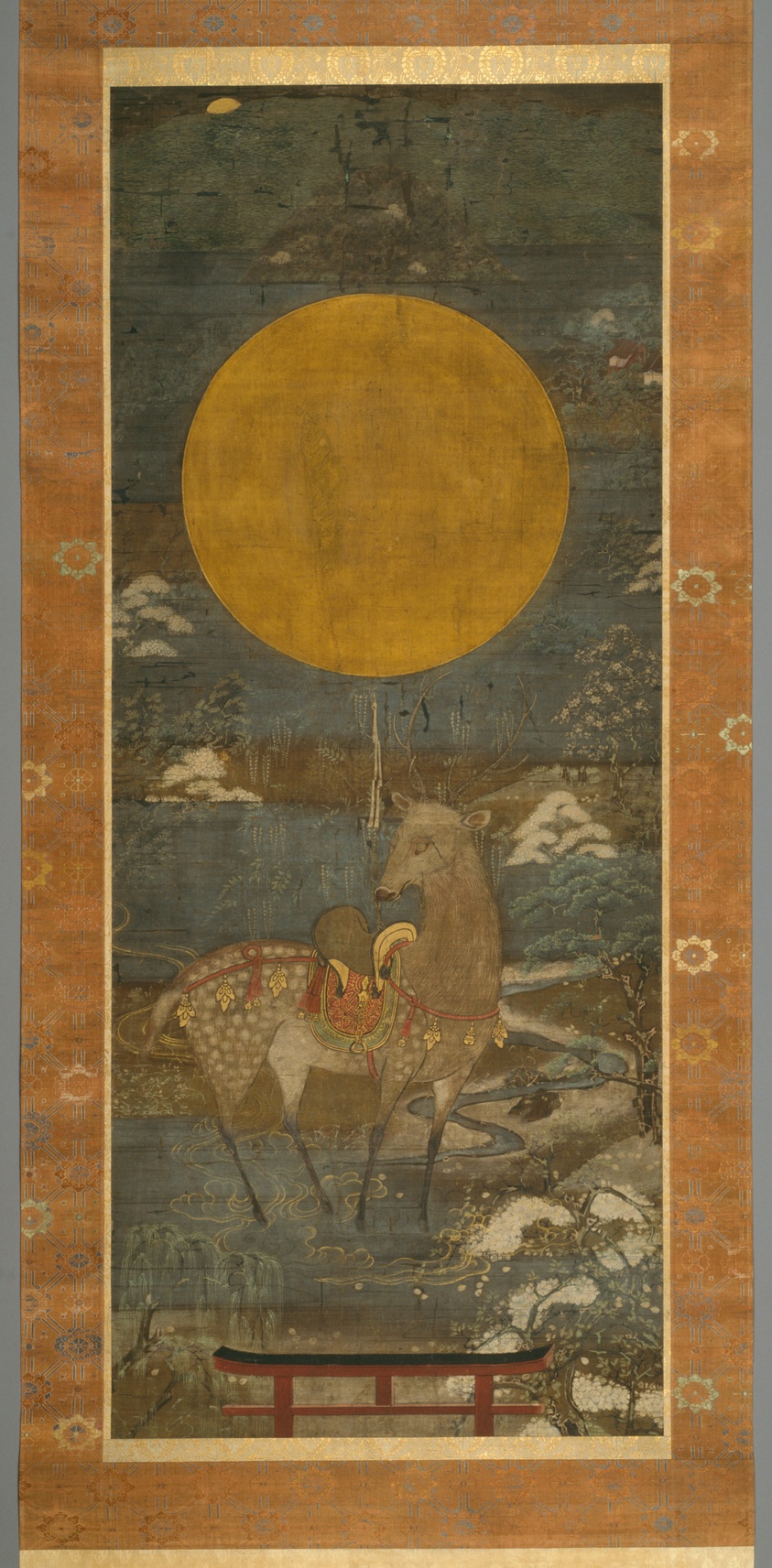
The Kasuga Deer Mandala: A Study in Materiality and Spiritual Cartography
The Kasuga Deer Mandala, rendered in ink, colors, and gold on silk, stands as a singular testament to the confluence of divine narrative and artisanal mastery. As a Senior Heritage Specialist at Lauren Fashion Heritage Lab, I approach this artifact not merely as a religious icon, but as a profound study in materiality—a document of cultural values encoded in the very fibers of its substrate. The choice of silk, a material synonymous with luxury, fluidity, and impermanence, is no accident. It is a deliberate act of reverence, elevating the mandala from a mere illustration to a living, breathing object of contemplation.
The Silk Substrate: A Canvas of Prestige and Fragility
Silk, in the context of 13th-century Japan, was a material of immense prestige, often reserved for the aristocracy and the most sacred of Buddhist rituals. Its production was a labor-intensive process, requiring the cultivation of silkworms, the careful extraction of filaments, and the meticulous weaving of a fabric that possessed an unmatched sheen and drape. For the Kasuga Deer Mandala, the silk was not a passive backdrop but an active participant in the visual narrative. The fabric’s natural luster interacts with the applied pigments and gold leaf, creating a shifting, luminous surface that changes with the angle of light. This dynamic quality mirrors the mandala’s spiritual purpose: to guide the viewer toward an ever-deepening understanding of the divine.
The fluid elegance of the silk is particularly significant. Unlike the rigid, planar surfaces of wood or paper, silk possesses a supple, almost breathable quality. The mandala, when displayed, would have been subject to the gentle undulations of air currents, causing the deer—the central motif—to appear to move within their celestial landscape. This kinetic potential transforms the artifact into a living mandala, a microcosm of the cosmic order in perpetual, graceful motion. The fragility of silk, however, underscores the ephemeral nature of earthly existence, a core tenet of Buddhist philosophy. The very materiality of the artifact thus becomes a sermon on impermanence.
Ink, Colors, and Gold: The Alchemy of Devotion
The technical execution of the Kasuga Deer Mandala reveals a masterful command of materials. The ink, derived from soot and animal glue, provides the foundational structure—the precise, calligraphic lines that delineate the deer, the sacred Mount Mikasa, and the Kasuga Shrine. These lines are not merely outlines; they are imbued with the energy of the brush stroke, a direct transmission of the artist’s intention. The colors, mineral-based and painstakingly ground, offer a restrained yet potent palette. Vermilion, malachite green, and azurite blue are applied in thin, translucent washes, allowing the silk’s texture to remain visible. This technique, known as *tsukuri-e* (built-up painting), creates a sense of depth and luminosity that is both ethereal and grounded.
The application of gold is the crowning achievement. Gold leaf, beaten to a gossamer thinness, is meticulously adhered to the silk, often in the form of *kirikane* (cut gold) or *sunago* (gold dust). In the Kasuga Deer Mandala, gold is used to highlight the deer’s antlers, the sacred torii gates, and the celestial clouds that frame the composition. This is not mere decoration; gold represents the radiant, unchanging nature of enlightenment. It catches the light, drawing the eye to the most spiritually significant elements, and serves as a visual metaphor for the transcendent reality that lies beyond the material world. The interplay of matte pigments and reflective gold creates a dynamic tension, a visual dialogue between the earthly and the divine.
Classic Silk Craftsmanship and Fluid Elegance: A Savile Row Perspective
From a Savile Row perspective, the Kasuga Deer Mandala can be understood as a bespoke garment for the spirit. Just as a master tailor selects the finest wool, cuts it with precision, and finishes it with hand-stitched details, the artist of this mandala chose silk as the foundation, executed the design with calligraphic rigor, and embellished it with gold. The result is a piece that is both structurally sound and exquisitely fluid, a balance of discipline and grace.
The fluid elegance of the silk is akin to the drape of a well-cut suit. It is not stiff or static; it moves with the wearer, adapting to the body’s contours. Similarly, the mandala’s silk substrate allows the image to breathe, to shift, to invite the viewer into a dynamic relationship with the sacred. The gold, like a fine silk tie or a pocket square, provides the finishing touch—a moment of brilliance that elevates the entire composition. The craftsmanship is invisible in its perfection; one does not see the individual brushstrokes or the gold leaf’s edges, but rather the unified, harmonious whole.
Heritage and Contemporary Resonance
For the Lauren Fashion Heritage Lab, the Kasuga Deer Mandala offers a profound lesson in the power of materiality. It demonstrates that the choice of fabric, the application of pigment, and the use of precious metals are not secondary considerations but integral to the object’s meaning. In an era of fast fashion and disposable goods, this artifact reminds us of the value of slowness, of intention, of the marriage between craft and concept. The silk, the ink, the colors, and the gold are not just materials; they are the vocabulary through which a spiritual vision is articulated.
As we preserve and study such artifacts, we are not merely cataloging the past. We are learning how to imbue our own creations with a similar depth of meaning. The Kasuga Deer Mandala is a masterclass in the art of the tangible, a reminder that the most profound truths are often communicated through the most exquisite materials. Its legacy is not only in its iconography but in its very substance—a testament to the enduring power of silk, craftsmanship, and the human desire to touch the divine.
Heritage Lab Insight
Lab Insight: AIC Silk Archive Node #12032.