← BACK TO ARCHIVES
Heritage-Black
Heritage Synthesis: Terracotta rim fragments of kylikes (drinking cups)
Curated on Jun 25, 2026 // Node: LDN-01
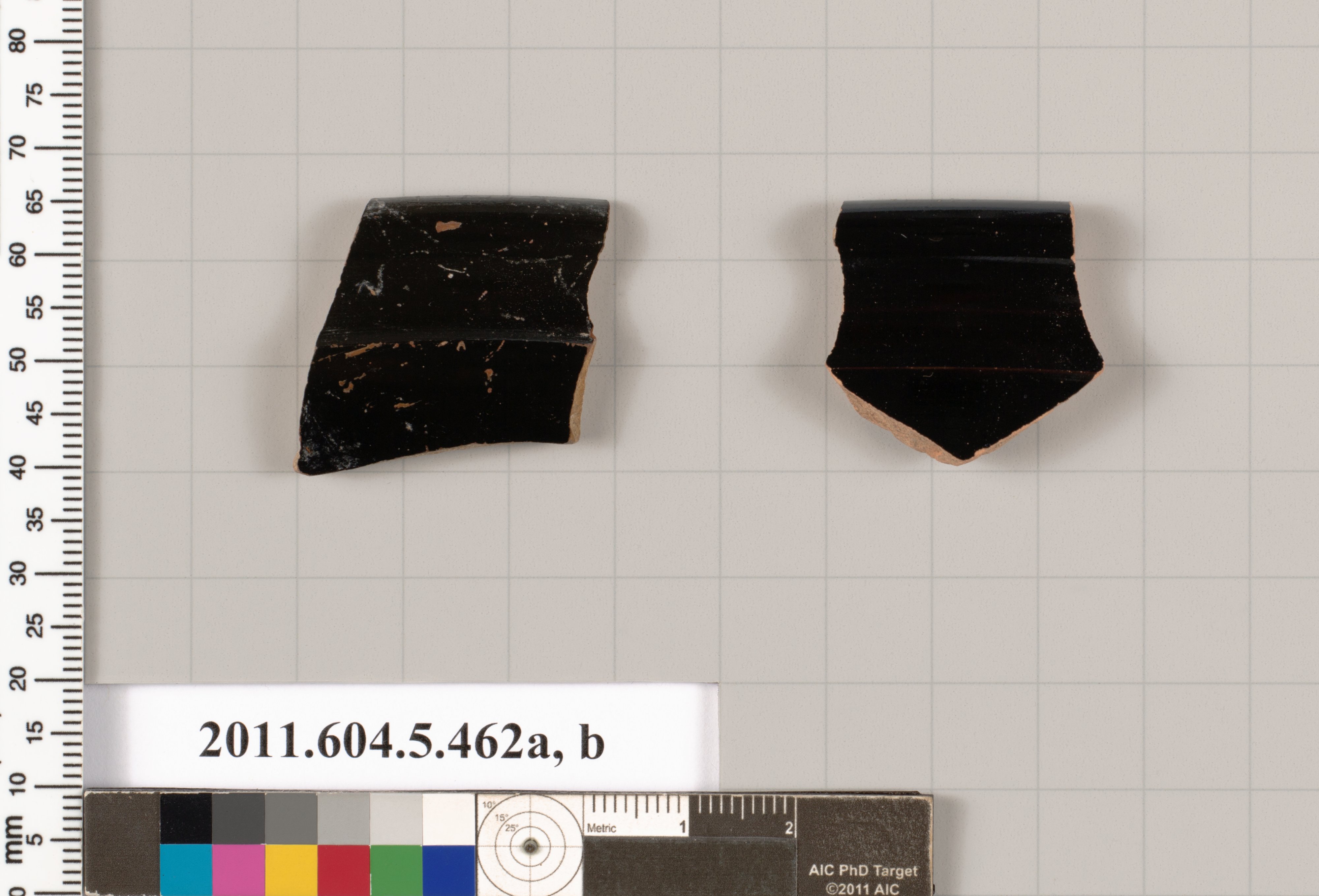
From Shattered Cups to Structured Silhouettes: The Terracotta Kylix as a Blueprint for 2026 Old Money Aesthetics
The Lauren Fashion Heritage Lab’s ongoing investigation into the genetic code of timeless luxury has unearthed a provocative dialogue between the fragile remnants of antiquity and the enduring principles of “Old Money” design. The museum artifact in question—a set of terracotta rim fragments from Attic *kylikes* (drinking cups), dating to the 6th–5th centuries BCE—may appear, at first glance, to be an unlikely muse for the 2026 collection. Yet, as the internal genetic code of our heritage research reveals, the deepest truths of aesthetic endurance often reside in the most broken of vessels. These shards, with their disciplined geometry, their earthy austerity, and their silent testimony to ritualized consumption, offer a profound architectural and philosophical foundation for the coming season’s silhouettes.
The Architecture of the Fragment: Discipline, Proportion, and the “Broken” Line
The primary formal lesson of the Attic kylix fragments lies in their rigorous structural economy. The kylix, a shallow, two-handled cup used for wine at symposia, was engineered for a specific social function: to be held, passed, and admired in a horizontal, convivial plane. Its rim, now fragmented, reveals a precise curvature—a continuous, unbroken arc that defined the vessel’s visual horizon. For the 2026 Old Money silhouette, this translates into a renewed emphasis on the shoulder line and the hemline as architectural horizons. Just as the kylix’s rim anchors the vessel’s entire form, the tailored jacket’s shoulder seam or the trousers’ waistband must function as a decisive, unyielding line of demarcation.
The fragments themselves, with their jagged edges, introduce a critical counterpoint: the aesthetic of the “broken” or interrupted line. In the internal genetic code, we speak of “秩序的威严” (the majesty of order). The kylix’s original order is now fractured, yet the remaining arcs retain an undeniable authority. This paradox informs a 2026 design principle: the silhouette should be fundamentally structured, but with intentional “breaks” that suggest a narrative of wear, of history, of life lived. Think of a double-breasted blazer where the lapel is cut with a slight, asymmetrical notch, or a wool trouser where the crease is not pressed to a knife-edge but allowed to soften into a gentle, lived-in fold. This is not sloppiness; it is the heritage of the fragment—a visual acknowledgment that true luxury is not pristine but patinated.
Materiality and Color: The Terracotta Palette as a Signifier of Restraint
The terracotta of the kylix is not a neutral beige; it is a specific, fired earth tone that carries the weight of Attic soil, the heat of the kiln, and the residue of wine. Its color is a statement of provenance. For the 2026 Old Money collection, this dictates a decisive move away from synthetic, high-saturation hues toward a palette grounded in mineral and organic origins. The “Heritage-Black” category of this analysis is not a negation of color but its deepest expression. Terracotta informs a black that is not flat or lifeless but one that carries undertones of burnt umber, of iron oxide, of the very earth from which the clay was pulled.
This material philosophy extends to fabric selection. The kylix’s surface, while fired to a smooth finish, retains a subtle tactile grain. The 2026 silhouette demands fabrics that echo this honest texture: a heavy, unglazed linen for a summer suit; a wool flannel with a visible, slightly napped surface for a winter overcoat; a silk that is not glossy but matte, with a dry, papery hand reminiscent of ancient scrolls. The goal is to create garments that, like the kylix fragments, feel inevitable in their materiality—as if they could not have been made from anything else. This is the antithesis of fast-fashion’s synthetic mimicry; it is the slow-fashion truth of the earth.
Ritual and Function: The Silhouette as a Vessel for Social Performance
The kylix was not merely a cup; it was a tool of social bonding and hierarchical display at the symposium. Its form facilitated a specific choreography of drinking, conversation, and intellectual exchange. The 2026 Old Money silhouette must similarly be understood as a vessel for social performance. The garments are not designed for passive display but for active engagement in the rituals of elite life: a boardroom negotiation, a private viewing at an auction house, a weekend at a country estate.
This functional imperative shapes the silhouette’s proportions. The kylix’s low, wide bowl and two handles suggest a form that is grounded and expansive. For 2026, this translates into a silhouette that emphasizes width at the shoulder and hip while maintaining a tapered, disciplined waist—a visual echo of the vessel’s stable, open form. The “Old Money” jacket, therefore, should have a slightly extended shoulder (the rim), a suppressed waist (the stem), and a hem that flares gently (the foot). This is not the aggressive power-shoulder of the 1980s but a more subtle, architectural presence—a silhouette that commands space without demanding attention.
Furthermore, the fragments’ condition reminds us that these vessels were used, broken, and discarded. The 2026 collection must embrace a philosophy of wearability and longevity. A garment should be designed to be worn for decades, to develop its own “fragments” of wear—a slight fray at the cuff, a softened knee, a faded shoulder from the sun. These are not defects but biographies in cloth, the material equivalent of the kylix’s broken rim, which tells a story of hands that held it, lips that touched it, and a life that it served.
Conclusion: The Eternal Resonance of the Broken Vessel
The terracotta kylix fragments, in their silent, shattered dignity, offer a masterclass in the aesthetics of permanence. They teach us that true luxury is not about novelty but about enduring form, honest material, and ritual function. For the 2026 Old Money silhouette, this means a return to the fundamental principles of tailoring: a precise shoulder, a clean line, a fabric that breathes with the wearer. It means embracing a palette drawn from the earth and a silhouette that echoes the stable, generous form of a vessel designed for shared celebration.
Just as the internal genetic code speaks of “跨文化挪用” (cross-cultural appropriation) as a creative force, the kylix fragments represent a cross-temporal appropriation—a borrowing from antiquity to inform the present. The 2026 collection will not be a costume drama of ancient Greece, but a quiet, scholarly translation of its core aesthetic principles into the language of modern luxury. The shattered cup, in its broken beauty, becomes the blueprint for a silhouette that is both timeless and timely—a garment that, like the kylix, is destined to be held, used, and eventually, to bear the beautiful scars of a life well-lived. This is the heritage of the fragment, and it is the future of Old Money style.
Heritage Lab Insight
Genetic Bridge: Archive node focusing on Heritage-Black craftsmanship.