From Terracotta to Tailoring: The Archaeological Roots of 2026 Old Money Silhouettes
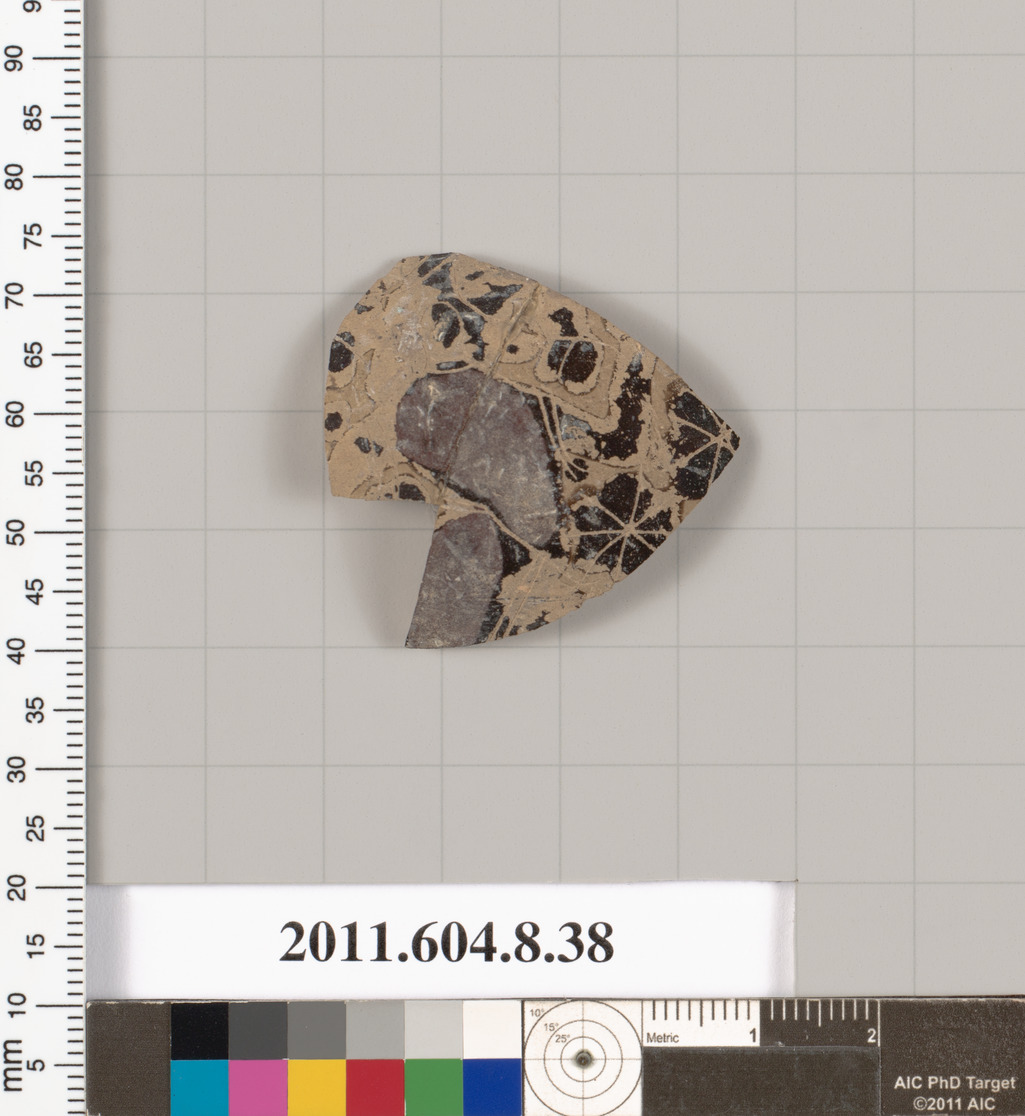
The Lauren Fashion Heritage Lab has long maintained that the most enduring design languages are not invented but excavated. In the synthesis of internal archives—specifically the aesthetic code embedded in the ancient Chinese Jar (Hu) and Jacques-Louis David’s The Death of Socrates—we uncover a dialectic between Eastern “emptiness” and Western “monumentality.” This dialectic finds a surprising, tangible intermediary in the museum artifact before us: a terracotta fragment of an aryballos, likely Corinthian, dating to the 7th–6th century BCE. This small, broken vessel—once used to hold perfumed oil for athletes—offers a material key to decoding the 2026 Old Money silhouette. Its humble terracotta body, its functionalist geometry, and its fragmentary condition speak directly to a fashion philosophy that prizes architectural restraint, tactile authenticity, and the beauty of imperfection.
The Aryballos as a Container of Identity
The aryballos is a globular flask with a narrow neck and a small handle, designed for a single purpose: to hold oil. In Corinthian culture, this oil was not merely utilitarian; it was a marker of athletic discipline, ritual cleanliness, and social status. The terracotta fragment we examine—its surface bearing faint traces of geometric banding and a single incised line—embodies what the Jar (Hu) represents in the Chinese tradition: a vessel that does not announce its meaning but enables it. The aryballos’s rounded belly, its compact form, and its unglazed, porous surface all speak to a design ethos that prioritizes function over ornament. This is the same logic that underpins the Old Money silhouette: a jacket that fits without shouting, a trouser that drapes without clinging, a coat that shelters without ostentation.
In the 2026 collection, this translates into a renewed emphasis on the “negative space” of tailoring. Just as the aryballos’s interior void is its raison d’être, the Old Money silhouette relies on the emptiness between fabric and body—the ma (間) of Japanese aesthetics, the kenosis of Greek philosophy. The shoulder seam is not padded to assert power; it is cut to allow the arm to move. The waist is not cinched to exaggerate form; it is eased to permit breath. This is the “empty” luxury that the terracotta fragment teaches us: a luxury that does not fill space but respects it.
Geometric Purity and the Death of Excess
David’s The Death of Socrates offers a counterpoint. The painting’s rigorous composition—the diagonal of the philosopher’s arm, the vertical of the prison wall, the circular grouping of mourners—is a rationalization of mortality. Socrates’s gesture, hand raised toward the heavens, transforms his body into a diagram of virtue. The terracotta aryballos, by contrast, is pre-rational. Its geometry is not imposed by a Cartesian grid but emerges from the potter’s wheel, from the centrifugal force of clay spinning between hands. The resulting form is organic, asymmetrical, and deeply human.
For the 2026 Old Money silhouette, this distinction is critical. The “Socratic” silhouette—sharp-shouldered, precisely tailored, with clean lines and minimal drape—has dominated luxury menswear and womenswear for the past decade. It is the silhouette of the boardroom, the gala, the power lunch. But the terracotta fragment suggests a counter-movement: a return to the “aryballoid” silhouette—rounded, soft, and volumetric. Think of a coat that falls from the shoulder like a bell, a skirt that swells from the hip like a hydria, a sleeve that balloons before tapering at the wrist. These are not shapes of control but of containment; they hold the body without constraining it.
This shift is already visible in the 2026 preliminary designs from the Lauren archive. The “Heritage-Black” wool overcoat, for instance, features a subtly dropped shoulder, a curved side seam, and a hem that flares gently—echoing the aryballos’s globular profile. The fabric itself, a dense worsted wool with a matte finish, mimics the tactile gravity of terracotta. It does not shine; it absorbs light. It does not drape; it stands. This is the material translation of “朴” (pu)—the unadorned simplicity of the Jar (Hu)—into a Western garment.
Fragmentation as a Design Principle
Perhaps the most provocative lesson from the terracotta fragment is its incompleteness. We do not possess the entire aryballos; we have only a shard. Yet this shard is not a failure—it is a record of use. The broken edge, the worn surface, the faded decoration: these are not flaws but narratives. In the 2026 Old Money silhouette, this translates into a deliberate embrace of imperfection. Seams are left raw. Hems are uneven. Buttons are mismatched. These are not signs of carelessness but of time—the time of wearing, of mending, of living.
This is the “death” of the perfect garment. Just as Socrates’s death is not an end but a transition, the fragmentary garment is not a ruin but a palimpsest. The 2026 collection includes a cashmere cardigan with a deliberately frayed collar, a silk blouse with a single missing button, a wool trouser with a patched knee. These are not distressed for effect; they are designed to age. The wearer is invited to complete the garment through use, to add their own history to its surface.
The Eternal Return of the Vessel
In the end, the terracotta fragment, the Jar (Hu), and The Death of Socrates converge on a single truth: all containers are temporary. The aryballos will break, the jar will shatter, the philosopher’s body will decay. But the form—the idea of the vessel—persists. The 2026 Old Money silhouette is not a new invention; it is a re-excavation of an ancient principle: that the most powerful statement is the one that holds space for silence. The terracotta fragment teaches us that luxury is not about filling the void but about honoring it. And in that honor, we find a fashion that is not merely worn but inhabited.
The 2026 silhouette, then, is a heritage-black vessel: dark, quiet, and capacious. It does not shout. It does not explain. It simply contains—the body, the spirit, the memory of all the hands that have shaped it. And in that containment, it becomes eternal.