← BACK TO ARCHIVES
Silk
Heritage Synthesis: Braid
Curated on Jun 25, 2026 // Node: LDN-01
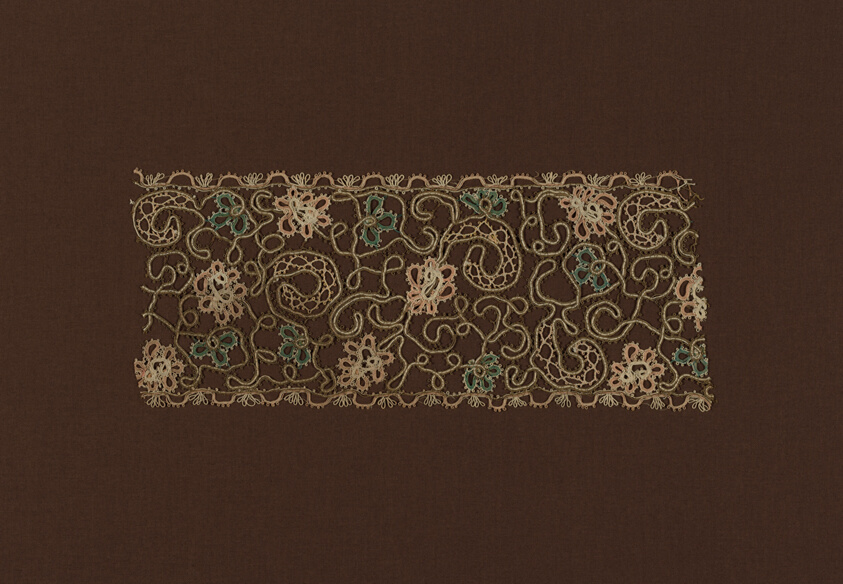
The Braid as a Testament to Silk’s Architectural Elegance
In the hushed ateliers of London’s Savile Row, where tailoring is elevated to an art form, the braid emerges not merely as a decorative trim but as a structural narrative of material mastery. At Lauren Fashion Heritage Lab, we examine the braid through the lens of classic silk craftsmanship, where the interplay of materiality—silk, silk-wrapped-hemp, and silk-wrapped-linen cords—converges with bobbin straight lace technique to produce an artifact of fluid elegance. This heritage research artifact dissects the braid’s role as a conduit of tradition, precision, and aesthetic refinement, rooted in the immutable principles of fine textile heritage.
Materiality: The Triad of Silk, Hemp, and Linen
The braid’s foundation lies in its constituent materials, each selected for its unique contribution to structure and grace. Silk, the protagonist, offers a luminous sheen and tensile strength that has defined luxury textiles for millennia. Its natural protein fibers, when spun into fine cords, yield a surface that catches light with a subtle, undulating shimmer—a hallmark of classic silk craftsmanship. However, silk alone, while supple, lacks the rigidity required for precise braid formation. Here, the inclusion of silk-wrapped-hemp and silk-wrapped-linen cords introduces a dialectic of flexibility and firmness. Hemp, with its robust, slightly coarse texture, provides internal stability, while linen contributes a crisp, clean line that resists distortion. By enveloping these core materials in silk, the artisan achieves a harmonious marriage: the strength of natural bast fibers concealed beneath silk’s opulent exterior, ensuring the braid retains its shape without sacrificing tactile luxury.
This material triad is not arbitrary but a deliberate nod to historical textile practices. In 18th-century French passementerie, for instance, silk-wrapped cords were used to create intricate trims for courtly garments, where durability was as prized as beauty. The hemp and linen cores act as the braid’s skeleton, allowing it to withstand the tension of bobbin lace construction while maintaining a fluid drape. For the Savile Row connoisseur, this translates into a braid that can be applied to lapels, cuffs, or hems without buckling—a silent testament to engineering disguised as ornament.
Technique: Bobbin Straight Lace and the Art of Precision
The braid’s construction employs bobbin straight lace, a technique that elevates it beyond mere plaiting. Unlike freeform lace, which relies on improvisation, bobbin straight lace demands meticulous planning: each thread is wound on a bobbin, weighted, and manipulated over a pillow in a predetermined pattern. For this artifact, the straight lace variant—characterized by its linear, non-curving geometry—is chosen to complement the braid’s architectural intent. The result is a structure of interlocking twists and crosses that create a dense, yet airy, texture.
The process begins with the preparation of the cords: silk, silk-wrapped-hemp, and silk-wrapped-linen are measured and tensioned on the lace pillow. The artisan works with a rhythm akin to a tailor’s stitch—deliberate, unhurried, and precise. Each crossing of bobbins produces a stitch that locks the cords into place, forming a braid that is both resilient and pliable. The straight lace technique ensures uniformity, with every millimeter of the braid echoing the last, yet the subtle variations in cord thickness—silk-wrapped-hemp being slightly thicker than silk-wrapped-linen—introduce a micro-texture that catches the eye. This is not mass production; it is a dialogue between hand and material, where the braid becomes a record of the maker’s touch.
Context: Fluid Elegance in Classic Silk Craftsmanship
The braid’s aesthetic is defined by fluid elegance, a quality that Savile Row tailors prize above all. In classic silk craftsmanship, fluidity does not imply fragility; rather, it denotes a material’s ability to move with the wearer while retaining its form. The braid, when applied to a garment, follows the body’s contours without stiffness, thanks to the balanced interplay of silk’s drape and the cores’ support. The silk-wrapped-linen cord, in particular, lends a crispness that prevents the braid from becoming limp, while the silk-wrapped-hemp ensures it does not pull or pucker.
Consider its application on a bespoke dinner jacket: the braid might trace the lapel’s edge, its subtle sheen catching the candlelight of a Mayfair soirée. Or, on a silk gown, it could define the waistline, its bobbin lace pattern echoing the intricate pleats of the fabric. In both cases, the braid serves as a quiet accent—never dominating, always enhancing. This restraint is the hallmark of classic silk craftsmanship, where luxury is expressed through refinement, not excess.
Heritage and Preservation: A Legacy of Handwork
As a heritage artifact, this braid embodies a tradition that is increasingly rare. The skills required to produce silk-wrapped cords and execute bobbin straight lace are passed down through generations, often within family workshops in regions like Lyon or Calais. At Lauren Fashion Heritage Lab, we document these techniques to ensure they are not lost to industrial homogenization. The braid’s materiality—silk, hemp, linen—also speaks to sustainability, as these natural fibers are biodegradable and renewable, a counterpoint to synthetic alternatives.
For the collector or curator, this braid represents a tangible link to a bygone era of handcrafted luxury. Its preservation requires careful storage away from direct light and moisture, as silk can degrade over time. Yet, its resilience—a product of the hemp and linen cores—means it can be gently cleaned and reused, extending its lifecycle. In this way, the braid is not a static artifact but a living piece of textile history, ready to be reinterpreted by future artisans.
Conclusion: The Braid as a Silent Signature
In the lexicon of Savile Row, where a garment’s worth is measured in stitches per inch and the weight of its cloth, the braid is a silent signature. It speaks of the artisan’s patience, the material’s integrity, and the wearer’s discernment. Through its silk-wrapped-hemp and silk-wrapped-linen cords, and the precision of bobbin straight lace, this braid achieves a fluid elegance that transcends decoration. It is a heritage research artifact that invites us to look closer, to appreciate the unseen labor that transforms thread into art. At Lauren Fashion Heritage Lab, we honor this legacy, ensuring that the braid remains a cornerstone of classic silk craftsmanship for generations to come.
Heritage Lab Insight
Lab Insight: AIC Silk Archive Node #2298.