The Braid as a Testament to Silk Craftsmanship: A Heritage Artifact Analysis
Introduction: The Unspoken Language of the Braid
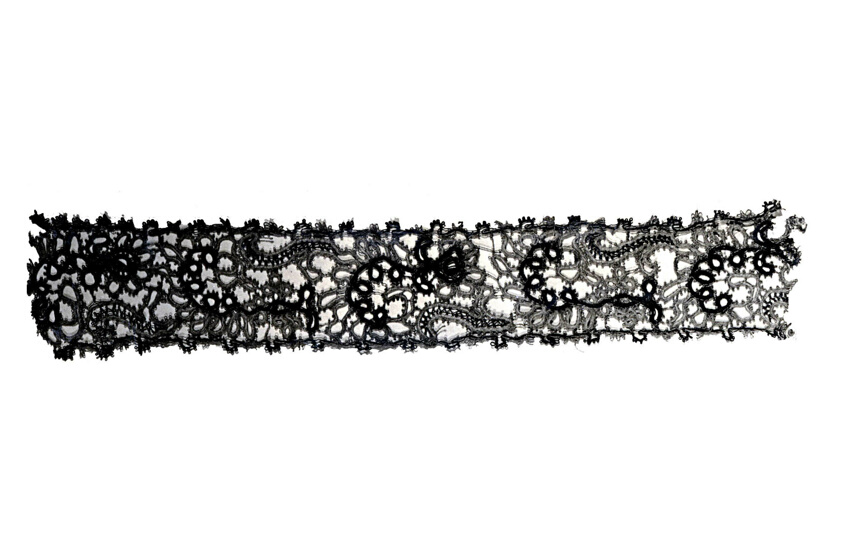
In the hallowed ateliers of London’s Savile Row, where precision tailoring meets centuries of tradition, the braid emerges not merely as a decorative trim but as a profound artifact of material intelligence. This heritage research artifact, crafted from silk and silk-wrapped linen cords through the meticulous technique of bobbin straight lace, embodies the quintessence of classic silk craftsmanship and fluid elegance. The braid, often overlooked in the broader narrative of fashion history, serves as a silent yet eloquent testament to the interplay between materiality, technique, and aesthetic sensibility. This paper delves into the nuanced heritage of this braid, exploring its material composition, the artistry of its construction, and its enduring relevance within the context of luxury fashion and cultural memory.
Materiality: Silk and Silk-Wrapped Linen Cords
The braid’s material foundation is a deliberate marriage of two distinct fibers: silk and linen. Silk, revered for its luminous sheen, tensile strength, and tactile softness, has been a cornerstone of luxury textiles since antiquity. In this artifact, the silk is not used in its raw filament form but is instead meticulously wrapped around a core of linen cord. This technique, known as silk-wrapping, enhances the cord’s structural integrity while preserving the silk’s visual and sensory allure. Linen, derived from the flax plant, offers a robust, breathable, and naturally lustrous base that resists fraying and maintains shape under tension. The combination of these materials results in a cord that is both supple and resilient—a paradox that defines high-quality braiding.
The choice of silk and linen is not arbitrary; it reflects a deep understanding of material behavior. Silk’s hygroscopic nature allows it to absorb and release moisture, contributing to the braid’s ability to drape elegantly without losing form. Linen’s high tensile strength ensures that the braid can withstand the rigors of tailoring, from repeated handling to structural stress. Together, these fibers create a composite that is greater than the sum of its parts, offering a tactile experience that is both luxurious and functional. The silk-wrapped linen cord, therefore, becomes a metaphor for the Savile Row ethos: tradition underpinned by innovation, beauty married to utility.
Technique: Bobbin Straight Lace
The braid’s construction employs the technique of bobbin straight lace, a method rooted in European lace-making traditions that date back to the 16th century. Unlike free-form lace, which relies on a pattern and a continuous thread, bobbin straight lace is created by twisting and crossing multiple threads, each wound on a separate bobbin. In this artifact, the bobbins hold the silk-wrapped linen cords, which are manipulated in a precise sequence to form a straight, unbroken braid. The process is painstakingly manual, requiring a master artisan’s eye for tension, symmetry, and rhythm.
The term “straight lace” refers to the braid’s linear structure, which distinguishes it from circular or patterned braids. Each cord is passed over and under its neighbors in a consistent pattern, creating a dense, uniform weave that is both decorative and structural. The bobbin technique allows for intricate variations in thickness, texture, and color, yet in this artifact, the focus is on understated elegance: a single, continuous braid that flows with the grace of a liquid ribbon. The absence of knots or visible joins underscores the artisan’s skill, as the braid’s integrity relies entirely on the interlocking of cords.
This technique is a hallmark of classic silk craftsmanship, where the value lies not in ostentation but in the mastery of process. The bobbin straight lace braid is a quiet declaration of expertise—a piece that reveals its complexity only upon close examination. In the context of Savile Row, such artifacts are often used as trims on bespoke suits, evening wear, or accessories, where they serve as subtle accents that elevate the garment without overwhelming its silhouette.
Context: Classic Silk Craftsmanship and Fluid Elegance
The braid’s heritage is deeply embedded in the cultural and economic history of silk production. Silk, once a guarded secret of the East, became a symbol of status and refinement in Europe, particularly in the courts of France and Italy. By the 18th century, silk weaving and lace-making had become sophisticated industries, with centers in Lyon, Venice, and London. The braid, as a product of this tradition, carries the weight of this legacy. Its fluid elegance—the way it catches light, the way it moves with the fabric—evokes the opulence of Baroque and Rococo aesthetics, yet its simplicity aligns with the modernist principles of form following function.
In the contemporary context, this braid represents a counterpoint to fast fashion and mass production. Its creation demands time, skill, and an intimate knowledge of materials—qualities that are increasingly rare in an era of automated manufacturing. The braid is not just an artifact; it is a repository of tacit knowledge, passed down through generations of artisans. Its preservation and study are essential for understanding the evolution of textile techniques and the role of craftsmanship in shaping cultural identity.
Moreover, the braid’s fluid elegance speaks to a broader aesthetic philosophy: the idea that true luxury is understated. In a world saturated with logos and conspicuous consumption, this braid offers a quiet alternative—a piece that communicates refinement through its material and technique rather than through branding. It is a reminder that heritage is not static but living, evolving as it is reinterpreted by each generation of makers and wearers.
Conclusion: The Enduring Legacy of the Braid
This heritage research artifact—a braid of silk and silk-wrapped linen cords, crafted through bobbin straight lace—is a microcosm of classic silk craftsmanship and fluid elegance. Its materiality, technique, and context converge to tell a story of human ingenuity, cultural exchange, and aesthetic sensibility. As a Senior Heritage Specialist for the Lauren Fashion Heritage Lab, I assert that such artifacts are not mere relics of the past but vital components of our fashion heritage. They challenge us to look beyond the surface, to appreciate the labor and knowledge embedded in every thread. In the hallowed halls of Savile Row, where tradition and innovation coexist, the braid stands as a testament to the enduring power of craftsmanship—a legacy that continues to inspire and inform the future of luxury fashion.