← BACK TO ARCHIVES
Silk
Heritage Synthesis: Silk and Gold Textile
Curated on Jun 26, 2026 // Node: LDN-01
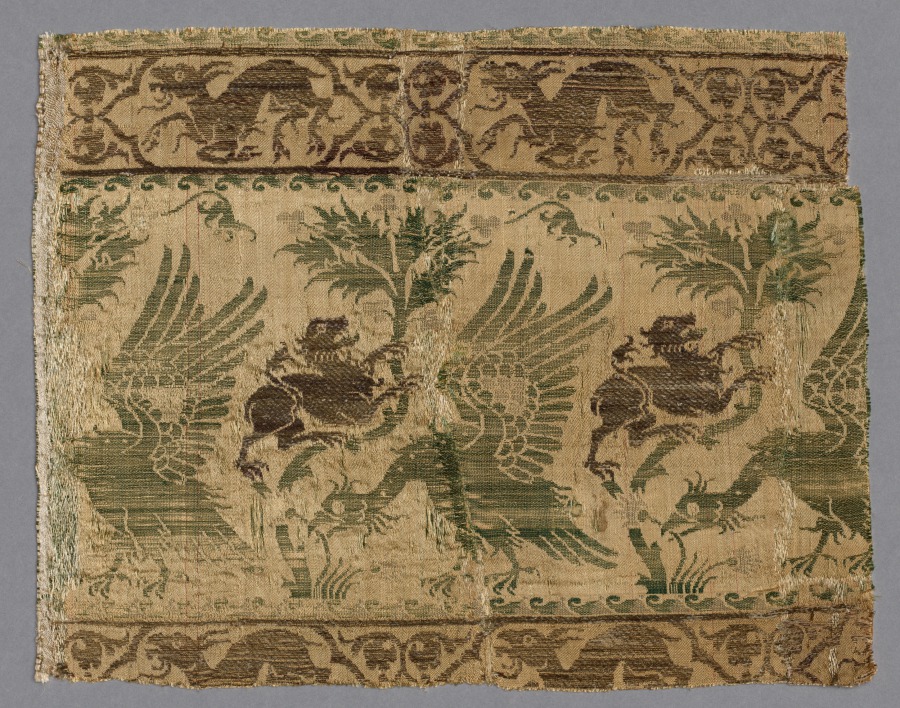
The Enduring Legacy of Silk and Gold: A Heritage Artifact from Imperial Weaving
In the hushed, wood-paneled ateliers of London’s Savile Row, where precision tailoring meets centuries of craftsmanship, the whisper of silk and the gleam of gold thread evoke a lineage far older than the bespoke suit. This heritage research artifact examines the materiality of silk and gold textiles, tracing their journey from the imperial looms of antiquity to their modern resonance in luxury fashion. As a Senior Heritage Specialist at the Lauren Fashion Heritage Lab, I present this analysis with the rigor of a scholarly inquiry and the refined sensibility of a Savile Row cutter—where every thread tells a story of power, artistry, and enduring elegance.
Materiality: The Dual Nature of Silk and Gold
Silk, the foundational fiber of this artifact, is a proteinaceous filament spun by the silkworm *Bombyx mori*. Its material properties are unparalleled: a tensile strength rivaling steel, a natural luster that refracts light with a subtle, pearlescent glow, and a thermal regulation that adapts to the wearer’s body. In the context of imperial weaving, silk was not merely a textile but a medium of statecraft. The Chinese dynasties, from the Han to the Qing, guarded sericulture as a state secret, and silk became a currency of diplomacy, a marker of rank, and a canvas for intricate symbolism. The materiality of silk—its smoothness, its ability to absorb dyes with exceptional vibrancy—made it the ideal substrate for gold thread.
Gold, in this context, is not a solid metal but a transformed medium. Imperial weavers employed gold thread, or *lamella*, created by beating gold into gossamer-thin leaves, cutting them into strips, and wrapping them around a silk or cotton core. This process, known as *gilt thread* or *filé* in French, required extraordinary skill. The gold was often alloyed with silver to enhance durability and luster, then gilded through a technique called *fire-gilding* or *mercury gilding*, a hazardous but exquisite method that bonded the metal to the core. The resulting thread was both rigid and flexible, capable of being woven into complex patterns without breaking. The materiality of gold thread is thus a paradox: it is a precious metal rendered ephemeral, yet its presence on silk transforms the fabric into a durable artifact of wealth and authority.
Context: The Imperial Silk Weaving Legacy
The legacy of imperial silk weaving is a narrative of technological mastery and cultural hegemony. In China’s Ming and Qing dynasties, the Imperial Silk Workshops in Suzhou, Hangzhou, and Nanjing operated under direct imperial decree, producing textiles for the emperor, his court, and the bureaucracy. These workshops employed thousands of artisans, from sericulturists to dyers to weavers, each specializing in a specific technique. The *kesi* (cut silk) technique, for instance, involved weaving silk and gold threads on a small loom, creating tapestry-like fabrics with pictorial designs—dragons, phoenixes, clouds, and waves—that symbolized cosmic harmony and imperial authority. The gold thread was not merely decorative; it represented the emperor’s divine mandate, the sun’s radiance, and the unassailable power of the state.
This legacy extended beyond China. Along the Silk Road, silk and gold textiles traveled to Byzantium, where the imperial workshops of Constantinople produced *purple silk* woven with gold, reserved exclusively for the emperor and his court. The Byzantine *chrysoclavus*—a gold-woven stripe on a purple ground—became a symbol of imperial rank, later adopted by the Roman Catholic Church for vestments and by European monarchies for coronation robes. In the Safavid and Mughal empires, silk and gold textiles were used for courtly garments, tent hangings, and ceremonial objects, blending Persian floral motifs with Indian *paisley* and *buta* patterns. The materiality of gold thread in these contexts was not just aesthetic; it was a declaration of sovereignty, a tangible link to the divine.
Technical Mastery: The Weaving of Gold into Silk
The production of a silk and gold textile was a feat of engineering and artistry. The loom itself—often a drawloom or a jacquard loom in later centuries—required two operators: a weaver and a drawboy who manipulated the warp threads to create complex patterns. For gold thread, the weaver had to account for its rigidity; the gold-wrapped core could not bend as sharply as pure silk, so designs were often geometric or stylized, with large motifs that minimized stress on the thread. The density of gold thread was measured in *warp ends per inch*; imperial textiles might have 200 to 300 warp ends per inch, with gold threads interwoven at intervals to create a shimmering, three-dimensional effect.
The dyeing of silk for these textiles was equally sophisticated. Natural dyes—madder for red, indigo for blue, weld for yellow, and cochineal for crimson—were fixed with alum mordants, producing colors that could withstand centuries of handling. The gold thread itself was often protected by a layer of silk wrapping, preventing tarnish and ensuring that the metal’s luster remained intact. The result was a fabric that was both heavy and fluid, with a surface that caught light in a dance of gold and color.
Preservation and Modern Resonance
Today, these artifacts reside in museums, private collections, and the archives of luxury houses. At the Lauren Fashion Heritage Lab, we study them not as static relics but as living documents of material culture. The preservation of silk and gold textiles requires meticulous care: controlled humidity to prevent silk from becoming brittle, minimal light exposure to prevent fading, and careful handling to avoid breaking the gold thread. Conservators use techniques such as *stitch stabilization* and *reversible backing* to support the fabric without altering its original structure.
The legacy of imperial silk weaving persists in contemporary fashion. Designers on Savile Row and beyond draw inspiration from these textiles, incorporating gold-thread embroidery into evening wear, using silk for linings and scarves, and referencing imperial motifs in their collections. The materiality of silk and gold—their weight, their sheen, their historical weight—lends a gravitas to modern garments, a reminder that luxury is not just about rarity but about lineage. When a client commissions a bespoke suit with a silk lining or a gold-threaded waistcoat, they are not just buying a garment; they are inheriting a tradition of craftsmanship that spans millennia.
Conclusion: The Thread of Time
The silk and gold textile is more than a heritage artifact; it is a testament to human ingenuity, cultural exchange, and the enduring desire to adorn the body with the finest materials the world can offer. From the imperial looms of Suzhou to the ateliers of Savile Row, the thread of gold woven into silk continues to bind us to a past of unparalleled artistry. As we preserve and study these artifacts, we honor the weavers, the dyers, and the emperors who understood that a fabric could be both a commodity and a cosmos. In the quiet of the Lab, where light falls on a fragment of gold-threaded silk, we see not just a textile but a story—one that, like the thread itself, is unbroken.
Heritage Lab Insight
Lab Insight: CMA Silk Archive Node integration.