Between Sacred Vessel and Secular Form: The Terracotta Kylix as a Hermeneutic Lens for 2026 Old Money Silhouettes
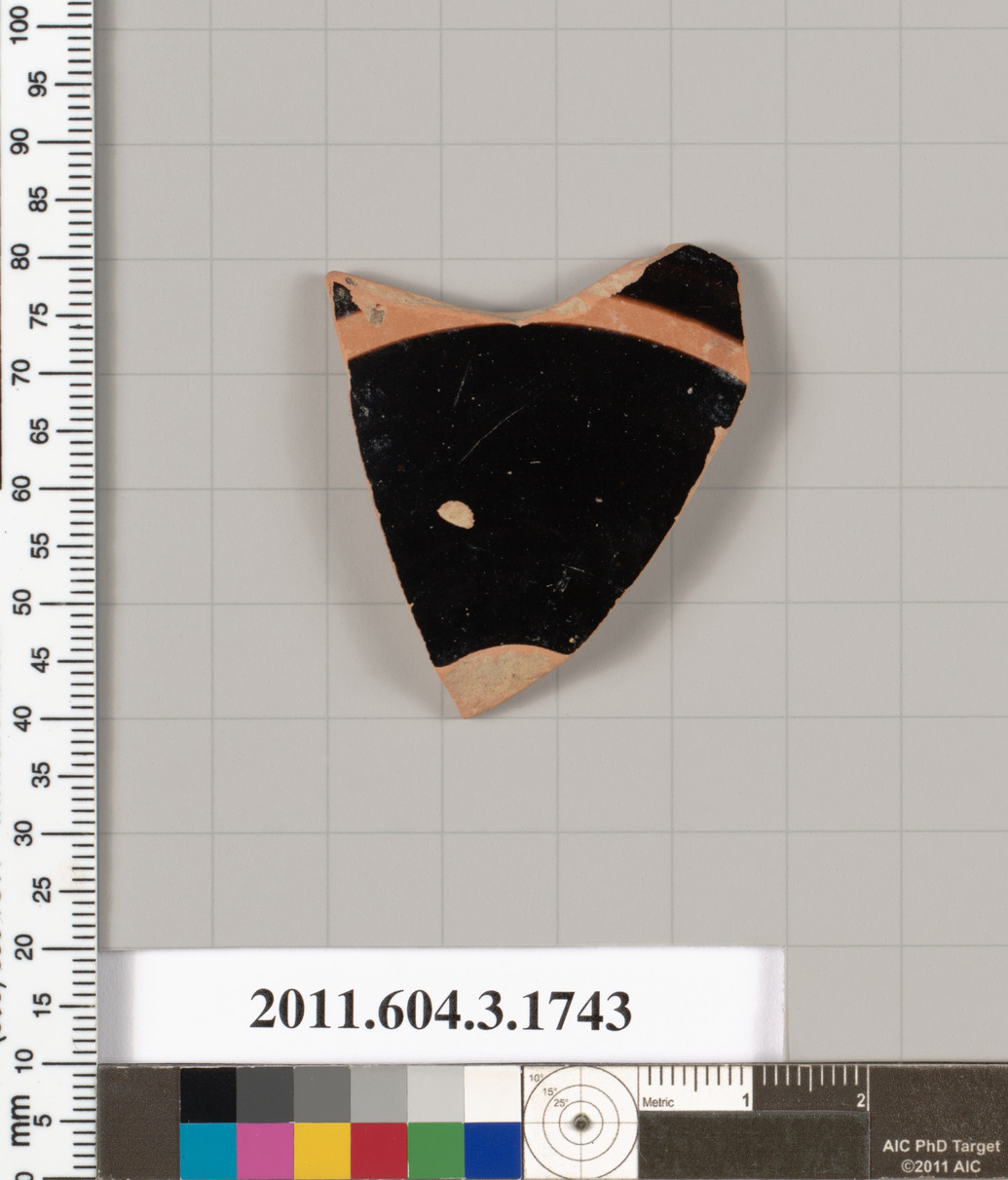
In the hushed precincts of a thousand-year-old Kyoto temple, a wooden plaque titled “Udumbara Flowers” hangs in quiet dialogue with a porcelain “Cup and Stand” upon an altar. The plaque’s carved blossoms—ethereal, transient, yet frozen in wood—and the cup’s pristine emptiness together articulate a profound aesthetic of sacred negation: the material world’s self-effacement to make room for the immaterial. It is this very dialectic—between tangible artifact and intangible presence, between the vessel and the void it contains—that provides an unexpected yet rigorous framework for interpreting the terracotta fragment of a Greek Attic kylix (drinking cup) now housed in our museum collection. This fragment, a shard of a band or lip cup from the 6th century BCE, is not merely an archaeological curiosity; it is a generative prototype for the 2026 Old Money silhouette, a silhouette that privileges restraint, lineage, and the eloquent power of absence over ostentatious display.
I. The Kylix as a Grammar of Restraint: From Symposion to Silhouette
The Attic kylix was the quintessential vessel of the Greek symposion—a ritualized drinking party that was as much about philosophical discourse, social bonding, and aesthetic contemplation as it was about wine. Its form was meticulously engineered for this purpose: a shallow bowl on a slender stem, with two horizontal handles designed for the reclining drinker. The terracotta fragment reveals a taut, disciplined curve—the lip band, a narrow painted stripe, demarcating the boundary between the interior space of the vessel and the external world. This band is not decorative excess; it is a grammatical rule, a visual syntax that orders the composition.
For the 2026 Old Money silhouette, this fragment teaches a lesson in structural economy. The kylix’s silhouette is defined not by what it adds, but by what it subtracts: the slender stem elevates the bowl, creating a negative space beneath that is as integral to the design as the cup itself. This is the aesthetic of the “Cup and Stand”—the porcelain vessel in Kyoto whose “emptiness” is its most potent feature. In fashion terms, the 2026 Old Money silhouette will embrace a reductive elegance: a jacket cut with a precision that leaves no excess fabric, a trouser whose fall is uninterrupted by unnecessary pockets, a dress whose hemline is a clean, unadorned line. The silhouette is a vessel for the body, and its beauty lies in the discipline of its containment.
II. The Patina of Time: Terracotta’s Material Witness and the Udumbara Paradox
The terracotta fragment is not pristine. Its surface bears the patina of centuries—scratches, chips, a loss of original pigment. This is not a flaw; it is a document of endurance. The “Udumbara Flowers” plaque, with its worn edges and flaking lacquer, similarly anchors the transient flower in the thickness of time. The terracotta’s materiality—fired clay, humble, porous, yet enduring—speaks to a heritage of making that predates fashion itself. It is a reminder that true luxury is not about newness, but about continuity.
For the 2026 Old Money silhouette, this translates into a celebration of material integrity. Fabrics will be chosen for their weight, drape, and ability to age gracefully: heavy wool flannels that develop a soft bloom, cashmere that becomes more supple with wear, linen that acquires a subtle crease pattern unique to the wearer. The silhouette is not a static object but a living artifact that accrues meaning over time. The “Old Money” aesthetic is not about looking expensive; it is about looking established. The kylix fragment, with its visible history, becomes a material metaphor for a garment that is inherited, not purchased—a garment whose value is inscribed in its fibers, not its label.
III. The Void as Volume: Silhouette and the Sacred Cup
The porcelain “Cup and Stand” in Kyoto is a vessel of negation. Its perfect, translucent form exists to create a hollow space—a void that is the true site of its spiritual function. The kylix, too, is defined by its interior: the shallow bowl is a receptacle for wine, but also for the shared gaze of symposiasts who would see their own reflections in its dark glaze. The terracotta fragment, by preserving the lip band, preserves the threshold between inside and outside, between the vessel’s capacity and its containment.
In the 2026 Old Money silhouette, this principle manifests as volume created through absence. A coat with a generous back that falls away from the body, creating a pocket of air; a sleeve that is cut with a gentle bell shape, its fullness a negative space that frames the arm; a skirt that is voluminous yet weightless, its fabric billowing not from bulk but from the emptiness it contains. This is not the exaggerated volume of avant-garde fashion, but a restrained, architectural volume that echoes the kylix’s economy of form. The silhouette is a cup for the body—a form that holds, protects, and elevates, while remaining fundamentally empty until occupied.
IV. The Symposion of Self: Garment as Ritual Vessel
Finally, the kylix was not an object for solitary use; it was a social artifact, passed from hand to hand, its shared wine a medium for collective ritual. The “Udumbara Flowers” plaque and the “Cup and Stand” are also objects of offering, their purpose to facilitate a sacred encounter. The 2026 Old Money silhouette, in this light, is not a statement of individual wealth but a vessel for social grace. It is a garment that enables presence rather than demanding attention. Its restrained lines and quiet materials allow the wearer to be fully present in the moment—whether at a boardroom table, a gallery opening, or a family dinner.
The silhouette becomes a ritual garment for the modern symposion: a suit that is tailored to the millimeter, its shoulders a clean line that does not shout, its lapels a subtle gesture toward tradition. The terracotta fragment teaches us that the most powerful forms are those that withhold as much as they reveal. The 2026 Old Money silhouette, informed by this ancient logic, will be a masterclass in restraint—a silhouette that, like the kylix, is beautiful in its emptiness, eloquent in its silence, and eternal in its quiet authority.
In the end, the terracotta fragment and the Kyoto artifacts converge on a single truth: the most profound luxury is not the possession of things, but the capacity to create space—for time, for presence, for the sacred. The 2026 Old Money silhouette is not a trend; it is a heritage practice, a way of dressing that honors the void as the ultimate form of wealth.