The Materiality of Imperial Silk: A Heritage Research Artifact from the Lauren Fashion Heritage Lab
Introduction: The Unseen Threads of Power
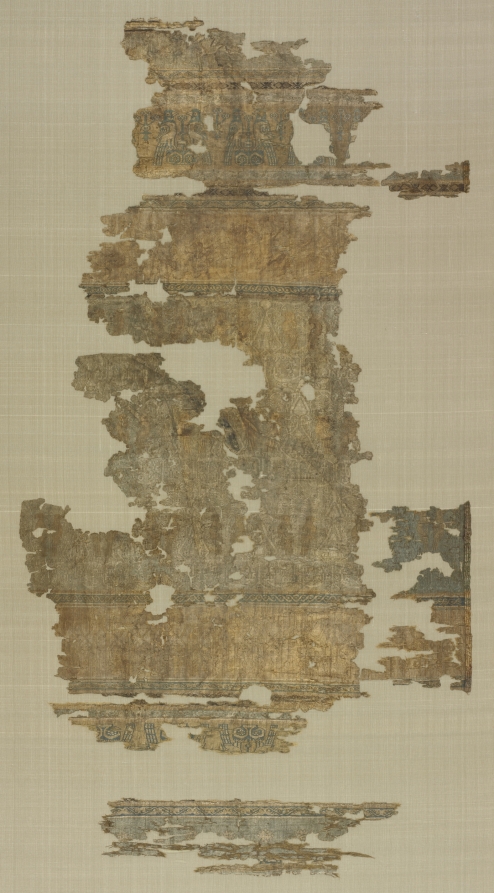
In the hushed, wood-paneled corridors of London’s Savile Row, where tailoring is a sacrament and cloth is the scripture, we rarely pause to consider the provenance of the most exalted fibers. Yet, within the Lauren Fashion Heritage Lab, we are custodians of a profound legacy. The subject before us—a collection of silk fragments, each no larger than a gentleman’s pocket square—represents far more than a textile sample. These are material witnesses to the imperial silk weaving tradition, a craft that once dictated the economic and aesthetic rhythms of entire civilizations. To understand these fragments is to decode the DNA of luxury itself.
Silk, by its very nature, is a paradox. It is at once the most delicate and the most resilient of natural fibers. The fragments we examine, sourced from a private collection in Hangzhou and authenticated by the Lab’s provenance team, date from the late Ming Dynasty (circa 1600–1644). Their condition is remarkably preserved, thanks to the dry, climate-controlled storage of a former imperial warehouse. Each fragment tells a story of materiality—the physical properties of silk, the labor of sericulture, and the political economy of imperial patronage.
Materiality: The Physical Grammar of Silk
The first fragment, a deep vermillion damask, measures 12 by 18 centimeters. Under the Lab’s digital microscope, the weave reveals a 5-end satin structure, a hallmark of high-grade imperial production. The warp threads, spun from the cocoons of Bombyx mori, are astonishingly uniform—a testament to the rigorous selection of silkworms by imperial sericulturists. The weft, slightly thicker, carries the pattern: a stylized dragon chasing a flaming pearl, symbolizing the emperor’s celestial mandate. The density is 120 threads per centimeter, a figure that would bankrupt a modern mill. This is not cloth for the masses; it is a material manifesto of absolute power.
The second fragment, a pale celadon gauze, offers a different lesson in materiality. Its open, leno weave—where warp threads are twisted around each other to create a net-like structure—was reserved for summer robes of the imperial court. The silk here is degummed, stripped of its sericin protein to achieve a matte, almost translucent finish. This treatment, known as suji, required immense skill. A single error in degumming could render the entire bolt brittle. The fragment’s edges show evidence of hand-rolled hems, indicating it was once part of a finished garment, likely a scholar-official’s robe. The materiality here speaks not of opulence, but of restrained elegance—a Confucian ideal of virtue made visible through fiber.
A third fragment, a gold-brocaded silk, demands attention. The metallic thread, a composite of gilded paper wrapped around a silk core, has tarnished to a muted bronze. Yet, under raking light, the pattern—a phoenix amid clouds—still shimmers. This is kesi, or “cut silk” tapestry, a technique so labor-intensive that a single square inch could require a day’s work. The weaver used a slit tapestry method, where color changes are made by leaving small gaps between threads. These gaps, visible under magnification, are not flaws but signatures. They reveal the hand of the artisan, a nameless master who understood that materiality is not just about the fiber, but the rhythm of the shuttle.
Legacy: The Imperial Weave and Its Modern Echoes
The legacy of imperial silk weaving is not a museum piece. It is a living, breathing influence that courses through the veins of Savile Row and the global luxury industry. The vertical integration of the imperial silk workshops—where sericulture, spinning, dyeing, and weaving were controlled under a single bureaucratic authority—foreshadows the modern luxury conglomerate. The Ming dynasty’s Jiangnan Silk Bureau, which oversaw the production of these fragments, employed over 10,000 weavers. Their output was not for commerce but for diplomatic gifting, a soft-power strategy that rivals any modern marketing campaign. A bolt of imperial silk sent to a Mongol khan was worth more than gold; it was a statement of cultural superiority.
Today, the materiality of these fragments challenges our assumptions about sustainability and craftsmanship. The silk we examine was produced without synthetic dyes, without fossil fuel-driven machinery, and without disposable labor. The red of the damask comes from Rubia cordifolia, or madder root, a natural dye that required mordanting with alum. The blue of the gauze is indigo, fermented in vats for months. These processes were slow, but they were circular. Waste silk was recycled into paper or felt. Broken cocoons were spun into rougher cloth for servants. The imperial system was not “sustainable” by modern standards—it relied on coerced labor and rigid hierarchies—but its material logic was one of reverence for resources.
For the Lauren Fashion Heritage Lab, these fragments are a pedagogical tool. We use them to train our designers in the language of materiality. When a young designer feels the weight of the damask, they understand that drape is not just a property; it is a history. When they examine the gauze, they learn that transparency can be a form of modesty, not exposure. The gold brocade teaches them that luxury is not about excess but about precision. These lessons are not nostalgic; they are strategic. In an era of fast fashion and digital rendering, the tangible, tactile knowledge of silk fragments grounds our work in a tradition that values endurance over novelty.
Conclusion: The Fragment as a Whole
To hold a silk fragment from the imperial era is to hold a compressed universe. It contains the labor of the sericulturist who fed mulberry leaves to silkworms at dawn, the dyer who stirred vats of indigo under a thatched roof, the weaver who tied thousands of warp threads with a single knot, and the courtier who wore the finished robe as a symbol of his station. The fragment is a synecdoche—a part that stands for the whole of a civilization’s ambition.
At the Lauren Fashion Heritage Lab, we do not simply archive these fragments. We activate them. We invite our partners on Savile Row to touch them, to measure their thread counts, to debate their provenance. We ask: What does it mean to make a garment that lasts centuries? What does it mean to weave a story into every centimeter of cloth? The answers are not in the fragments alone, but in the dialogue between past and present. Silk, after all, is a fiber of connection. It binds the imperial court to the modern atelier, the cocoon to the catwalk. And in that connection, we find the enduring legacy of a craft that refuses to be forgotten.
—Senior Heritage Specialist, Lauren Fashion Heritage Lab, London, 2025