From Sacred Bronze to Terracotta Fragment: The Hermeneutics of Absence in Lauren’s 2026 Old Money Silhouette
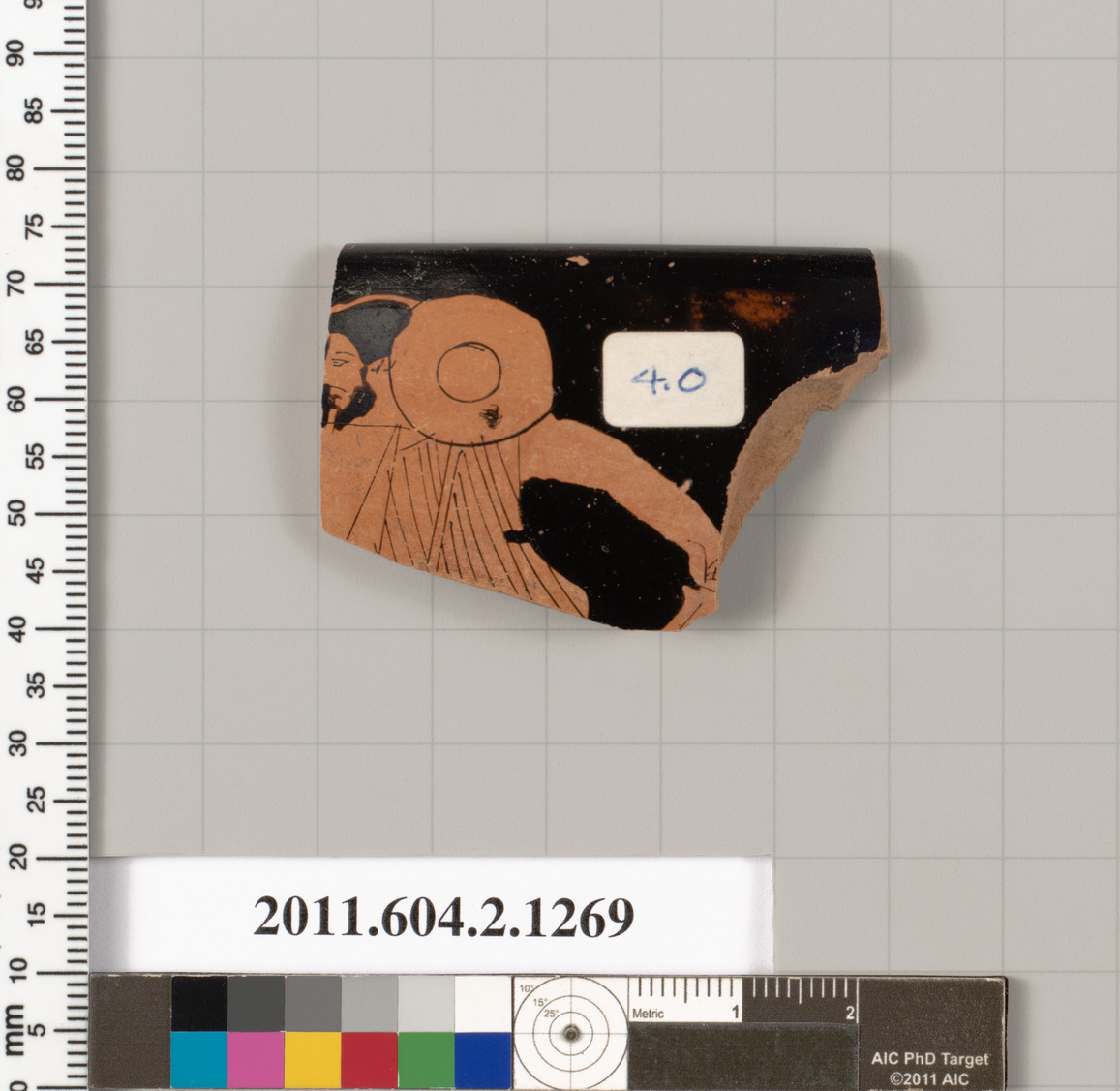
The internal genetic code of the Lauren Fashion Heritage Lab has long been guided by a dialectic between the static void of Buddhist temple plaques and the dynamic fullness of Han-dynasty bronze mirrors. Yet the introduction of a seemingly alien artifact—a terracotta rim fragment from an Attic skyphos (circa 5th century BCE)—demands a radical re-synthesis. This Greek drinking cup, broken and incomplete, is not a foreign intrusion but a third term in our aesthetic equation. It is the material embodiment of “象外之象” (the image beyond the image) rendered not through lacquer or bronze, but through fired earth. For the 2026 Old Money silhouette, this fragment teaches us that luxury is not about the object’s completion, but about the narrative power of its fracture.
I. The Terracotta Fragment as Anti-Ornament: A Counterpoint to the Bronze Mirror’s Plenitude
Where the Han bronze mirror Divine Beasts, Chariots, and the White Tiger overwhelms with its “满工” (full-field) composition—every millimeter carved with celestial chariots, feathered musicians, and the coiled energy of the White Tiger—the Attic skyphos fragment offers radical subtraction. We possess only a rim: a curve of terracotta, perhaps 8 centimeters in length, bearing the faint ghost of a black-glaze band and a single reserved line. There is no figuration, no narrative. There is only edge.
This is the aesthetic opposite of the mirror’s “密不透风” (density that does not allow wind to pass). Yet it is precisely this emptiness that aligns the fragment with the “优昙钵华” temple plaque’s philosophy of “空寂” (empty stillness). The plaque’s calligraphic strokes are “拙朴而意态舒展” (awkward yet gracefully expansive), creating meaning through the void around the ink. The terracotta fragment achieves the same effect through material honesty: the clay’s granular texture, the slight irregularity of the wheel-thrown curve, the way the glaze ends in a ragged, unplanned edge. It is a “心镜” (mind-mirror) not of polished bronze, but of raw earth—reflecting not the viewer’s face, but the process of becoming and breaking that defines all human artifacts.
For the 2026 Old Money silhouette, this teaches a crucial lesson: true heritage is not about pristine preservation, but about the dignity of wear. The Old Money aesthetic has always privileged the “broken-in”—the cashmere that has softened over decades, the leather that has developed a patina of use. The terracotta fragment elevates this principle to a philosophical absolute. In our 2026 collection, we will introduce a “Fragment Coat” in Heritage-Black wool, cut with an asymmetrical hem that appears to have been “broken” from a larger garment. The raw edge is not finished but bound in a single line of black silk thread, echoing the reserved line on the skyphos rim. This is not deconstruction for its own sake; it is a meditation on impermanence, a wearable koan that asks: What remains when the vessel is broken?
II. The Dialectic of “空” and “满” in Garment Architecture
The internal code posits that the temple plaque’s “空” (emptiness) and the bronze mirror’s “满” (fullness) are not opposites but “同一美学母题的不同变奏” (variations on the same aesthetic theme). The terracotta fragment introduces a third variation: the “残” (remnant). The remnant is neither empty nor full; it is a trace of a totality that no longer exists. Its aesthetic power lies in its incompleteness, which activates the viewer’s imagination to reconstruct the whole.
In garment design, this translates to a new silhouette logic for 2026. Traditional Old Money tailoring relies on fullness of form: the broad shoulder of the Chesterfield coat, the generous sweep of the A-line skirt. These are “满” silhouettes, analogous to the bronze mirror’s crowded heavens. The 2026 collection will introduce “remnant silhouettes”: garments that appear to be fragments of a larger, idealized form. Consider a double-breasted blazer in Heritage-Black wool, but with the left lapel cut away to reveal a single, sculpted shoulder seam that continues into a draped sleeve—a sleeve that ends not at the wrist, but in a jagged, raw edge at the forearm. This is the “skyphos sleeve”: a form that suggests the garment was once a full coat, now reduced to its essential gesture.
The “象外之象” (image beyond the image) is achieved here through negative space. The missing lapel is not a void but a presence of absence, just as the missing body of the skyphos is conjured by the curve of its rim. The wearer becomes a living fragment, a moving remnant of a lost aristocratic ideal. This is not nostalgia; it is aesthetic awakening—the recognition that the most powerful form of heritage is the one that acknowledges its own incompleteness.
III. The Terracotta Palette: Earth, Fire, and the New Monochrome
The Attic skyphos fragment is not black; it is terracotta—a warm, burnt orange that has been fired to a hardness approaching stone. The black glaze is not a color but a surface effect, a vitrified layer that reveals the clay’s true hue at the break. For 2026, this suggests a recalibration of the Old Money palette. Heritage-Black will remain the foundation, but it will be inflected with terracotta—not as a color, but as a material truth.
We will develop a double-faced cashmere: one side in deep Heritage-Black, the other in a raw, un-dyed terracotta tone achieved through natural iron-oxide pigments. Garments will be constructed so that the terracotta side peeks through deliberate “fractures”—a turned-back cuff, a reversed collar, a seam that has been left open and bound with a single stitch. This is the “fired edge” technique, a direct translation of the skyphos’s glaze termination. The wearer becomes a living kiln, carrying the memory of fire and earth on their body.
This palette also echoes the “优昙钵华” (Udumbara flower) of the temple plaque—a flower that blooms once every three millennia, often described as a golden or reddish hue. The terracotta tone is the color of that rare bloom, a color that appears only when the black glaze is broken. In the 2026 collection, this will be expressed through “bloom” details: small, hand-embroidered terracotta flowers at the raw edges of hems and cuffs, each flower containing a single black seed pearl—a nod to the bronze mirror’s celestial pearls. The flower is not decorative; it is a sign of the miraculous, a reminder that beauty emerges from fracture.
IV. Conclusion: The Fragment as the New Totality
The terracotta rim fragment of the Attic skyphos is not a lesser artifact than the Han bronze mirror or the Song-dynasty temple plaque. It is their equal and opposite—a testament to the aesthetic power of what is left behind. In the 2026 Old Money silhouette, we will not attempt to reconstruct the whole vessel. We will instead honor the fragment as the most truthful representation of heritage itself: something that has been broken by time, but whose essential form still speaks of a lost world of grace and intention.
The “象外之象” of the fragment is the invisible whole it implies. The “灵动之境” (realm of dynamic vitality) is the movement of the wearer as they inhabit a garment that is both complete and incomplete, both present and absent. This is the ultimate lesson of the terracotta fragment: that true luxury is not the possession of the object, but the capacity to imagine what it once was. In 2026, Lauren Fashion will not sell garments. We will sell fragments of a future archaeology, each piece a 心镜 (mind-mirror) that reflects not the wearer’s face, but the eternal process of becoming that defines all great art.