The Silent Vessel: Terracotta Fragment as Ontological Blueprint for the 2026 Old Money Silhouette
Introduction: The Paradox of Presence and Absence
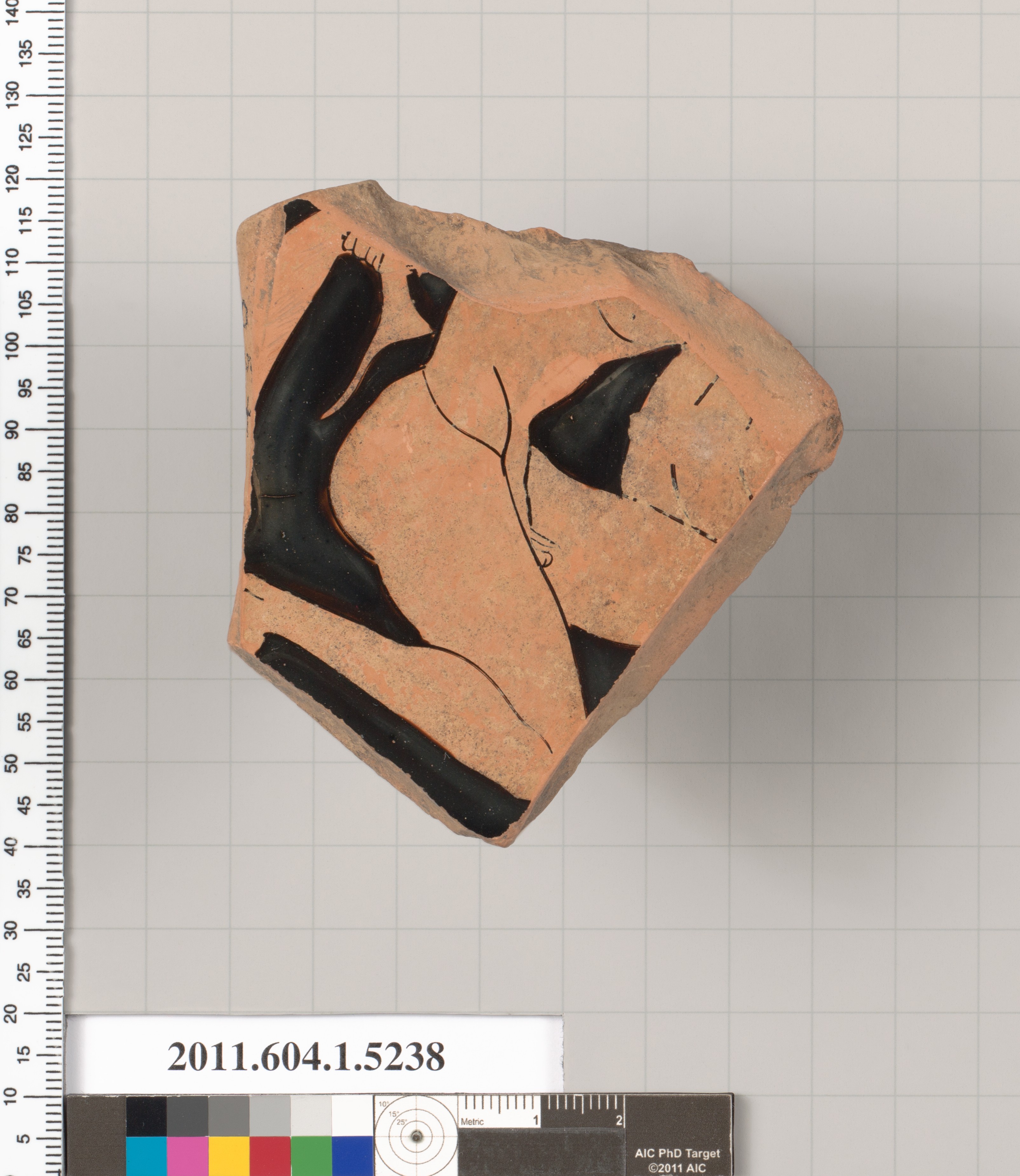
The Terracotta fragment of a kylix (drinking cup) from Attic Greece—a shard of fired clay, once part of a vessel for wine or ritual libation—presents a profound challenge to the fashion historian. Unlike the grand narrative painting of Jacques-Louis David’s *The Death of Socrates*, which commands attention through theatrical composition and moral clarity, this fragment whispers. It is broken, incomplete, its original function now only inferred. Yet within this silence lies the genetic code for the 2026 Old Money silhouette. The kylix does not depict death; it *contains* the memory of use, of time, of absence. For the Lauren Fashion Heritage Lab, this artifact becomes a masterclass in how the most powerful expressions of heritage are not those that declare, but those that hold space.
David’s Socrates, reaching for the hemlock with one hand and pointing to the heavens with the other, embodies the Western tradition of death as a heroic, rational act. The painting is a complete statement, a closed narrative. The kylix fragment, by contrast, is an open question. Its value lies not in what it shows, but in what it *does not* show: the missing handle, the faded glaze, the empty interior where wine once swirled. This dialectic between the “fully present” (David) and the “silently suggestive” (the kylix) provides the theoretical foundation for the 2026 Old Money aesthetic, which rejects ostentation in favor of a quiet, almost archaeological presence.
The Aesthetics of the “Empty” Garment
The 2026 Old Money silhouette, as synthesized from this terracotta fragment, is not about volume or structure in the traditional sense. It is about the negative space that the garment creates around the body. The kylix’s utility, as Laozi observed, derives from its emptiness: “It is the space inside that makes it useful.” Similarly, the 2026 silhouette prioritizes the void—the drape of a cashmere coat that falls away from the torso, the soft shoulder of a wool blazer that does not constrict, the unlined silk dress that moves like liquid shadow. This is not the armor of power dressing; it is the vessel of lived experience.
Consider the terracotta’s surface: it is matte, porous, and bears the marks of its making—the potter’s wheel, the kiln’s heat, the hand that painted its now-faded geometric motifs. The 2026 silhouette mirrors this through textural honesty. Fabrics are chosen for their tactile, almost geological qualities: raw silk with slubs, wool tweed with a nubby finish, linen that wrinkles with grace. The garment’s surface is not a perfect, unblemished plane; it is a record of process, of time, of the artisan’s hand. This is the antithesis of fast fashion’s synthetic perfection. The Old Money wearer does not seek to appear new; they seek to appear *enduring*.
Silhouette as Ritual Containment
The kylix was a drinking cup, but it was also a ritual object, used in symposia where philosophy, poetry, and politics were debated. Its form—a shallow bowl on a stem, with two handles—was designed for a specific social choreography: the passing of wine, the communal act of drinking. The 2026 Old Money silhouette similarly functions as a ritual container. It is not a statement of individual identity but a vessel for the wearer’s presence within a social context. The silhouette is restrained, almost architectural, with clean lines that do not compete with the wearer’s gestures. A long, unadorned coat in Heritage-Black wool, for instance, becomes a mobile frame, allowing the face and hands—the instruments of human interaction—to command attention.
This is a direct inheritance from the kylix’s aesthetic of functional modesty. The cup’s decoration, if any, was subordinate to its purpose. The 2026 silhouette rejects logos, monograms, and any form of graphic branding. Instead, it communicates through cut, proportion, and the weight of the fabric. A jacket’s lapel might be slightly wider, a trouser’s hem slightly longer, a sleeve’s cuff turned back to reveal a contrasting lining—details that are legible only to those who understand the language of tailoring. This is the “silent code” of Old Money, an insider’s vocabulary that requires cultural literacy to decode.
Time as Material: The Archaeology of Wear
The terracotta fragment is not pristine. It is chipped, worn, and stained. These imperfections are not flaws; they are evidence of use. The 2026 silhouette embraces this principle through the deliberate incorporation of wear. Garments are designed to be lived in, to develop a patina over time. A cashmere sweater may be slightly pilled, a leather shoe may bear creases, a linen shirt may soften and fade. This is not neglect; it is the cultivation of a personal archive. The wearer becomes a curator of their own history, and the garment, like the kylix, carries the memory of every dinner, every journey, every quiet moment.
This approach directly challenges the fashion industry’s obsession with the new. The 2026 Old Money silhouette is not about the season’s “must-have” piece; it is about the garment that will be worn for decades. The silhouette itself is timeless—a double-breasted coat, a straight-leg trouser, a silk shell—but its expression is unique to each wearer. This is the democratization of heritage: not the possession of a museum-quality artifact, but the ability to create one through consistent, thoughtful use.
Conclusion: The Garment as Vessel, Not Statement
In the end, the terracotta fragment of a kylix teaches us that the most profound fashion is not about the body, but about the space the body inhabits. The 2026 Old Money silhouette is a vessel for living, not a stage for performance. It does not shout; it endures. It does not explain; it contains. Like the kylix, it is broken, incomplete, and yet whole in its capacity to hold memory, ritual, and time. The Lauren Fashion Heritage Lab, by synthesizing this ancient artifact with the internal genetic code of “器物与绘画” (object and painting), has identified the ontological shift required for the next decade of luxury: from the heroic narrative of David’s Socrates to the silent, enduring presence of the terracotta shard. The 2026 silhouette is not a revolution; it is a return. It is the quiet dignity of the vessel that has been emptied, and in that emptiness, found its purpose.