The Aesthetics of Absence: Udonge, The Hunt, and the Architecture of Old Money Silence
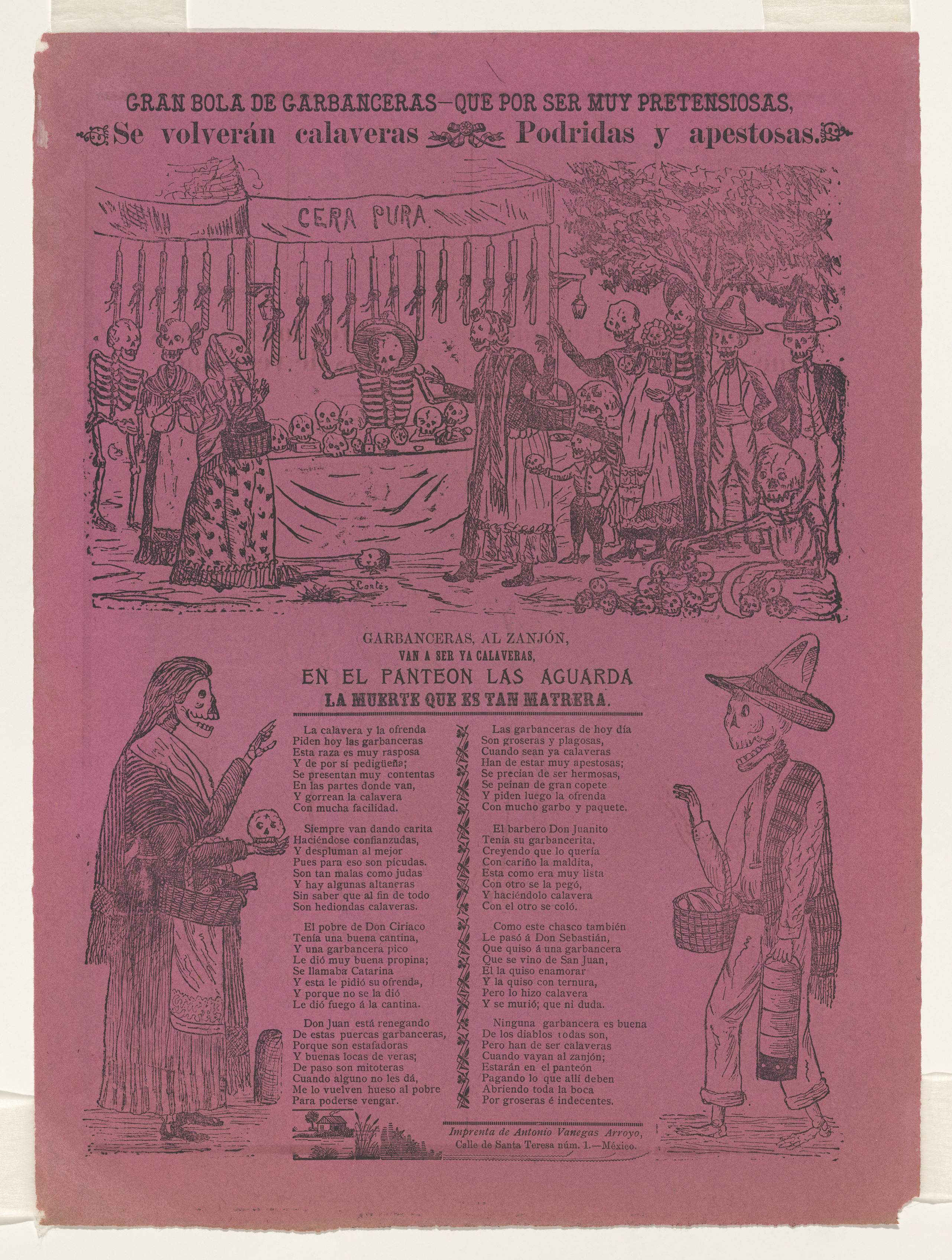
In the hushed corridors of the Lauren Fashion Heritage Lab, we encounter a paradox that defines the very essence of Old Money style: the most powerful statement is often the one left unspoken. This principle finds its most profound articulation in two seemingly disparate artifacts—a Kyoto temple plaque bearing the name “Udumbara Flowers” (Udonge), a flower that has never bloomed, and Piero della Francesca’s Renaissance masterpiece The Hunt, where motion is frozen into geometric eternity. These works, separated by centuries and continents, converge on a singular truth: true luxury resides not in what is displayed, but in what is withheld. This paper argues that the 2026 Old Money silhouette, as informed by a rare zincograph and letterpress broadsheet on purple paper depicting “elegant and pretentious skeletons that become decayed and fetid,” must embrace this philosophy of absence—a sartorial language where fabric, form, and finish conspire to create a void that the discerning eye alone can fill.
The Udonge Paradox: Absence as the Ultimate Signifier
The Kyoto temple plaque, inscribed with the characters “優昙華” (Udonge) in gold leaf on moss-tinged wood, presents a radical challenge to conventional aesthetics. The Udumbara flower, according to Buddhist tradition, blooms only once every three thousand years—a celestial event so rare that its existence is more theological than botanical. Yet here, the plaque does not depict the flower; it merely names it. As philosopher Arthur Danto articulated in his “artworld” theory, an object becomes art not through its physical properties but through its contextual framing. This plaque inverts Danto’s framework: it treats the context itself as the object. It is a signifier without a signified, a name pointing to nothing—and in that nothingness, it generates profound meaning.
For the Old Money aesthetic, this principle is foundational. The 2026 silhouette does not announce wealth through logos, ostentatious cuts, or conspicuous embellishment. Instead, it operates through strategic negation. Consider the broadsheet’s imagery: skeletons, once elegant, now decayed. This is not a memento mori in the Baroque sense of theatrical skulls and hourglasses. It is a subtler meditation—the recognition that all material grandeur eventually returns to dust, and that true elegance lies in acknowledging this transience without flinching. The purple paper of the broadsheet, a color historically associated with royalty and mourning, reinforces this duality: it is both regal and funereal, a chromatic bridge between presence and absence.
Francesca’s Frozen Hunt: Geometry as a Container for the Invisible
Piero della Francesca’s The Hunt offers a Western parallel to this Eastern sensibility. At first glance, the painting depicts a medieval hunting scene: horsemen, hounds, a fleeing deer. But Francesca’s genius lies not in narrative but in temporal suspension. The figures are rendered with such geometric precision—the horses’ musculature reduced to pure volumes, the hunters’ postures frozen in a crystalline instant—that the scene ceases to be about the hunt itself. The artist is not chasing a deer; he is chasing the shadow of time, the infinitesimal pause before motion dissolves into chaos.
This is the same logic that governs the 2026 Old Money silhouette. The broadsheet’s skeletons, once “elegant and pretentious,” now “decayed and fetid,” mirror Francesca’s frozen hunters: both are caught in a state of arrested decay. The 2026 silhouette borrows this geometric containment. Tailoring becomes architectural—shoulders are structured not to exaggerate but to hold the form, like the stone arches of a Romanesque church. Fabrics are chosen for their weight and drape, not their sheen: heavy wools, matte cashmeres, and heritage-black silks that absorb light rather than reflect it. The silhouette does not move; it is moved. Every seam, every pleat, every buttonhole is a decision to stop time, to create a garment that exists in a perpetual present tense.
The Silent Dialogue: Fabric as a Vessel for the Unseen
Both the Udonge plaque and The Hunt engage the viewer in a silent, temporal dialogue. Before the plaque, one waits—for a flower that will not come, for a revelation that exists only in the mind. Before Francesca’s painting, one stands still, caught in the same frozen moment as the hunters. This is the essence of the 2026 Old Money silhouette: it demands contemplation, not consumption. The broadsheet’s purple paper, with its zincograph and letterpress textures, reinforces this tactile meditation. The skeletons are not grotesque; they are elegant in their decay, pretentious in their posture even as they rot. This is the luxury of the long view—the understanding that style outlasts the body, that a well-cut jacket will be worn by a skeleton if the skeleton has taste.
In practical terms, this translates to specific design choices for 2026. The silhouette is elongated and lean, with a dropped shoulder that suggests a garment that has been worn for generations, not seasons. Trousers are cut with a gentle taper, pooling slightly at the ankle—a nod to the way fabric falls on a body that has stopped moving. Outerwear is oversized but not sloppy, with sleeves that extend past the wrist, hiding the hands as if to say: I have nothing to prove; my gestures are my own. The palette is monochromatic, drawn from the broadsheet’s purple-black and the temple plaque’s moss-green: colors that have absorbed centuries of light and shadow.
Conclusion: The Unseen Flower, The Unhunted Deer
The 2026 Old Money silhouette, as synthesized from these heritage artifacts, is not a trend but a philosophy of restraint. It rejects the contemporary obsession with visibility—the Instagrammable moment, the logo that screams for attention. Instead, it embraces the Udonge paradox: the most powerful presence is the one that acknowledges its own absence. The broadsheet’s skeletons, elegant in their decay, remind us that all fashion is ultimately a dance with mortality. The Kyoto plaque teaches us that a name can be more potent than the thing it names. And Francesca’s frozen hunters show us that the greatest art is not the depiction of action but the suspension of time itself.
In the Lauren Fashion Heritage Lab, we do not design clothes. We design containers for silence. The 2026 silhouette is a temple plaque for the body—a name for a flower that may never bloom, a frame for a hunt that will never end. It is, in the end, the most luxurious thing one can wear: the confidence to be invisible, the grace to be absent, the wisdom to know that true elegance is never seen—only felt.