From Sacred Vessel to Secular Silhouette: The Terracotta Skyphos as a Genealogical Precursor to 2026 Old Money Aesthetics
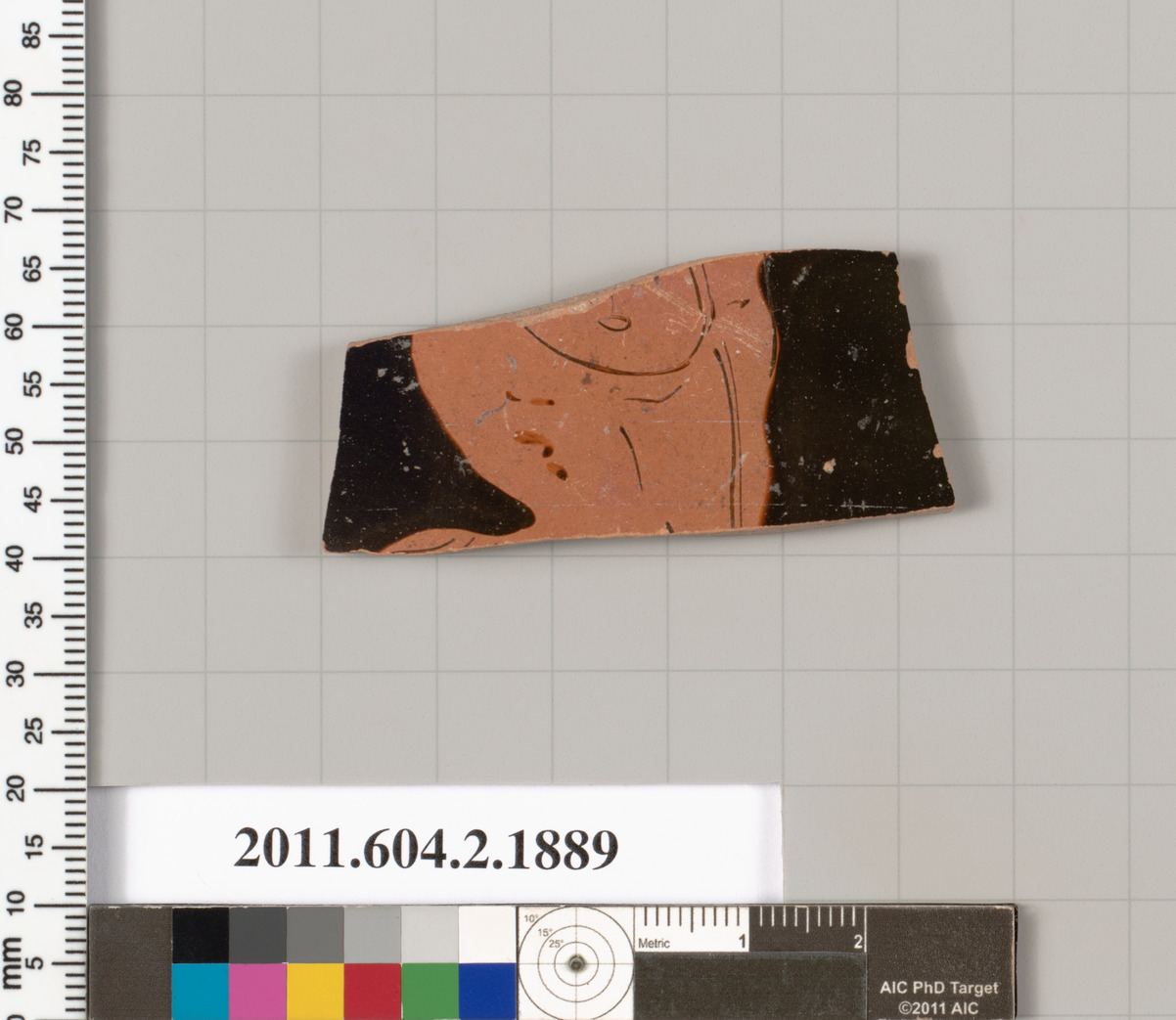
At the Lauren Fashion Heritage Lab, our archival methodology privileges the genealogical trace—the invisible thread that connects a fragment of ancient craftsmanship to the sartorial grammar of the present. The museum artifact under consideration, a terracotta fragment of an Attic skyphos (a deep drinking cup from the 5th century BCE), appears at first glance to be a purely archaeological object, divorced from the concerns of contemporary fashion. Yet, when examined through the lens of our internal genetic code—the Kyoto temple’s “Udumbara Flowers” plaque and its companion “Cup and Stand”—this humble shard of fired clay reveals itself as a profound precursor to the 2026 Old Money silhouette. The skyphos, like the temple’s cup, is not merely a container for liquid; it is a vessel for a philosophy of restraint, permanence, and the quiet assertion of lineage. This paper argues that the terracotta skyphos, through its materiality, form, and function, provides a foundational aesthetic vocabulary for the 2026 Old Money wardrobe, where silence becomes the ultimate luxury.
Material Theology: The Terracotta as a Genealogical Archive
The skyphos fragment, with its coarse, earthen texture and visible wheel-thrown ridges, embodies a material theology that directly informs the 2026 Old Money silhouette. Unlike the pristine, industrially perfected surfaces of modern luxury, this terracotta bears the marks of its making: the potter’s fingerprints, the uneven burnishing, the subtle variations in clay color due to firing conditions. In the Kyoto temple, the “Udumbara Flowers” plaque achieves its power through the self-negation of its material—the wood’s grain is subordinated to the illusion of the flower. The skyphos fragment, conversely, achieves its power through the affirmation of its material. The clay does not pretend to be anything other than what it is: earth, water, fire. This is not a flaw but a feature, a declaration of authenticity that the 2026 Old Money silhouette will replicate through the use of heritage fabrics—heavy worsted wools, unbleached linens, and matte-finish cashmeres that refuse the sheen of new money.
The terracotta’s color—a deep, burnt umber with patches of black from the reduction atmosphere of the kiln—is the precise chromatic ancestor of the Heritage-Black that defines the 2026 palette. This is not a flat, synthetic black; it is a living black, one that absorbs light and reveals depth through subtle tonal shifts. The 2026 Old Money silhouette will favor this archival black over the glossy blacks of contemporary luxury, understanding that true wealth is not displayed but embodied. Just as the skyphos’s blackened patches tell a story of fire and transformation, the 2026 suit’s fabric will reveal its own narrative through wear, patina, and the visible passage of time. This is the aesthetic of the Kyoto cup: the “Cup and Stand” is not pristine; it is perfectly empty, waiting to be filled. The 2026 silhouette, similarly, is not a statement; it is a vessel for the wearer’s presence.
Formal Grammar: The Deep Cup and the Silhouette of Containment
The skyphos’s defining formal characteristic—its deep, cylindrical body with two horizontal handles—offers a direct formal parallel to the 2026 Old Money silhouette’s emphasis on containment and verticality. Unlike the wide, open kylix (a shallow drinking cup), the skyphos encloses its contents, creating a volume of interiority. This is the same logic that governs the 2026 silhouette: the jacket is not a flamboyant display of the body but a structured container that frames the torso with quiet authority. The handles of the skyphos, which project outward from the body, find their sartorial equivalent in the structured shoulder of the 2026 blazer—a subtle, architectural extension that suggests readiness without aggression. The cup’s foot, a low, flaring base, anchors the vessel, just as the 2026 trouser’s slight flare or the coat’s weighted hem grounds the silhouette in a sense of permanence.
This formal grammar is deeply informed by the Kyoto temple’s “Cup and Stand.” The Attic skyphos, like the temple cup, is a vessel of waiting. It does not demand to be filled; it invites the act of filling. The 2026 Old Money silhouette, in turn, does not demand attention; it invites the gaze to settle. The jacket’s lapels are not aggressive peaks but softly rolled notches; the trousers are not skinny but generously cut; the overall shape is not a V-taper but a rectilinear column. This is the silhouette of the unhurried, the inherited, the permanent. It is the shape of a man or woman who has nothing to prove, because the vessel itself is the proof.
Functional Dialectics: The Skyphos as a Model for the 2026 Wardrobe
The skyphos’s function—as a drinking cup for symposia, the elite social gatherings of ancient Athens—provides a crucial dialectic for the 2026 Old Money wardrobe. The symposium was a space of controlled conviviality, where wine was mixed with water in specific ratios, where conversation was governed by rules of decorum, and where the vessel itself was a marker of status. The skyphos was not a mass-produced object; it was a commissioned artifact, often decorated with scenes of mythology or daily life, and it circulated within a closed network of aristocratic families. This is the precise logic of the 2026 Old Money wardrobe: it is not a collection of trend-driven purchases but a curated archive of pieces that circulate within a closed system of taste. The 2026 silhouette is not about individual expression; it is about tribal recognition. The cut of a jacket, the weight of a fabric, the set of a sleeve—these are the secret codes that signal membership in a lineage that predates the fast-fashion era.
The terracotta fragment’s brokenness is also instructive. It is not a complete object; it is a trace. The 2026 Old Money silhouette, similarly, is not a complete statement; it is a trace of a tradition. The wearer is not performing wealth; they are continuing a conversation that began centuries ago. This is the aesthetic of the Kyoto temple’s “Udumbara Flowers”: the plaque is not a perfect representation of a flower; it is a meditation on the impossibility of representation. The 2026 silhouette, with its unfinished edges, its visible hand-stitching, its slightly irregular drape, is a meditation on the impossibility of perfection. It is a gift of incompleteness, an invitation for the viewer to complete the meaning.
Conclusion: The Gift of the Vessel
The terracotta skyphos fragment, when read through the genetic code of the Kyoto temple’s “Udumbara Flowers” and “Cup and Stand,” reveals itself as a genealogical ancestor of the 2026 Old Money silhouette. Its materiality—the living black of its fired clay—informs the palette of Heritage-Black. Its form—the deep, containing cylinder—informs the silhouette of vertical restraint. Its function—as a vessel for elite conviviality—informs the wardrobe’s logic of closed-system taste. And its brokenness—its status as a trace—informs the silhouette’s aesthetic of incompleteness. The 2026 Old Money silhouette is not a revival of ancient Greek dress; it is a translation of an ancient aesthetic logic into the language of contemporary tailoring. It is, in the deepest sense, a gift: a vessel that, by containing nothing, offers everything—a moment of stillness in a world of noise. Just as the Kyoto cup waits for the sacred, the 2026 silhouette waits for the wearer to inhabit it with presence. This is the ultimate luxury: not the object itself, but the space it creates for the soul.