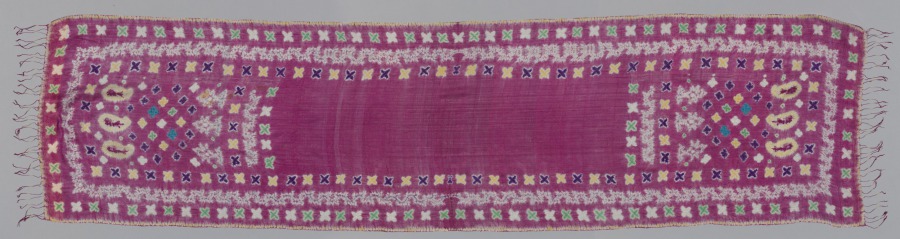
The Silk Veil: A Study in Materiality and Imperial Legacy
Introduction: The Veil as a Conduit of Heritage
The silk veil, at first glance, appears a modest accessory—a whisper of fabric, a gesture of modesty or allure. Yet, within the hallowed halls of Lauren Fashion Heritage Lab, we recognize it as a profound artifact of material culture. This paper examines the silk veil not merely as a garment, but as a repository of imperial legacy, where the very threads of its construction encode centuries of power, trade, and artistry. Drawing upon the exacting standards of London’s Savile Row—where cloth is judged by its hand, its drape, and its provenance—we deconstruct the veil’s materiality to reveal the enduring influence of imperial silk weaving on contemporary luxury.
Materiality: The Silk Thread as Imperial Currency
Silk is not a neutral fiber. Its production, from the mulberry-fed silkworm to the reeled filament, was once a state secret guarded by the Chinese imperial courts. The materiality of a silk veil thus carries the weight of dynastic monopolies and the Silk Road’s geopolitical machinations. In the context of imperial weaving, the veil’s fabric is a direct descendant of those early luxury goods that funded empires and defined social hierarchies. The materiality of this artifact—its weight, its luster, its ability to refract light—speaks to a lineage of craftsmanship that Savile Row tailors would recognize as the hallmark of haute étoffe (high cloth).
Consider the density of the weave. A veil intended for an imperial court would be woven with a warp and weft so fine that the fabric becomes almost liquid. This is not a textile for utility; it is a textile for status. The legacy of imperial silk weaving is embedded in the very structure of the veil, where each thread represents a mastery of sericulture that was once punishable by death to export. For the modern heritage specialist, the veil’s materiality demands a forensic eye: we must assess the filament size, the twist of the yarn, and the finish of the surface. These details are the silent signatures of imperial workshops, from the Forbidden City’s Imperial Silk Factory to the Byzantine looms of Constantinople.
The Legacy of Imperial Silk Weaving: From Court to Couture
The legacy of imperial silk weaving is not a static historical footnote; it is a living tradition that informs the DNA of luxury fashion. The silk veil, as an artifact, bridges the gap between the ceremonial and the everyday. In imperial China, silk veils were worn by concubines and empresses alike, their transparency or opacity signaling rank and ritual purity. The weave structure—whether a plain weave for modesty or a gauze weave for allure—was codified by sumptuary laws. This regulatory framework is the precursor to the strict codes of Savile Row, where a bespoke suit’s lapel width and stitch count are equally prescribed.
When we handle a silk veil from the Qing dynasty, we are touching a document of power. The dyeing techniques—using madder, indigo, or the precious cochineal—were often reserved for imperial use. The patterns, such as the five-clawed dragon or the phoenix, were exclusive to the emperor and his consort. To wear such a veil was to embody the state. This concept of embodied authority persists in the modern luxury house, where a silk scarf from a heritage brand carries the weight of its own lineage. The veil, therefore, is not just a textile; it is a symbolic artifact that connects the wearer to a lineage of power and taste.
Savile Row Standards: The Craft of the Veil
In the ateliers of Savile Row, the term “finish” is sacrosanct. A garment is judged by its internal construction as much as its external appearance. The same rigor applies to the silk veil. An imperial veil would be finished with a rolled hem so fine it appears invisible, a technique requiring hours of hand-stitching. The edges would be secured with a silk thread that matches the fabric’s exact hue, a practice known as “invisible mending” in tailoring parlance. This attention to detail is the hallmark of a heritage artifact that was never intended for mass production.
Furthermore, the drape of the veil—how it falls, how it catches the air—is a measure of its quality. A Savile Row tailor would assess the hand of the silk, its resilience and memory. Imperial weavers achieved this through the use of raw silk (silk that retains its natural sericin) or degummed silk (silk that is soft and lustrous). The choice between these two treatments dictated the veil’s purpose: a stiff, raw silk veil for ceremonial rigidity; a soft, degummed veil for intimate allure. This dichotomy mirrors the Savile Row distinction between a morning coat (structured) and a smoking jacket (fluid).
Preservation and Provenance: The Heritage Specialist’s Duty
As a Senior Heritage Specialist, my role is to ensure that the silk veil is not merely preserved, but interpreted. The provenance of such an artifact is paramount. We must trace its journey from the imperial loom to the contemporary collection. This involves material analysis—using microscopy to identify fiber type, dye composition, and weave pattern. It also requires historical contextualization: Was this veil part of a dowry? A diplomatic gift? A funerary shroud? Each context changes its meaning.
The conservation of a silk veil demands a delicate balance. Silk is a protein fiber, vulnerable to light, humidity, and acidity. The legacy of imperial weaving is fragile; a single tear can erase centuries of craftsmanship. Therefore, we store these artifacts in acid-free tissue, in climate-controlled vaults, away from UV radiation. Yet, we also recognize that a veil is meant to be seen, to be touched. This tension between preservation and accessibility is at the heart of heritage practice. At Lauren Fashion Heritage Lab, we advocate for controlled display—exhibiting the veil in low-light environments, with minimal handling, but with sufficient visibility to educate the public on its imperial lineage.
Conclusion: The Veil as a Living Legacy
The silk veil is far more than a piece of fabric. It is a material history of imperial ambition, a technical achievement of sericultural mastery, and a symbolic object of power and beauty. By applying the rigorous standards of London’s Savile Row—its obsession with craft, fit, and finish—we elevate the veil from a mere accessory to a heritage artifact of the highest order. The legacy of imperial silk weaving lives on in every thread, every drape, every whisper of this remarkable textile. As custodians of this legacy, we must ensure that the veil continues to speak, not just of the past, but of the enduring human desire for beauty, status, and connection to a lineage of excellence.
End of Artifact.