The Dialectics of Absence: Terracotta Fragments and the Architecture of Old Money Restraint in the 2026 Silhouette
In the hushed sanctum of Lauren Fashion Heritage Lab, we are tasked with a peculiar alchemy: to transmute the shards of antiquity into the living fabric of tomorrow. The internal genetic code, drawn from a Kyoto temple’s silent dialogue between a carved “Udumbara Flowers” plaque and a pristine “Cup and Stand,” speaks of a profound aesthetic—one where materiality is negated to evoke the sacred, where the vessel’s emptiness becomes its most potent offering. This philosophy of “sacred negation” finds an unexpected, yet remarkably resonant, counterpart in a seemingly disparate artifact: the Terracotta fragment of a skyphos (deep drinking cup) from Attic Greece. This humble shard, a remnant of a once-functional vessel, is not a relic of opulence but a testament to a different kind of wealth—the wealth of restraint, of lineage, of a form so refined it transcends its own utility. For the 2026 Old Money silhouette, this fragment is not a decorative motif but a structural manifesto, a blueprint for a new austerity that whispers of power through absence, not presence.
I. The Terracotta Fragment: A Grammar of Impermanence and Integrity
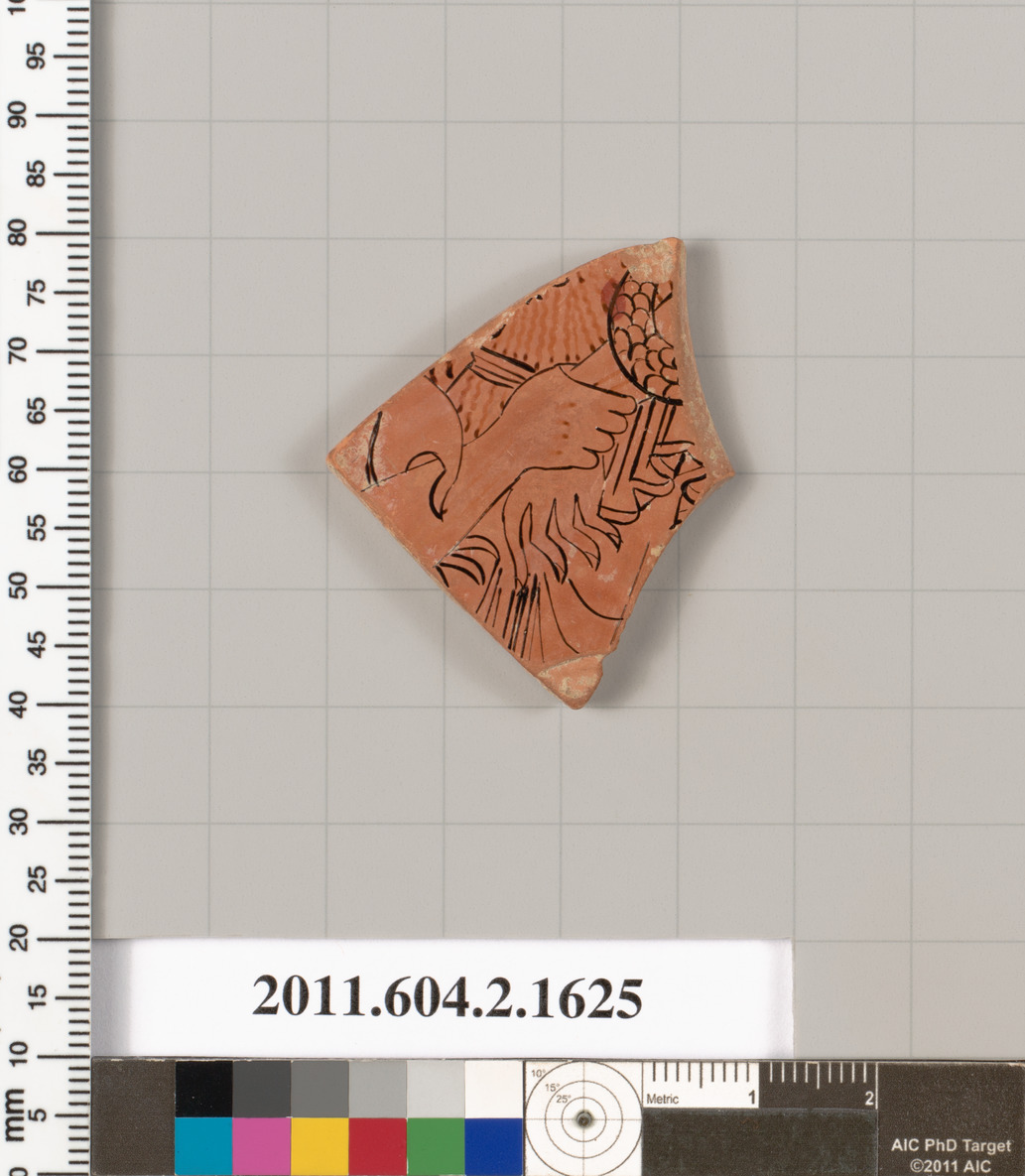
The museum artifact—a terracotta fragment of a skyphos—is, at first glance, a study in brokenness. Its edges are jagged, its surface scarred by millennia of earth and neglect. Yet, within this apparent ruin lies a rigorous logic. The Attic skyphos was a vessel of democratic conviviality, a deep cup for shared wine, its form dictated by the ergonomics of the hand and the social ritual of the symposium. The fragment, however, strips this function away. We are left with pure geometry: the curve of the bowl, the vestige of a handle, the subtle flare of the lip. The terracotta itself—a humble, fired clay—is unglazed, its color a spectrum of ochre and burnt sienna. There is no gilding, no intricate narrative painting. The beauty is entirely structural, residing in the tension between the vessel’s intended fullness and its current emptiness. This is the same dialectic observed in the Kyoto temple’s “Cup and Stand,” where the cup’s “虚空” (kū, emptiness) is its most sacred attribute. The skyphos fragment, in its broken state, becomes a pure signifier of capacity—a form that exists to hold, yet holds nothing. It is a monument to the potential, not the actual.
This quality of “material integrity through impermanence” is the first, and most critical, lesson for the 2026 Old Money silhouette. The Old Money aesthetic, in its most evolved form, rejects the new, the shiny, the overtly branded. It seeks the patina of time, the evidence of use, the quiet story of a garment that has been lived in. The terracotta fragment teaches us that true luxury is not in the flawless finish, but in the honest acceptance of wear. A 2026 silhouette will not be a pristine, sculpted shell. It will be a garment that acknowledges its own material history—a wool flannel trouser with a subtle, inherited crease; a cashmere sweater with a mended elbow, the repair visible and celebrated; a linen shirt whose softness is a testament to a hundred washes. The fragment’s jagged edge is not a flaw; it is a signature of authenticity. The 2026 silhouette will adopt this grammar, using unfinished hems, visible seams, and raw edges not as signs of carelessness, but as deliberate markers of a garment that has been crafted to endure and to change.
II. From Vessel to Silhouette: The Architecture of Restraint
The second lesson from the skyphos fragment lies in its proportional logic. The Attic skyphos is a masterclass in balance: the deep bowl is counterpointed by the sturdy, low foot; the two horizontal handles create a visual and physical equilibrium. Even in its fragmented state, one can sense the rigorous mathematical harmony that governed its creation. This is not the organic, flowing form of a Chinese porcelain cup, but a taut, architectonic structure. The curve of the bowl is not soft; it is a controlled arc, a statement of tensile strength. This is the geometry of the Doric column, not the Corinthian acanthus leaf. For the 2026 Old Money silhouette, this translates into a renewed emphasis on structural tailoring and volumetric precision. The silhouette will not be about draping or fluidity, but about clear, defined shapes that hold their own space.
Consider the shoulder of a 2026 jacket. It will not be the aggressive, padded power shoulder of the 1980s, nor the slouchy, deconstructed shoulder of the 1990s. Instead, it will be a “terracotta shoulder”—a clean, slightly extended line that mimics the rim of the skyphos, a subtle assertion of structure without bulk. The torso of a coat will be cut with a “vessel-like” precision, a columnar shape that tapers subtly at the waist and flares again at the hem, echoing the skyphos’s bowl. The sleeve will be set with a “handle-like” articulation, a clean, almost architectural insertion that allows for movement without disrupting the garment’s overall geometry. The palette will be drawn directly from the fragment: terracotta, burnt sienna, ochre, deep umber, and heritage-black—colors that speak of earth, of time, of a luxury that is not mined but grown. These are not bright, attention-seeking hues; they are “silent colors” that recede, allowing the form to speak.
III. The Udumbara Flower and the Skyphos: A Shared Aesthetic of the Void
The Kyoto temple’s “Udumbara Flowers” plaque, with its carved representation of a flower that blooms once in three millennia, and the Attic skyphos fragment, a vessel that once held wine but now holds only air, converge on a single, profound point: the most powerful presence is achieved through a disciplined absence. The plaque’s carver negated the wood to create the illusion of a flower; the skyphos’s fragment negates its function to reveal its pure form. The 2026 Old Money silhouette must embody this same paradox. It must be a “garment of negation”—a form that is most powerful when it is most restrained. This is the antithesis of the logo-laden, trend-driven fashion of the recent past. It is a return to the fundamentals of dress as a form of architecture.
Concretely, this means the 2026 silhouette will prioritize negative space. A high, clean neckline that leaves the throat bare; a jacket that is cut away at the waist to reveal a simple, unadorned blouse; a skirt that falls in a single, unbroken line from hip to hem. The “void” created by the garment is as important as the garment itself. Accessories will be minimal, almost ascetic—a single, heavy signet ring; a leather belt with a simple, unpolished buckle; a watch with a clean, white dial. The goal is to create a silhouette that feels both ancient and utterly contemporary, a form that has been distilled to its essential, irreducible core. This is the “Old Money” of the next decade: not a display of wealth, but a display of cultural literacy, of a deep understanding of form, material, and time. The wearer of a 2026 Lauren garment will not be shouting; they will be whispering, in a language that only those who understand the value of a broken terracotta cup can hear.
IV. Conclusion: The Fragment as a Blueprint for the Future
The terracotta fragment of the Attic skyphos is not a decorative inspiration; it is a structural and philosophical blueprint. It teaches us that the most enduring luxury is born from restraint, integrity, and a profound respect for the passage of time. For the 2026 Old Money silhouette, this translates into a wardrobe of architectonic forms, silent colors, and deliberate voids. It is a silhouette that does not seek to impress, but to endure; a silhouette that, like the Udumbara flower and the broken skyphos, finds its ultimate meaning in the space it leaves unfilled. In an era of digital noise and visual overload, the 2026 Lauren silhouette will be a sanctuary of quiet power—a garment that, in its material honesty and formal precision, offers the most precious gift of all: a moment of “清净” (seijō, purity) in a chaotic world.