← BACK TO ARCHIVES
Heritage-Black
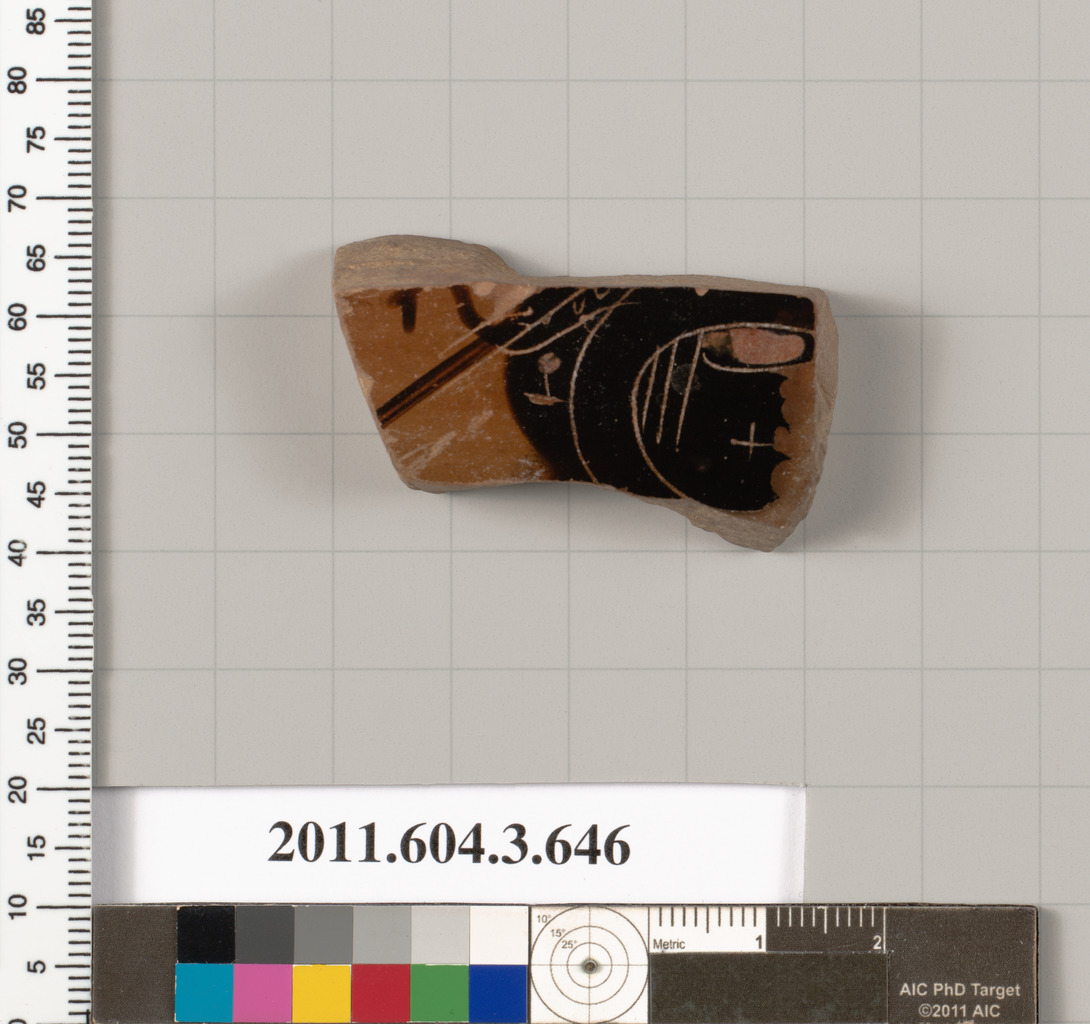
Heritage Synthesis: Terracotta fragment of a calyx-krater (bowl for mixing wine and water)
Curated on Jun 27, 2026 // Node: LDN-01
The Terracotta Krater and the Architecture of Restraint: Recasting Attic Form for the 2026 Old Money Silhouette
The Lauren Fashion Heritage Lab’s internal genetic code—rooted in the Eastern aesthetic of “poetry, calligraphy, painting, and vessel” as a unified cosmos—finds an unexpected yet profoundly resonant dialogue with a Western artifact: the Greek Attic terracotta fragment of a calyx-krater (a bowl for mixing wine and water). At first glance, the krater’s function as a utilitarian vessel for symposia seems distant from the meditative “Lohan” armchair or the painted landscape. Yet, when examined through the lens of heritage fashion, this fragment reveals a shared architectural principle: the transformation of material into a container for spirit. For the 2026 Old Money silhouette, the krater’s formal vocabulary—its calibrated proportions, its narrative surface, and its ritualistic purpose—offers a blueprint for a new kind of restrained luxury, one that privileges structure over ornament, lineage over novelty, and the quiet authority of the vessel over the noise of the ephemeral.
The Krater as a Structural Archetype: Proportion and the Silhouette’s Skeleton
The calyx-krater, with its flaring upper body and stable, slightly tapered base, is an exercise in controlled tension. Its form is not passive; it actively *holds* space. The fragment, even in its broken state, communicates a rigorous geometry: the lip curves outward like a collar, the body swells to a generous belly, and the foot grounds the entire composition with a quiet, unyielding weight. This is not the organic, flowing line of a Greek *hydria* (water jar) but a more architectonic, almost Doric, sensibility.
For the 2026 Old Money silhouette, this translates directly into the construction of the jacket and coat. The “krater shoulder” emerges as a key motif—a structured, slightly extended shoulder line that does not exaggerate but rather *frames* the torso, much as the krater’s rim frames the liquid within. This is not the aggressive power shoulder of the 1980s; it is a softer, more considered volume, akin to the rounded back of the Lohan armchair. The coat’s body, like the krater’s belly, should possess a subtle, controlled fullness—a “vessel volume” that suggests interior space without appearing inflated. The waist is not cinched but gently defined, allowing the fabric to drape with the same gravity that pulls the krater’s clay into its settled form. The hem, like the krater’s foot, must be clean, weighted, and decisive. In practical terms, this means a single-breasted overcoat in a dense, matte wool (Heritage-Black, naturally) with a three-quarter length, a notched lapel that mimics the krater’s lip, and a slight A-line from the chest to the hem. The silhouette is not about the body’s contours but about the *space* the garment creates around the body—a portable, habitable vessel.
Narrative Surface: The Fragment as a Textile of Memory
The terracotta fragment is not merely a shape; it is a surface inscribed with narrative. The Attic krater was often decorated with mythological scenes—gods, heroes, and mortals engaged in acts of transformation, combat, or symposium. The fragment we possess likely bore a figure, a gesture, a fold of drapery. This is the visual equivalent of the “poem” inscribed on the Chinese landscape vessel: a story that elevates the object from utility to contemplation.
In the 2026 Old Money context, this principle of narrative surface rejects the blank minimalism of recent luxury. Instead, it calls for a textile that *tells* a story—not through overt logos or prints, but through texture, weave, and subtle pattern. The “krater textile” for Heritage-Black might be a double-faced cashmere, one side a deep, matte black, the other a charcoal jacquard woven with an abstracted Greek key or a stylized vine motif—a reference to the krater’s original function as a wine vessel. This pattern is not visible at a distance; it reveals itself only in movement, when the coat’s lining is glimpsed or when the fabric folds. This is the fashion equivalent of the “poem on the vessel”: a hidden layer of meaning that rewards the knowing eye. Alternatively, a wool-cashmere blend could be woven with a subtle herringbone that, upon close inspection, resolves into a pattern of broken amphorae or laurel leaves—a quiet, intellectual nod to antiquity. The surface is not flat; it is a palimpsest, a fragment of a larger cultural text.
Ritual and Restraint: The Symposium as a Model for Dressing
The krater’s purpose was not merely to hold wine but to facilitate the *symposium*—a ritualized gathering of men for philosophical discourse, poetry, and measured intoxication. The krater was the central object, the mediator of conversation. Its form—wide-mouthed, stable, communal—was designed for the act of *mixing*: water with wine, intellect with spirit, individual with group. This ritualistic dimension is the bridge to the Eastern concept of “可居可游” (dwelling and wandering) found in the Lohan armchair. Both objects are not passive; they *activate* a space and a practice.
For the 2026 Old Money silhouette, this translates into a philosophy of dressing as a *ritual of restraint*. The garment is not a statement of wealth or status but a tool for facilitating presence, composure, and dialogue. The Heritage-Black coat, inspired by the krater, is designed for the modern symposium: a boardroom, a gallery opening, a private dinner. Its structure imposes a certain posture—shoulders back, spine elongated, movements deliberate. The weight of the fabric, the precision of the cut, and the hidden narrative of the textile all conspire to quiet the wearer’s external noise and amplify their internal focus. This is the opposite of “loud luxury.” It is a *silent* luxury, one that communicates through absence and restraint, much as the krater’s black-figure painting uses negative space to define its figures.
Conclusion: The Vessel as a Philosophy of Endurance
The Attic terracotta fragment, though broken, is not a ruin. It is a testament to endurance—a form that has survived millennia because it was *well-made*. Its clay body, fired and hardened, resists decay. Its proportions, grounded in mathematical harmony, feel eternally modern. For the 2026 Old Money silhouette, this is the ultimate lesson. The Heritage-Black garment is not a seasonal product but a *vessel* intended to be passed down, to acquire patina, to become a fragment of the wearer’s own story. It is a container for time.
By synthesizing the krater’s architectural structure, its narrative surface, and its ritualistic purpose, Lauren Fashion can create a silhouette that is not merely a trend but a *classic reborn*. The 2026 Old Money aesthetic, as informed by this ancient Greek artifact, is one of quiet power, intellectual depth, and material integrity. It is the Western counterpart to the Eastern “诗、书、画、器” unity—a proof that the finest luxury is not about the new, but about the *enduring*. The krater fragment, in its broken perfection, whispers a truth that fashion must remember: the most profound vessels are those that hold not liquid, but meaning.
Heritage Lab Insight
Genetic Bridge: Archive node focusing on Heritage-Black craftsmanship.