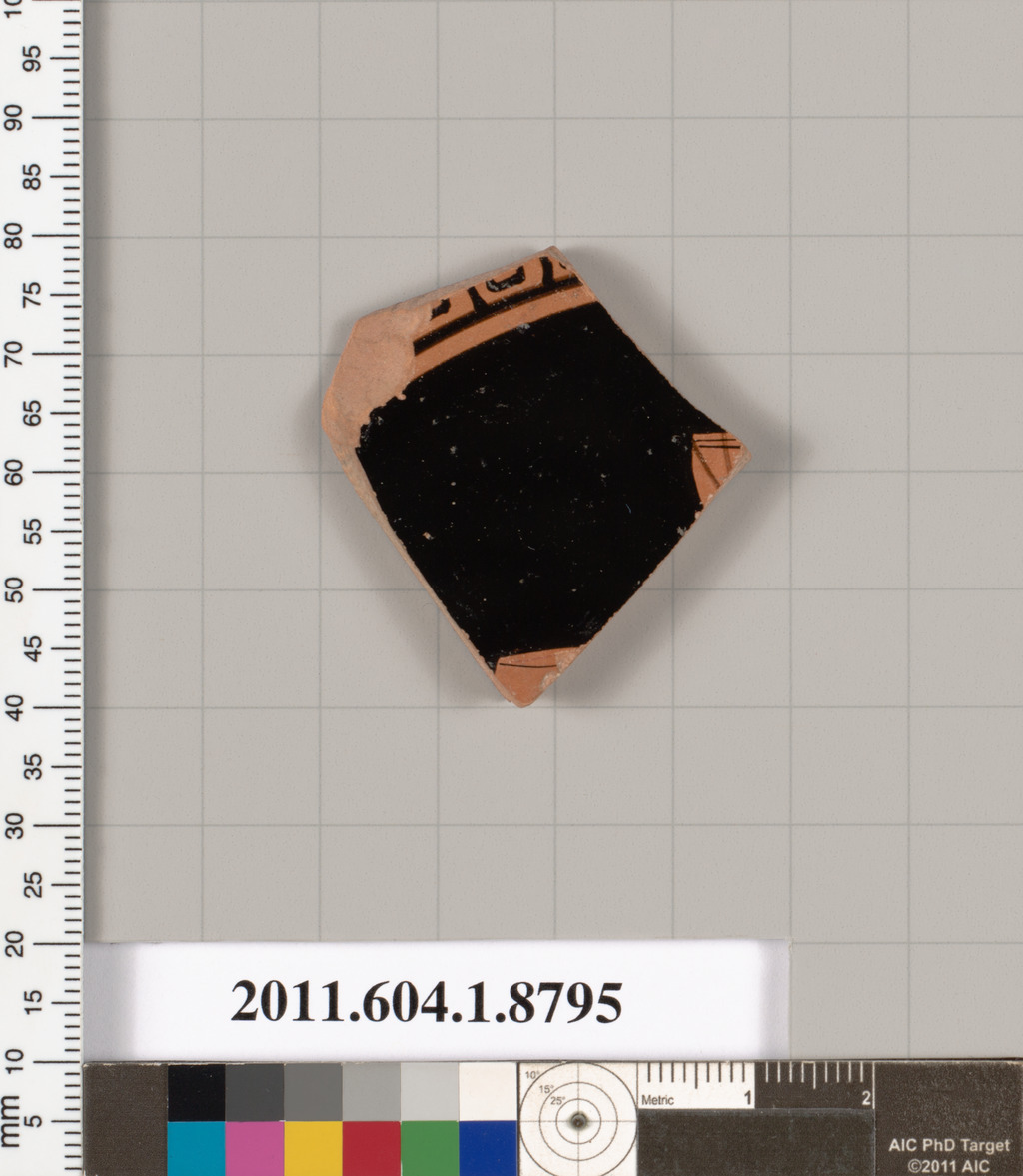
From Terracotta Fragment to Tailored Lineage: The Attic Kylix as a Structural Archetype for 2026 Old Money Silhouettes
The Lauren Fashion Heritage Lab’s internal genetic code—the dialectic between the ethereal “Udumbara Flower” temple plaque and the worldly “Beast and Grapevine” bronze mirror—establishes a foundational tension between transcendence and immanence, emptiness and plenitude. This binary, however, finds a surprising third term in a seemingly unrelated artifact: the Terracotta fragment of a kylix (Greek, Attic, c. 5th century BCE). This drinking cup, broken yet resonant, offers a material and philosophical key to decoding the 2026 Old Money silhouette—a fashion language that prizes restrained power, inherited form, and the quiet authority of the fragmentary.
At first glance, the kylix—a shallow, two-handled vessel used for symposia—appears distant from the sacred and secular Chinese artifacts that anchor our heritage research. Yet its terracotta medium, its broken state, and its function as a vessel for communal ritual align it with the “观物取象” (observing things to grasp their essence) principle that unites the Udumbara and the Beast-Grapevine mirror. The kylix is neither a symbol of transcendent emptiness nor a celebration of earthly fullness; rather, it embodies a third aesthetic category: the monumental in the mundane. Its fired clay, once raw earth, has been shaped, painted, shattered, and preserved. In its fragmentary condition, it speaks not of perfection but of duration—of a form that outlives its original context, becoming a relic of a civilization’s social and aesthetic codes.
The Kylix as a Structural Model for Old Money Silhouettes
The 2026 Old Money silhouette, as synthesized from the kylix’s formal properties, rejects both the asceticism of the Udumbara and the opulence of the Beast-Grapevine. Instead, it adopts the kylix’s geometric clarity, balanced asymmetry, and tactile materiality. Consider the vessel’s profile: a low, wide bowl supported by a slender stem and a flared foot. This architecture translates directly into garment construction. The broad, horizontal shoulder line of a tailored jacket echoes the kylix’s rim—a confident, unadorned edge that frames the body. The cinched waist corresponds to the stem, creating a moment of compression before the silhouette expands into a flared skirt or wide-leg trouser, mimicking the kylix’s foot. This is not the exaggerated volume of a crinoline or the severe reduction of a sheath; it is a measured, architectural expansion that suggests stability and lineage.
The terracotta’s warm, earthen hue—a spectrum from burnt sienna to pale ochre—informs the 2026 color palette. Unlike the Udumbara’s stark white or the Beast-Grapevine’s gilded bronze, the kylix offers muted, grounded tones: clay, sand, rust, and ash. These colors, when applied to heavy wool, double-faced cashmere, and matte silk twill, evoke a sense of archaeological depth. A coat in “Terracotta Dust” or “Attic Red” does not shout; it whispers of centuries. The finish is crucial: the kylix’s surface, once glossy with slip, now bears the patina of age. Similarly, 2026 Old Money fabrics will favor slight irregularities—slubs in linen, subtle nubs in wool, a matte rather than lustrous sheen—that signal authenticity and provenance over industrial perfection.
Fragmentation as a Design Principle
Perhaps the most radical insight from the kylix fragment is the aesthetic of the incomplete. The broken edges, the missing sections, the painted figures that dissolve into negative space—these are not flaws but generative absences. They invite the viewer to complete the form mentally, engaging in an act of co-creation. This principle directly informs the 2026 silhouette through asymmetric hems, deconstructed lapels, and intentional “gaps” in tailoring. A jacket might have one sleeve cut slightly shorter, revealing a contrasting lining; a skirt could feature a deliberate slit that exposes the leg in a manner akin to the kylix’s missing shard. These are not signs of decay but of narrative richness—the garment as a story that has been lived, worn, and partially erased.
The kylix’s painted decoration—often featuring mythological scenes or symposiastic revelry—also offers a lesson in restrained ornament. The figures are rendered in black-figure or red-figure technique, with precise outlines and minimal internal detail. This economy of line is echoed in the 2026 Old Money approach to embellishment: embroidery that traces a single, continuous vine along a seam; a single row of jet-black buttons on a charcoal coat; a subtle herringbone weave that reads as texture rather than pattern. The ornament does not compete with the silhouette; it articulates the structure, much as the kylix’s painted figures follow the curve of the bowl.
The Dialectic of Vessel and Garment
Returning to the internal genetic code, the kylix mediates between the Udumbara’s “空” (emptiness) and the Beast-Grapevine’s “有” (fullness). The kylix is a vessel—literally a container for wine, symbolically a holder for social ritual. Its interior is empty, awaiting substance; its exterior is decorated, bearing meaning. This duality mirrors the Old Money garment’s function: it is both a protective shell for the body and a surface for encoded status. The 2026 silhouette does not seek to transcend the body (as the Udumbara suggests) nor to celebrate it through abundance (as the Beast-Grapevine implies). Instead, it frames the body as a vessel for time—a container for inherited memory, personal history, and social continuity.
The kylix’s terracotta medium further reinforces this. Unlike the precious metals of the Beast-Grapevine mirror or the carved wood of the temple plaque, terracotta is common, accessible, and enduring. It is the material of everyday life, yet it has survived millennia. This paradox—the humble made monumental—is the essence of Old Money aesthetics. The 2026 silhouette will favor unobtrusive luxury: a cashmere coat that feels like a second skin, a wool suit that drapes without stiffness, a silk blouse that whispers rather than shines. These garments do not announce their cost; they reveal it through fit, weight, and the precise fall of a hem.
Conclusion: The Fragment as Future Heritage
The terracotta kylix fragment, in its broken glory, offers a profound lesson for the 2026 Old Money silhouette: true heritage is not pristine but patinated. It is the garment that has been worn, mended, and passed down; the silhouette that respects the body’s architecture while allowing for movement and change; the color that evokes earth and time rather than novelty. By integrating the kylix’s structural clarity, material honesty, and aesthetic of fragmentation, Lauren Fashion can create a collection that speaks not to the transient desires of the moment but to the enduring codes of civilization—a wardrobe as lasting as fired clay, as resonant as a symposium’s echo, and as quietly powerful as a shard of ancient pottery held in the hand.