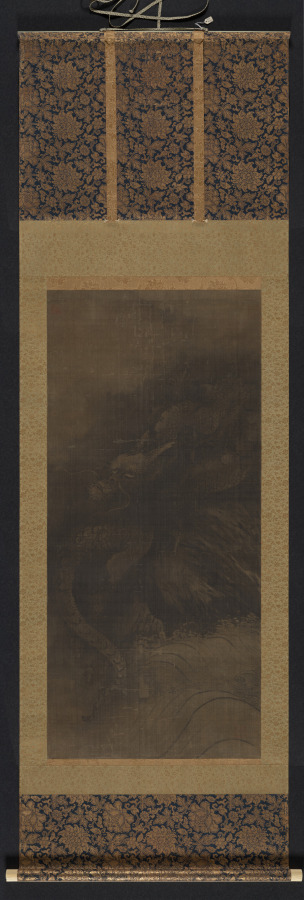
The Dragon in Silk: A Study of Imperial Weaving’s Enduring Legacy
Prologue: The Thread of Power
In the hushed, wood-paneled ateliers of London’s Savile Row, where the air is thick with the scent of wool and beeswax, the word “heritage” is often invoked with a reverence reserved for lineage. Yet, few materials carry a legacy as potent, as politically charged, and as exquisitely tactile as silk. When we speak of the dragon—a creature of myth, might, and majesty—woven into this fabric, we are not merely discussing a pattern. We are dissecting a codified language of power, a narrative spun over millennia, and a materiality that demands the highest discipline from both the weaver and the wearer. This artifact, the Dragon in Silk, is a testament to the imperial legacy of Chinese silk weaving, a tradition whose echoes can still be felt in the bespoke tailoring houses of Mayfair today.
The Materiality of Silk: A Conductor of Authority
Silk is not a passive substrate. Its natural lustre, its tensile strength, and its capacity for the most intricate dyeing and weaving techniques make it an active participant in the garment’s story. For the imperial courts of China, silk was more than a textile; it was a medium for statecraft. The dragon motif, specifically the five-clawed long, was reserved exclusively for the Emperor. To wear such a garment was to embody celestial mandate. The materiality of silk—its ability to hold a sharp crease, to shimmer with movement, to resist the ravages of time—mirrored the desired permanence of the dynasty. A Savile Row cutter understands this principle intuitively: the cloth must serve the structure, and the structure must serve the man. In imperial China, the silk served the Dragon, and the Dragon served the Heavens.
The process of creating such a garment was a feat of logistical and artisanal mastery. The silkworms, fed on mulberry leaves from protected groves, produced filaments that were reeled, dyed with natural pigments from madder, indigo, and the precious cochineal for crimson, and then woven on massive drawlooms. The kesi (cut silk) technique, a form of tapestry weaving, allowed for the precise depiction of the dragon’s scales, claws, and the flaming pearl it pursued. This was not a print; it was a construction, thread by thread, of a living symbol. The weight of the silk, its drape, and the subtle interplay of light across its surface were all calibrated to project an aura of unassailable authority. In the same way, a bespoke suit on Savile Row is built from the inside out—with canvas, horsehair, and meticulous hand-stitching—to create a silhouette that commands respect without shouting.
The Dragon as a Design Lexicon: From Forbidden City to Savile Row
The dragon in imperial silk is not a chaotic beast. It is a study in controlled dynamism. The five-clawed dragon is depicted with a serpentine body, often in profile, reaching for a flaming pearl—a symbol of wisdom and spiritual energy. The design is symmetrical, balanced, and deeply symbolic. The colors were equally codified: yellow for the Emperor, blue for princes, and red for high-ranking officials. This was a system of visual hierarchy as rigid as any regimental tie or club stripe on Savile Row. The dragon’s posture—whether ascending, descending, or coiled—communicated specific messages about the Emperor’s relationship with the cosmos.
Today, the legacy of this design language survives in the most refined of contexts. When a Savile Row house commissions a silk lining for a dinner jacket or a scarf for a limited edition, the dragon motif is often reinterpreted with a restrained, architectural hand. The five-clawed dragon is rarely used in its full imperial form, as it would be a sartorial solecism—a breach of etiquette akin to wearing a crown to a board meeting. Instead, the influence is felt in the scale of the pattern, the precision of the weave, and the materiality of the silk itself. A dragon’s tail, rendered in a subtle jacquard on a midnight blue silk twill, might adorn the interior of a bespoke overcoat. The wearer knows. The tailor knows. That is the essence of heritage: a shared, unspoken understanding of provenance.
The Artisan’s Discipline: Weaving as an Act of Preservation
The creation of imperial dragon silks was a state-sponsored enterprise, with workshops in Suzhou, Hangzhou, and Nanjing employing thousands of artisans. The master weaver was a figure of immense respect, his knowledge passed down through generations. The looms were complex, requiring two or three operators to manage the warp and weft. A single mistake—a broken thread, a misaligned color—could render an entire bolt of silk worthless. This discipline is the very soul of bespoke tailoring. The Savile Row cutter who spends hours adjusting the fall of a lapel, the hand-finisher who sews a buttonhole with 120 stitches per inch, is a direct descendant of that imperial weaver. Both understand that perfection is not an option; it is the only standard.
The legacy of imperial silk weaving is not merely a historical footnote. It is a living, breathing practice that informs how we approach luxury today. The dragon in silk is a reminder that true heritage is not about nostalgia; it is about the relentless pursuit of mastery. It is about understanding that the material, the motif, and the maker are inextricably linked. For the modern gentleman, to wear a silk garment that references this tradition is to carry a piece of that discipline, that history, and that power. It is a quiet statement, made in the finest thread, that you understand the weight of what you wear.
Conclusion: The Unbroken Thread
The dragon in silk, born in the imperial workshops of ancient China, has traversed centuries and continents to find a new home in the bespoke houses of London. Its journey is a testament to the enduring power of materiality and craft. The silk still shimmers. The dragon still commands. And the weaver—whether in Suzhou or on Savile Row—still bows to the same immutable law: that the thread must be true, the design must be purposeful, and the legacy must be honored. This is not a relic. This is a living artifact, woven into the very fabric of how we define excellence.