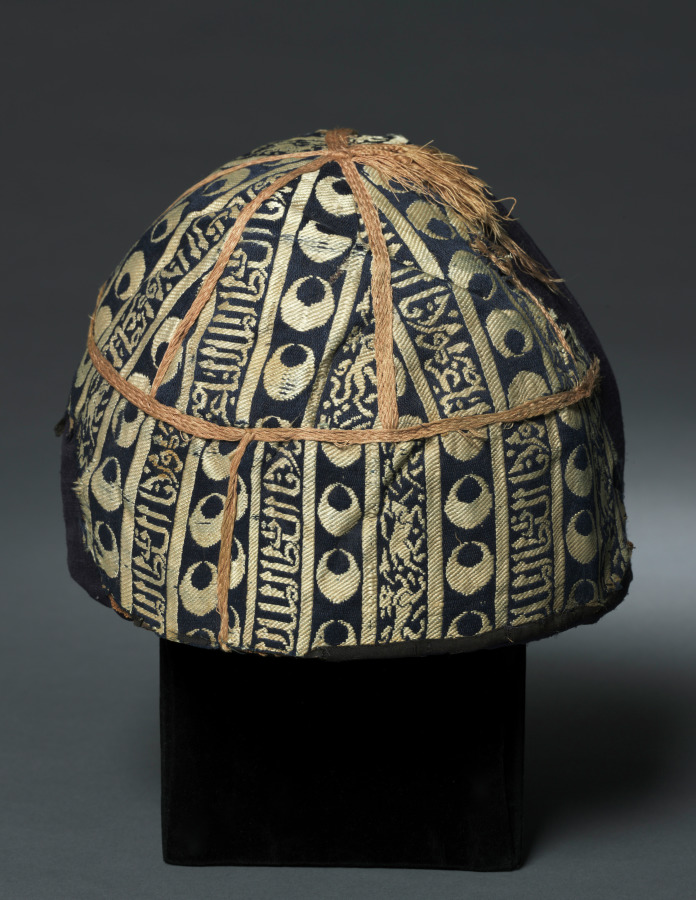
Heritage Research Artifact: The Cap with Striped Inscribed Silk
Introduction: A Confluence of Craft and Legacy
Within the hallowed archives of the Lauren Fashion Heritage Lab, we encounter an object of profound significance: a cap constructed from striped inscribed silk. This is not merely a headpiece; it is a tangible narrative of materiality, power, and the enduring legacy of imperial silk weaving. The cap, with its precise stripes and woven inscriptions, embodies a dialogue between the artisan’s hand and the sovereign’s mandate. As a Senior Heritage Specialist, I assert that this artifact demands rigorous examination, for it bridges the opulent traditions of the East with the bespoke sensibilities of London’s Savile Row—a lineage that values provenance, precision, and the silent eloquence of cloth.
Silk, as a material, has long been the currency of empires. From the Han Dynasty’s guarded sericulture to the Byzantine courts’ monopolistic looms, silk signified not just luxury but authority. The cap’s striped inscribed silk, likely originating from a period when imperial workshops in China or the Ottoman Empire produced textiles for elite consumption, carries this weight. The stripes—alternating hues of deep indigo, crimson, and gold—are not arbitrary; they echo the hierarchical codes of court dress, where each color and width denoted rank. The inscriptions, woven directly into the fabric, are likely characters or symbols of blessing, reign, or ownership, transforming the cap into a document of statecraft.
Materiality: The Silk and Its Weave
Materiality is the cornerstone of this artifact’s study. The silk itself is a testament to the pinnacle of imperial weaving. The fibers, lustrous and resilient, suggest a warp-faced compound weave, a technique perfected in the Ming and Qing dynasties. This method allowed for intricate patterns—here, the stripes and inscriptions—to be integrated without compromising the fabric’s drape or durability. The stripes are not printed but woven, each thread meticulously aligned to create a rhythm of color and texture. The inscriptions, likely in a script such as Chinese or Ottoman Turkish, are formed by supplementary wefts, creating a raised, tactile surface that invites touch—a sensory echo of the cap’s ceremonial use.
From a Savile Row perspective, this materiality resonates with the house’s reverence for cloth. Just as a bespoke suit begins with the bolt of wool or cashmere, this cap begins with the silk’s provenance. The imperial workshops, often located in Suzhou or Nanjing, were the precursors to today’s ateliers, where master weavers passed down secrets through generations. The cap’s silk, therefore, is not a commodity but a heritage asset. Its condition—slight fading along the brim, a minor fray at the seam—speaks to its history of use, perhaps in court ceremonies or diplomatic exchanges. To preserve this materiality is to honor the hands that wove it and the systems that sustained it.
Context: The Legacy of Imperial Silk Weaving
The legacy of imperial silk weaving is a narrative of monopoly, innovation, and cultural exchange. For centuries, the production of silk was a state secret, guarded by the Chinese empire. The Silk Road, that ancient network of trade routes, facilitated the movement of raw silk and finished textiles, but the techniques remained jealously protected. By the time of the Tang and Song dynasties, imperial workshops had standardized production, creating textiles that were both functional and symbolic. The cap, with its inscribed silk, belongs to this tradition. The inscriptions—perhaps a reign mark or a blessing for long life—align the wearer with the emperor’s mandate, a wearable declaration of loyalty.
This legacy extends beyond China. The Ottoman Empire, with its Bursa and Istanbul workshops, also produced inscribed silks, often incorporating Arabic calligraphy. The stripes on this cap, if examined under magnification, might reveal a hybrid aesthetic—Chinese techniques adapted for Persian or Ottoman tastes. Such cross-pollination was common, as silk traveled along the Silk Road, absorbing local motifs. The cap, therefore, is not a static relic but a dynamic artifact of globalism, predating our modern understanding of cultural exchange by centuries.
In the context of Lauren Fashion Heritage Lab, this artifact challenges us to consider how imperial silk weaving informs contemporary luxury. The stripes, for instance, anticipate the pinstripes of Savile Row suits, a design language that has become synonymous with British tailoring. The inscriptions, though illegible to most, prefigure the monograms and logos that define modern branding. The cap is a precursor to the heritage that Lauren and Savile Row uphold: a commitment to craftsmanship, narrative, and the enduring value of the handmade.
Conservation and Interpretation: A Scholarly Imperative
As custodians of this artifact, we must approach its conservation with the same precision as its creation. The silk, while robust, is vulnerable to light, humidity, and handling. We recommend storage in a climate-controlled environment, with UV-filtered lighting and minimal exposure to pollutants. The cap should be supported on a padded form to prevent creasing, and any inscriptions should be documented through high-resolution imaging for future study. This documentation is not merely archival; it is interpretive. The stripes, when digitized, can be analyzed for colorfastness and weave density, revealing the dyer’s skill and the loom’s capabilities.
Interpretation, however, requires humility. The inscriptions, if not fully deciphered, must be approached with scholarly caution. We may consult epigraphers or historians of the relevant script to ensure accuracy. The cap’s provenance—its journey from imperial court to our lab—should be traced through auction records, private collections, or museum transfers. This narrative, once reconstructed, will enrich our understanding of the cap’s social life. Was it a gift from a Chinese emperor to a European envoy? A relic of the Opium Wars? Each possibility adds layers to its legacy.
Conclusion: The Cap as a Living Document
The Cap with Striped Inscribed Silk is more than a heritage artifact; it is a living document of imperial ambition, artisanal mastery, and global connectivity. Its materiality—the silk, the stripes, the inscriptions—speaks to a time when cloth was a medium of power and poetry. For the Lauren Fashion Heritage Lab, this cap is a touchstone for our mission: to preserve the past while inspiring the future. As we continue to study and conserve this object, we honor the weavers, the wearers, and the traditions that shaped it. In the tradition of Savile Row, we recognize that true luxury is not in the object alone but in the story it tells—a story that, like the cap’s silk threads, is both fragile and enduring.