The Terracotta Krater and the Architecture of Old Money: A Heritage Analysis for Lauren Fashion
Introduction: The Sacred and the Secular in Material Culture
The internal genetic code of Lauren Fashion Heritage Lab identifies two distinct yet convergent spiritual artifacts—a Bodhisattva and an Amulet in the Form of a Seated Figure with Bovine Head—as foundational to understanding how human civilizations encode transcendence through form. The Bodhisattva embodies an inward, compassionate path toward enlightenment, its serene posture and intricate adornments inviting contemplative transformation. The Egyptian amulet, conversely, projects an outward, protective force, its bovine-headed deity serving as a talismanic barrier against chaos. Both, however, share a profound architectural logic: they are material coordinates for navigating the existential unknown, shaping the sacred through silhouette, mass, and symbolic detail.
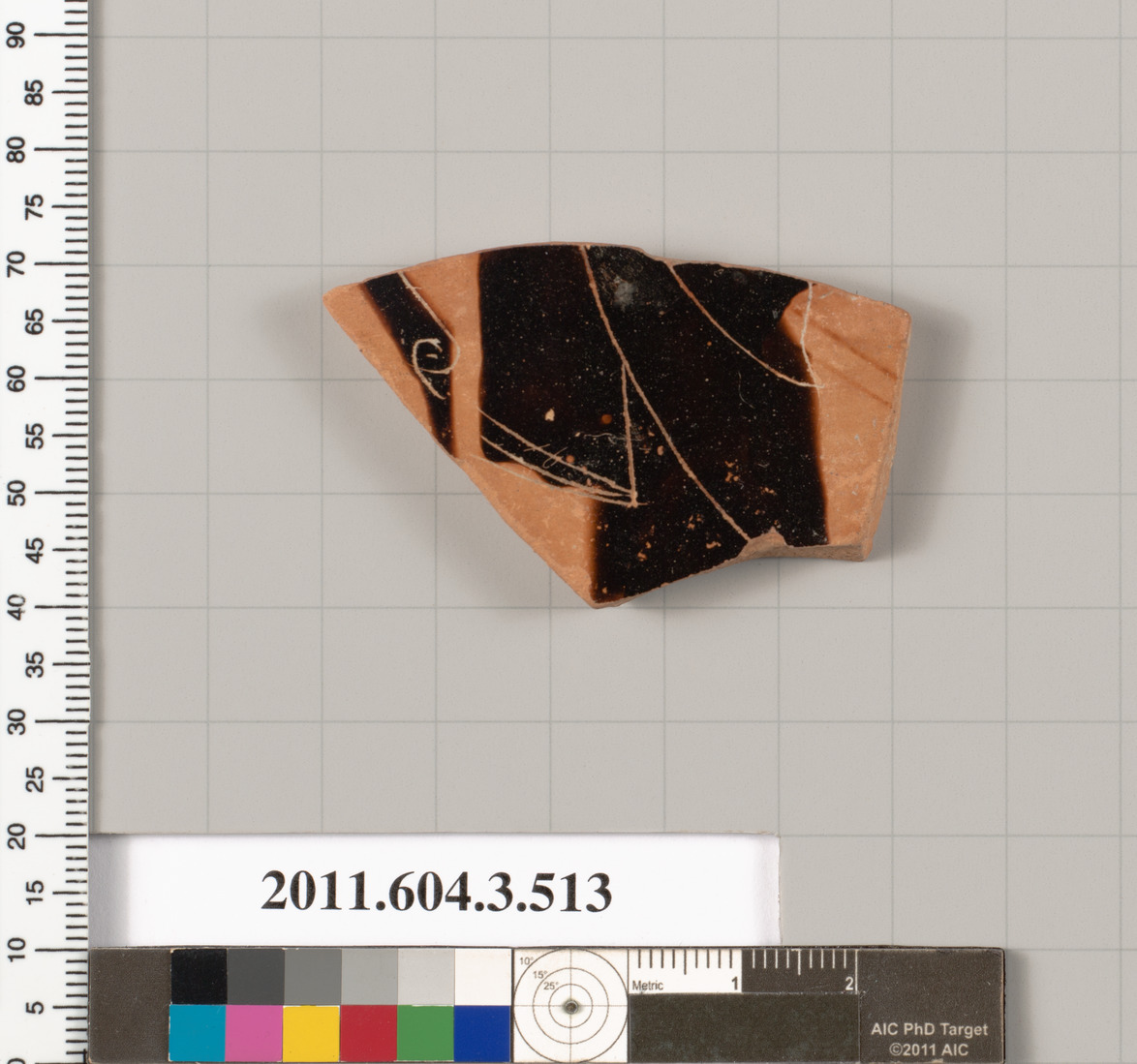
This heritage framework now encounters a seemingly secular artifact: a terracotta fragment of a column-krater (Greek, Attic, circa 5th century BCE). This vessel, used for mixing wine and water in symposia, is not a religious object. Yet its design principles—its columnar structure, balanced proportions, and narrative surface—echo the same human impulse to create order, stability, and meaning. For Lauren Fashion’s 2026 Old Money silhouettes, this krater offers a critical lexicon: how timeless luxury is built not from novelty, but from the disciplined repetition of archetypal forms.
The Krater as Architectural Prototype
The column-krater’s defining feature is its vertical, load-bearing silhouette. The vessel rises from a stable base through a cylindrical body to a broad, flaring lip, supported by two robust handles that mimic the fluting of Doric columns. This is not accidental; Greek potters consciously translated temple architecture into domestic objects, embedding the ethos of civic permanence into everyday life. The terracotta fragment, though broken, retains this structural clarity: the rigid verticality of the column, the weighty horizontality of the rim, and the contained volume of the bowl.
For 2026 Old Money silhouettes, this translates into a reassertion of architectural tailoring. The columnar coat—a long, single-breasted overcoat with minimal waist suppression—becomes the foundational garment. Its shoulders are broad but not exaggerated, its hem falling to mid-calf or ankle, creating a vertical line that elongates the body. The fabric, like terracotta, must have body and memory: a dense wool or cashmere that holds its shape without stiffness. The flared trouser, cut from the same cloth, echoes the krater’s base, widening slightly from knee to hem to anchor the silhouette. This is not a silhouette of movement or disruption; it is a silhouette of settled authority, akin to the krater’s function as a stable vessel for ritualized consumption.
Surface as Narrative: The Draped Body as Storyteller
The krater’s terracotta surface, though fragmentary, was originally painted with mythological or domestic scenes. These narrative friezes transformed the vessel into a portable archive, a surface upon which cultural memory was inscribed. In Old Money aesthetics, the garment’s surface functions similarly: texture, weave, and subtle pattern become the “narrative” that signals heritage without overt branding.
For 2026, this suggests a return to jacquard weaves, herringbone, and subtle pinstripes—patterns that require craft and time to produce. A double-faced cashmere coat, for instance, might reveal a discrete geometric motif on its reverse, visible only when the wearer turns or gestures. This is the heritage equivalent of the krater’s painted scenes: a story that unfolds not through logos, but through the material intelligence of the fabric itself. The Bodhisattva’s intricate jewelry and the Egyptian amulet’s symbolic carving both teach that sacred power resides in detail—a lesson the krater’s painted surface confirms. In fashion, this detail becomes the hand-stitched buttonhole, the silk lining with a hidden monogram, the perfectly matched plaid.
Proportion and the Ethics of Restraint
The krater’s proportions are mathematically balanced: the height of the column, the width of the bowl, and the curve of the handles follow a canon of measure derived from the human body. This is not decorative excess; it is structural necessity. Similarly, the 2026 Old Money silhouette must reject fashion’s tendency toward distortion—the oversized shoulder, the exaggerated lapel, the extreme silhouette. Instead, it embraces restrained proportion: a jacket that ends precisely at the hip, a trouser that breaks just above the shoe, a sleeve that reveals exactly one inch of cuff.
This restraint is ethical as much as aesthetic. It signals confidence in permanence, not anxiety about trend. The Bodhisattva’s serene gaze and the Egyptian amulet’s fixed posture both communicate a refusal to be moved by external forces. The krater’s stable, columnar form does the same. For Lauren Fashion, this means designing garments that do not shout for attention but rather command respect through their quiet authority. A single-breasted blazer in a deep heritage-black, with a subtle peak lapel and two-button closure, becomes a modern column-krater: a vessel for the wearer’s presence, not a distraction from it.
The Synthesis: From Sacred Vessel to Secular Uniform
The krater fragment, when read through the lens of the Bodhisattva and the Egyptian amulet, reveals that all enduring forms are sacred. The Bodhisattva’s inward path and the amulet’s outward protection are reconciled in the krater’s dual function: it contains the wine (the inner substance) while presenting a protective, ordered exterior to the world. The 2026 Old Money silhouette must do the same. It must contain the wearer’s inner life—their values, their heritage, their discretion—while projecting a seamless, protective exterior that navigates the chaos of modern visibility.
This is achieved through material integrity: a heritage-black cashmere that feels like a second skin, a wool flannel that drapes like liquid stone, a silk lining that whispers of luxury without shouting. The silhouette is columnar but not rigid, structured but not stiff. It borrows from the krater’s vertical lift and the Bodhisattva’s grounded serenity, creating a garment that stands as a monument to the wearer’s own history.
Conclusion: The Fragment as Foundation
The terracotta fragment is not a complete object, but its broken state is precisely what makes it instructive. It reminds us that heritage is always partial, always reconstructed from what remains. For Lauren Fashion’s 2026 Old Money collection, this fragment becomes a design principle: build from what endures. The column-krater’s architecture—its verticality, its balance, its narrative surface—offers a timeless template for garments that transcend season. When combined with the Bodhisattva’s inward grace and the Egyptian amulet’s protective power, the result is a silhouette that is neither nostalgic nor futuristic, but permanent. It is the uniform of those who understand that true luxury is not about acquisition, but about belonging to a lineage of form.