The Sublime Vessel: Terracotta Fragments and the Architecture of Absence in 2026 Old Money Silhouettes
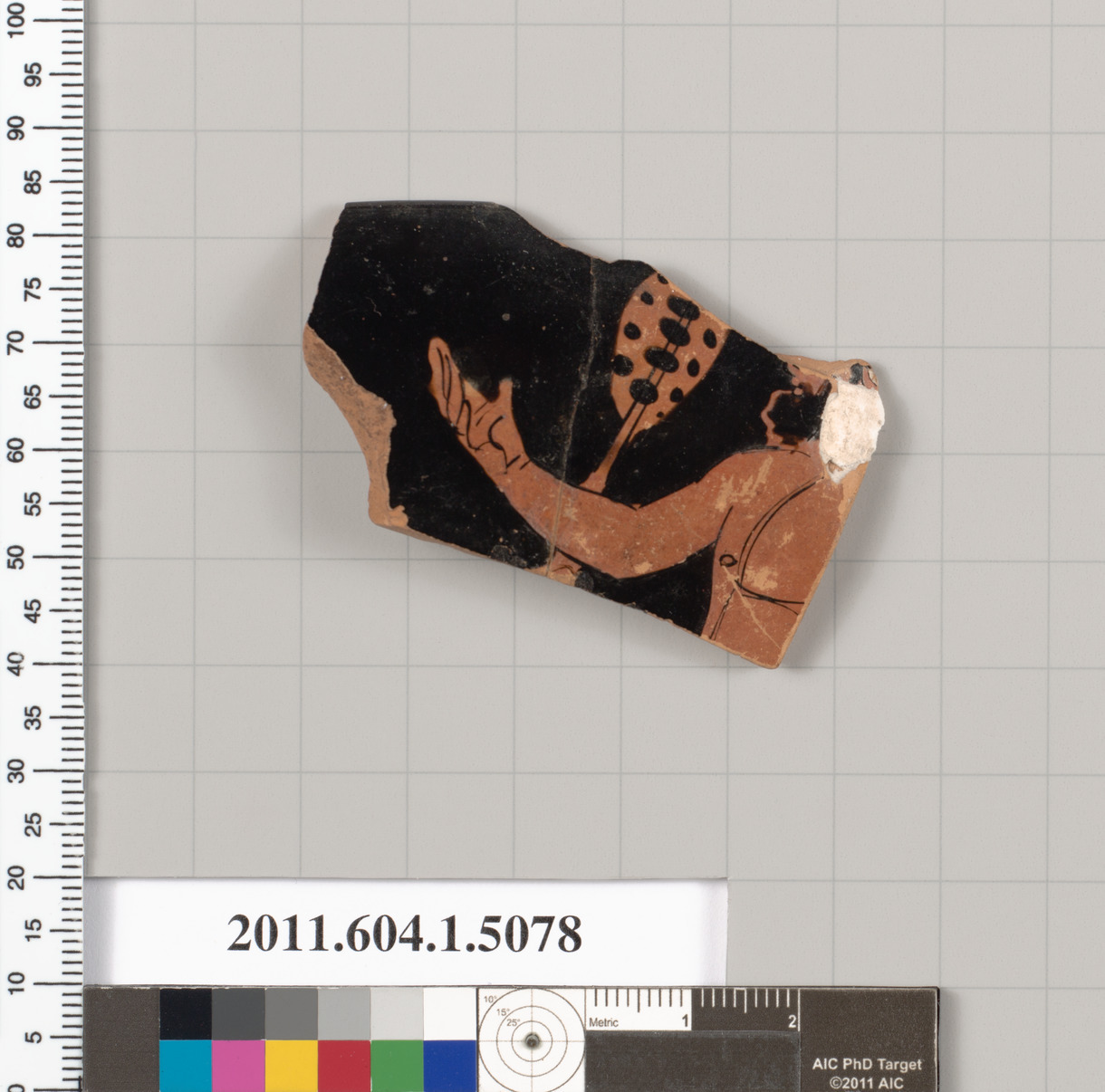
In the hushed sanctum of Lauren Fashion Heritage Lab, where the genetic code of timeless elegance is perpetually decoded, we encounter a paradox of profound resonance. The internal archive presents a Japanese temple tableau: a wooden plaque carved with the transient “Udumbara Flowers”—a bloom that appears once in three millennia—and a porcelain “Cup and Stand,” a vessel of such refined emptiness it awaits the divine. These artifacts, one of fleeting form and one of sacred void, find an unexpected yet illuminating parallel in the Terracotta rim fragment of a kylix (drinking cup) from Attic Greece. This shard of earthenware, a remnant of symposium and ritual, becomes a critical interlocutor for understanding the 2026 Old Money silhouette—a design philosophy that, like the temple’s offerings, privileges absence over presence, restraint over display, and the fragment over the whole.
The Kylix Fragment: A Grammar of Broken Perfection
The terracotta kylix rim is not a complete object; it is a relic of use, a witness to a thousand hands that raised it in libation. Its broken edge is not a flaw but a narrative scar. The clay, fired to a warm, matte umber, bears the slight irregularity of the potter’s wheel—a human touch that no machine can replicate. In the context of Old Money aesthetics, this fragment speaks directly to the rejection of ostentatious novelty. The 2026 silhouette, as extrapolated from this artifact, will not be a garment of pristine, unbroken lines. Instead, it will embrace the archaeological—a jacket whose shoulder seams are slightly dropped, as if eroded by time; a trouser hem that brushes the floor with a deliberate, worn weight; a coat whose lapel roll mimics the gentle curve of the kylix’s rim, suggesting a history of wear rather than a debut on a runway.
The kylix’s terracotta materiality is equally instructive. Unlike the polished, reflective surfaces of fast fashion, terracotta is porous, matte, and humble. It absorbs light rather than reflecting it. The 2026 Old Money palette will therefore pivot away from high-gloss blacks and stark whites toward earthy, mineral tones: burnt umber, raw sienna, deep ochre, and the grey-black of aged clay. These colors, like the terracotta fragment, do not shout; they whisper of provenance. A cashmere overcoat in a shade of “Attic Clay” or a wool suiting in “Fired Earth” becomes a silent declaration of lineage—a fabric that feels as if it has been excavated from a storied wardrobe, not purchased from a seasonal collection.
The Udumbara Flower and the Silhouette of Transience
Returning to the temple’s Udumbara plaque, we see a masterful synthesis of transience and permanence. The carved flower, which blooms only once in three millennia, is rendered in wood that itself decays. This duality is the core of the 2026 Old Money silhouette. The garment must appear timeless yet lived-in. A double-breasted blazer, for instance, will be cut with the precision of a Savile Row master, yet its fabric—a heavy, brushed wool—will have a slight nap that catches the light like the worn edges of the temple plaque. The silhouette will not be rigid; it will drape with the weight of history. Shoulders will be soft, not padded; waists will be defined by the body’s own architecture, not by constricting darts. This is the architecture of absence: the garment does not impose a shape on the wearer; it reveals the shape that has always been there, like the flower emerging from the wood grain.
The “Cup and Stand” porcelain offers a further refinement. Its emptiness is its purpose. The 2026 silhouette will similarly be defined by what it does not contain. Pockets will be minimal, perhaps even absent, to preserve the purity of the line. Fastenings will be hidden, buttons covered in self-fabric, zippers replaced by meticulously hand-finished plackets. The garment becomes a vessel for the wearer’s presence, not a display of the designer’s ego. The kylix fragment, with its broken rim, reminds us that even a vessel’s imperfection can be sacred. A 2026 Old Money coat might feature an asymmetric hem—not as a trend, but as a quiet nod to the fragmentary nature of beauty. A sleeve might be cut slightly fuller, echoing the generous curve of the kylix’s bowl, allowing the arm to move with a freedom that suggests unselfconscious grace.
The Synthesis: Wearing the Fragment
The terracotta kylix fragment, when placed in dialogue with the Udumbara plaque and the porcelain cup, yields a tripartite design manifesto for 2026. First, material honesty: like terracotta, fabrics must be unapologetically natural—wool, cashmere, linen, and silk, finished with a matte, almost tactile surface. Second, structural restraint: the silhouette must be built around the negative space of the body, much as the porcelain cup’s value lies in its emptiness. Third, the poetics of imperfection: a deliberate asymmetry, a slightly uneven lapel roll, a hem that grazes the floor with a worn edge—these are not errors but signatures of authenticity.
In practical terms, the 2026 Old Money wardrobe will be archaeological in its layering. A base of a fine-gauge cashmere turtleneck in “Terracotta Dust” will be overlaid with a wool vest cut with the clean, unadorned lines of the porcelain cup. Over this, a single-breasted coat in a heavy, felted wool—its color the deep, burnt umber of the kylix—will fall to the mid-calf, its hem slightly longer in the back, as if the fabric itself remembers the weight of time. Trousers will be cut with a full leg, tapering only slightly at the ankle, their crease sharp but not pressed to a knife’s edge—a nod to the kylix’s human-made irregularity. Footwear will be minimal: a leather loafer in a matte, unpolished finish, its sole thin and flexible, allowing the foot to feel the ground beneath.
This is not a costume of nostalgia. It is a philosophy of dressing that sees the garment as a fragment of a larger, unknowable whole. The wearer of the 2026 Old Money silhouette does not seek to be seen as new; they seek to be recognized as enduring. Like the terracotta kylix, they bear the marks of use, of ritual, of life lived with intention. Like the Udumbara flower, they bloom not in the glare of the spotlight, but in the quiet, sacred space of the self. The silhouette is not a shape; it is a vessel for presence. And in its emptiness, it holds the most precious gift of all: the possibility of grace.