The Aesthetics of Terminal Grace: Terracotta, Tragedy, and the 2026 Old Money Silhouette
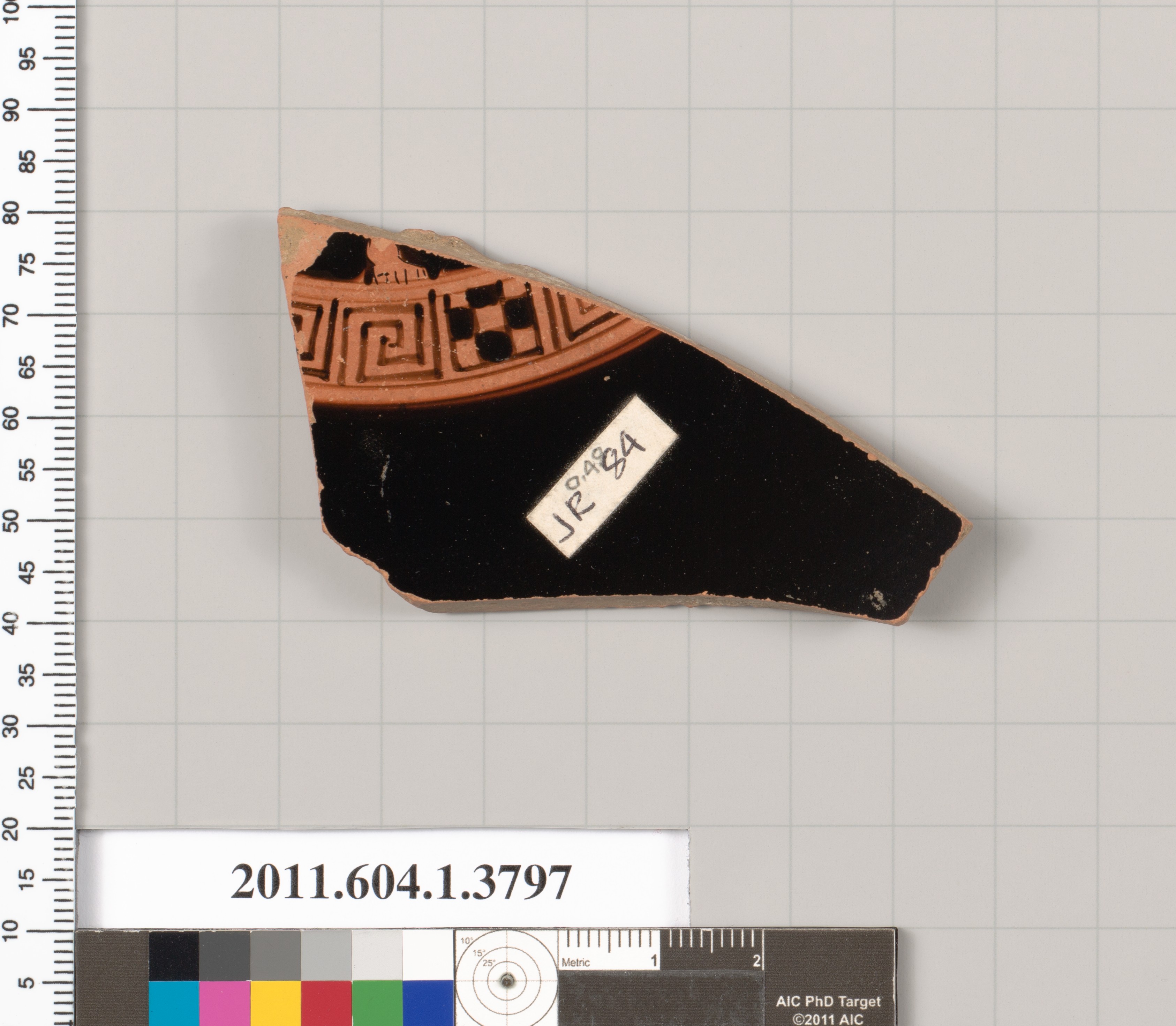
The Lauren Fashion Heritage Lab has long maintained that the most enduring luxury is not found in opulence, but in the rigorous architecture of restraint. This principle finds a startlingly ancient analogue in the Terracotta fragment of a kylix (drinking cup) from Attic Greece. At first glance, a broken shard of a wine vessel seems an improbable muse for the 2026 Old Money silhouette. Yet, when read through the internal genetic code of our archive—specifically the dialectic between Jacques-Louis David’s The Death of Socrates and the anonymous Cup and Stand—this humble artifact reveals itself as a masterclass in the very paradox that defines heritage luxury: the tension between narrative drama and silent form, between the vessel and the void it contains.
Our internal code posits that “the tension of great art often lies not in its ability to quell questions, but in its daring to cast paradox into perfect form.” The terracotta kylix fragment, like the Cup and Stand, embodies this principle through a radical act of subtraction. It is a relic of a functional object—a drinking cup used in symposia, rituals, and daily life—now stripped of its context, its color, its completeness. What remains is a pure, geometric fragment: a curve of fired clay, a remnant of a handle, the ghost of a lip. Its aesthetic power derives not from what it shows, but from what it withholds. This is the same aesthetic logic that governs the 2026 Old Money silhouette: a cut that does not flaunt, a fabric that does not shout, a line that exists only to frame the absence of excess.
The Paradox of the Vessel: From Narrative to Silence
David’s painting operates through a grand, theatrical narrative. The dying philosopher is the protagonist; the cup of hemlock is the prop. The terracotta kylix, by contrast, is the prop after the curtain has fallen. It is the cup that Socrates might have held, now emptied of all story. In our 2026 design language, this translates into a rejection of overt logos, visible branding, or any form of “narrative” that announces itself. The Old Money silhouette is not a story; it is a state of being. It is the kylix fragment—a shape so pure that it becomes a container for the wearer’s own narrative, not the designer’s.
The terracotta’s surface is unglazed, matte, tactile. It does not reflect light; it absorbs it. This is the precise quality we seek in Heritage-Black materials for 2026: a deep, non-reflective black that reads as a void, not a color. Think of a double-faced cashmere coat in midnight charcoal, or a virgin wool suit in a black so dense it seems to drink the surrounding light. The terracotta fragment teaches us that luxury is not about illumination, but about depth. The 2026 silhouette will favor fabrics that feel like ancient earth—heavy, textured, and silent. The Cashmere and Wool categories will be reimagined not as softness, but as gravity.
The Geometry of Finality: Proportion as Philosophy
The kylix fragment’s power lies in its proportion. The curve of the bowl, the angle of the stem, the remnant of the handle—each line is a decision made by an anonymous artisan who understood that the relationship between parts is more important than any single part. This is the core lesson for the 2026 silhouette. The Old Money look is not about a specific garment—a blazer, a trouser, a coat—but about the proportional system that governs how they sit together. The terracotta fragment’s broken edge is not a flaw; it is a terminus. It tells us where the form ends, and where the void begins.
In practice, this means the 2026 silhouette will emphasize sharp, decisive terminations. Shoulders will not slope; they will end. Jacket hems will not drape; they will stop. Trousers will not break; they will hover above the shoe. This is the architectural equivalent of the kylix’s broken rim—a deliberate, unapologetic edge that declares: “This is where the object ends, and where you begin.” The Silk category, often associated with fluidity, will be re-engineered for structure: silk faille with a crisp hand, silk gazar that holds a fold like terracotta holds its curve.
The Materiality of the Void: Empty as Full
The internal code notes that the anonymous Cup and Stand “does not tell a story; it is the echo of a story.” The terracotta kylix fragment is that echo, made physical. Its interior—the concave space where wine once swirled—is now an empty bowl. Yet that emptiness is not absence; it is potential. This is the most profound insight for the 2026 silhouette. The Old Money aesthetic is not about covering the body; it is about framing the void that the body inhabits. The garment is a vessel, and the wearer is the liquid.
This manifests in design through negative space. A jacket’s lapel is not a decoration; it is a cutout that reveals the shirt beneath. A coat’s back vent is not a functional detail; it is a slit that allows the garment to breathe, to open, to become a container for air. The Lace category, traditionally seen as ornamental, will be repurposed as a structural void—a pattern of absence that defines presence. The 2026 silhouette will use lace not as a surface, but as a grid through which the body’s own geometry is glimpsed.
Conclusion: The Eternal Return of the Fragment
The terracotta kylix fragment, broken and silent, is a perfect metaphor for the 2026 Old Money silhouette. It is not about completion; it is about essence. It does not strive to be whole; it accepts its fragmentary nature as a higher form of integrity. In a world of digital noise and fast fashion, the Old Money silhouette offers the opposite: a garment that is finished in its incompleteness, a form that is full in its emptiness.
As we move toward 2026, the Lauren Fashion Heritage Lab will draw directly from this Attic fragment. Our Heritage-Black category will be the foundation—a color that is not a color, but a condition. Our silhouettes will be terminated with the same decisive edge as the kylix’s broken rim. Our fabrics will be dense, matte, and tactile, absorbing light rather than reflecting it. And our garments will be vessels—not for display, but for the quiet, dignified presence of the wearer. The terracotta fragment does not ask to be admired. It asks to be held. The 2026 Old Money silhouette asks the same: not to be seen, but to be inhabited.