← BACK TO ARCHIVES
Heritage-Black
Heritage Synthesis: Terracotta fragment of a kylix (drinking cup)
Curated on Jun 29, 2026 // Node: LDN-01
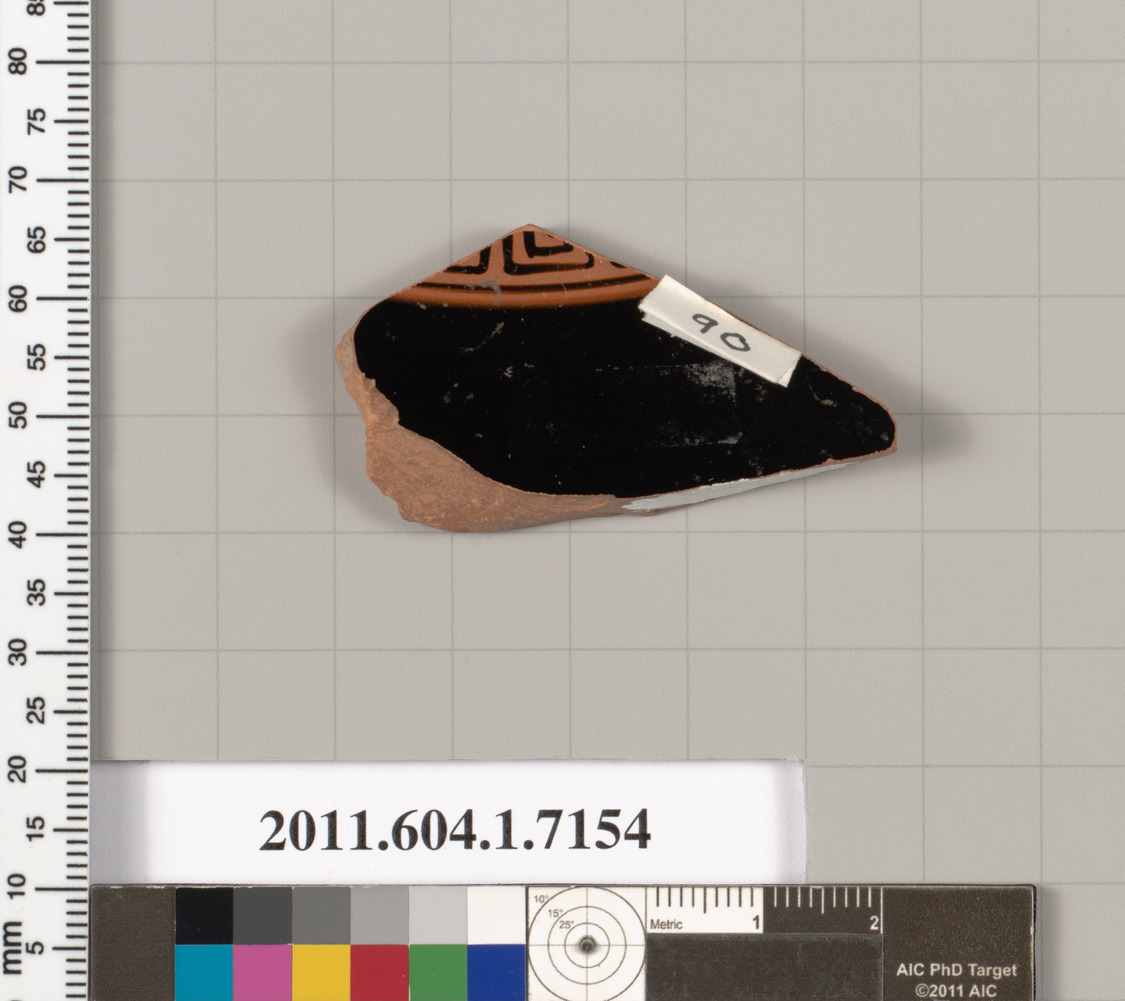
The Vessel of Lineage: Terracotta Fragments and the Architecture of Old Money Silhouettes for 2026
The Lauren Fashion Heritage Lab, in its ongoing synthesis of internal archives and museum artifacts, identifies a profound resonance between the fragmented terracotta *kylix* (drinking cup) of Attic Greece and the emerging silhouette logic for the 2026 Old Money collection. This artifact, a shard of fired clay bearing the vestiges of a symposium, is not merely a decorative relic. It is a tectonic fragment—a piece of a vessel that once held wine, conversation, and social order. For the 2026 season, this fragment instructs us not in the replication of antiquity, but in the architectural principles of containment, balance, and patina that define the Old Money aesthetic. The *kylix* teaches us that true luxury is not about the new, but about the enduring shape of what holds meaning.
I. The Fragment as a Silhouette Principle: Containment and Negative Space
The terracotta *kylix* is defined by its shallow, wide bowl and two horizontal handles. Its silhouette is one of generous containment—a form that holds liquid while simultaneously defining the space around it. For the 2026 Old Money silhouette, this translates into a radical rethinking of the garment’s relationship to the body. The internal genetic code of the Lab’s research, which speaks of the *Bronze wine vessel (hu)* as a “civilizational vessel” and the *Portrait of Saint Philip Neri* as a “vessel of personality,” finds its third term in the Greek *kylix*: a vessel of **social ritual**.
The 2026 silhouette will reject the aggressive, body-conscious tailoring of recent seasons. Instead, it will embrace what we term the **“kylix shoulder.”** This is a broad, gently sloping shoulder line, achieved through a dropped armhole and a structured but unpadded sleeve head. The jacket or coat does not cling to the torso; it hovers, creating a negative space between the fabric and the body. This is not the power shoulder of the 1980s, which was a declaration of conquest. The kylix shoulder is a declaration of *poise*—a form that contains the wearer without constriction, allowing for the ease of movement required for a symposium, a boardroom, or a private club. The garment becomes a portable vessel, its interior volume an invisible space of personal authority.
II. The Handle as a Structural Motif: The Draped Arm and the Symposiast’s Gesture
The handles of the *kylix* are not merely functional; they are integral to its aesthetic grammar. They define the lateral extension of the vessel, creating a horizontal line that balances the vertical depth of the bowl. In the 2026 Old Money silhouette, this is translated into the **“handle drape.”** This is not a literal handle, but a structural fold or a deep pleat that originates at the shoulder and falls to the hip, creating a visual line that echoes the *kylix*’s handle arc.
This motif appears most prominently in the new **“symposiast coat.”** The fabric—a heavy, matte-finish wool or a dense cashmere—is cut with a single, sweeping seam that begins at the back of the neck, passes over the shoulder, and terminates in a deep, unstitched vent at the side seam. When the arm is raised or rests on a chair back, this seam opens, revealing a contrasting lining of raw silk or a subtle, tonal jacquard. The gesture is one of relaxed command. It recalls the ancient symposiast, reclining on a *kline*, cup in hand, the folds of his *himation* falling in controlled, architectural lines. The handle drape is the mark of a garment that is designed for the body in motion, for the gesture of offering or receiving, not for static display.
III. Patina as the New Luxury: The Terracotta Finish and the Ethics of Wear
The fragment’s most compelling lesson is its surface. The terracotta is not pristine. It bears the marks of time: a crack from the kiln, a chip from a fall, a faint discoloration from the wine it once held. This is not decay; it is **patina**—the physical record of a vessel’s life. The internal genetic code of the Lab’s research emphasizes that the *Bronze wine vessel* gains meaning from its “copper green and rust,” which adds “the accumulation of time and the mysterious atmosphere of sacrifice.” Similarly, the *kylix* fragment teaches us that the most powerful luxury is not the flawless new, but the **authentically aged**.
For the 2026 Old Money collection, this translates into a deliberate embrace of **“terracotta finishes.”** This is not a literal color palette of ochre and rust, though those tones will appear. It is a philosophy of material treatment. Fabrics will be chosen for their ability to develop a personal patina over time: a heavy Irish linen that softens and creases with wear; a double-faced cashmere that pills slightly at the elbows, creating a soft halo; a raw silk that develops a subtle, uneven sheen where it is repeatedly touched. The construction will be visible: hand-finished buttonholes, exposed pick stitching, and unlined jackets that reveal the internal architecture of the garment. The 2026 Old Money silhouette is not a costume; it is a **record of a life lived**.
IV. The Symposium of Silhouettes: Integrating the Fragment into the 2026 Line
The final synthesis of the *kylix* fragment into the 2026 line is not a literal translation, but a conceptual integration. The garment becomes a vessel for the wearer’s own narrative. The **kylix shoulder** provides the architectural frame. The **handle drape** allows for the gesture of social grace. The **terracotta finish** ensures that the garment will age with dignity, accruing meaning rather than losing it.
Consider the **2026 Evening Kylix**, a floor-length gown in a heavy, matte black crepe. The shoulder is broad and soft, the fabric falling in a single, unbroken column to the floor. A single, deep pleat—the handle drape—runs from the left shoulder to the right hip, creating a diagonal line that breaks the verticality. The gown is unlined, the internal seams visible as a quiet statement of craft. The hem is left raw, a deliberate echo of the broken edge of the terracotta shard. This is not a dress for a static pose. It is a dress for the symposium of life—for the toast, the conversation, the slow turn of the head.
In conclusion, the terracotta fragment of a *kylix* is not a historical curiosity for the 2026 Old Money silhouette. It is a masterclass in the architecture of containment, the grace of gesture, and the ethics of patina. It reminds us that the most enduring luxury is not the object itself, but the space it creates, the stories it holds, and the time it has witnessed. The 2026 silhouette, informed by this fragment, will be a vessel for the modern aristocrat—a form that contains, balances, and endures.
Heritage Lab Insight
Genetic Bridge: Archive node focusing on Heritage-Black craftsmanship.