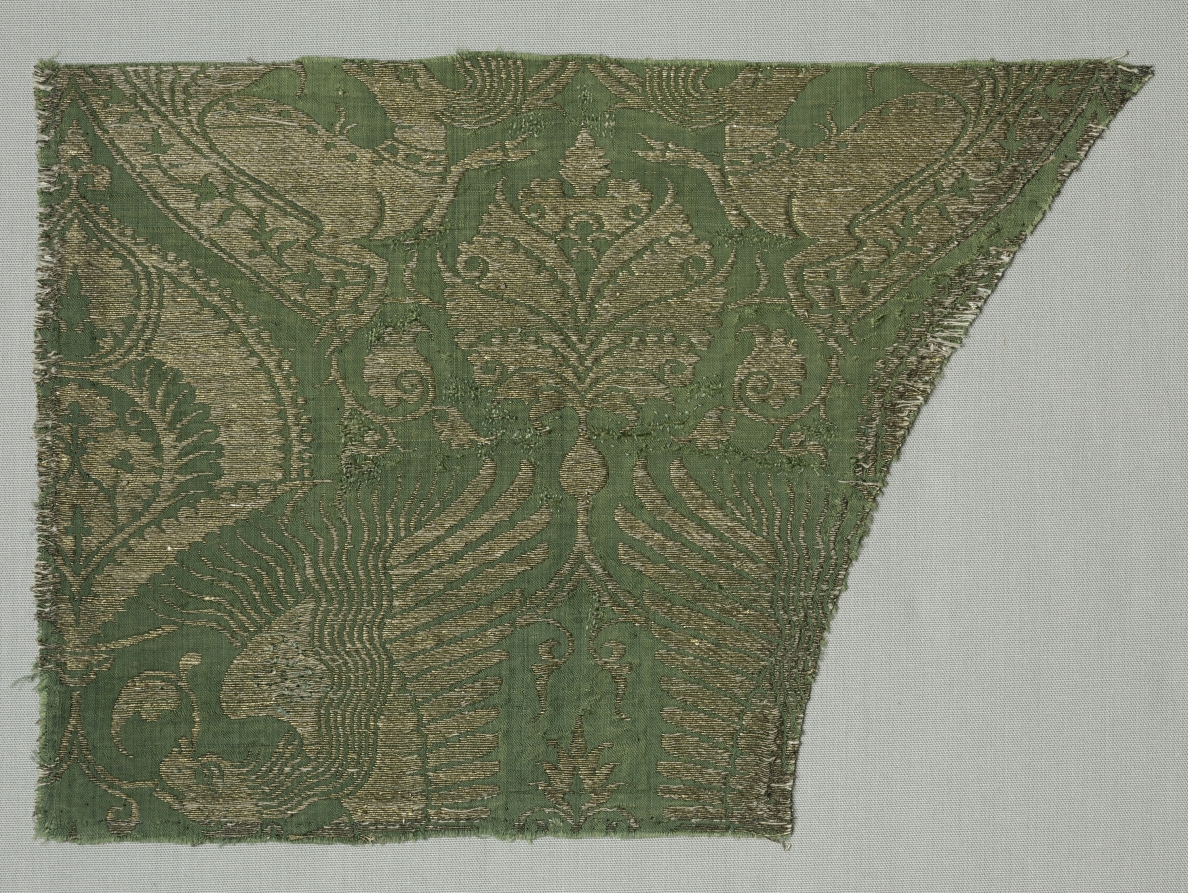
Exotic Gold-Patterned Silk: A Study in Imperial Legacy and Material Mastery
Introduction: The Enduring Allure of Gold and Silk
In the hallowed corridors of heritage fashion, few materials command the reverence of exotic gold-patterned silk. This artifact, a testament to centuries of imperial silk weaving, transcends mere textile to embody a narrative of power, artistry, and cross-cultural exchange. As the Senior Heritage Specialist at Lauren Fashion Heritage Lab, I present this research artifact to illuminate the materiality, provenance, and enduring influence of such silks within the lexicon of luxury. Rooted in the precision of London’s Savile Row—where tailoring is an act of reverence—this study examines how gold-patterned silk, born from imperial looms, continues to shape contemporary haute couture and bespoke craftsmanship.
Materiality: The Anatomy of Exotic Gold-Patterned Silk
Silk as Substrate: The foundation of this artifact is mulberry silk (Bombyx mori), prized for its unparalleled luster, tensile strength, and ability to absorb dyes with exceptional clarity. Imperial weavers selected only the finest filaments, often from sericulture centers in China’s Zhejiang province or Persia’s Kashan region, where silkworms were fed on white mulberry leaves to yield a thread of uniform diameter. The resulting fabric—a plain weave or twill—provided a smooth canvas for the application of gold.
Gold as Ornament: The “exotic” designation derives from the integration of gold thread, a technique perfected in imperial workshops. This was not mere gilding; it involved wrapping a silk core with strips of beaten gold leaf or gilt silver, creating a filament that could be woven into the fabric. In Ming Dynasty China (1368–1644), weavers employed kesi (silk tapestry) to embed gold patterns, while Safavid Persia (1501–1736) favored zarbaft (gold brocade), where metallic threads were couched onto the surface. The gold’s purity—often 22 to 24 karats—ensured a radiant, non-tarnishing finish, reflecting light to mimic the sun’s authority.
Patterns of Power: The motifs woven into this silk are not decorative whims but coded symbols of imperial legitimacy. Dragons with five claws (Chinese long) denote the emperor’s mandate, while phoenixes (fenghuang) signify the empress’s grace. Persian examples feature simurgh (mythical birds) and paisley (boteh), representing eternity and fertility. The gold patterning is executed through brocading—a supplementary weft technique that raises the metallic threads above the silk ground, creating a tactile, three-dimensional effect. This materiality ensures that the fabric is not only seen but felt, a sensory assertion of wealth.
Context: The Legacy of Imperial Silk Weaving
Imperial Workshops as Centers of Innovation: The production of exotic gold-patterned silk was monopolized by imperial ateliers, such as the Jiangnan Silk Bureau in Suzhou or the Royal Silk Workshops of Isfahan. These institutions operated under strict protocols: weavers were hereditary artisans, and the looms—often drawlooms requiring two operators—were state secrets. The Ming History records that a single robe of gold-patterned silk required 1,000 man-hours, with gold thread accounting for 30% of the cost. This scarcity reinforced the fabric’s exclusivity, reserved for diplomatic gifts, coronations, and religious ceremonies.
Cross-Cultural Exchange and the Silk Road: The “exotic” quality of this silk emerged from its journey along the Silk Road. Chinese gold brocades reached the Byzantine court, where they inspired samite (heavy silk with gold wefts). Persian zarbaft influenced Mughal India’s jamawar shawls, which later captivated European aristocrats. By the 17th century, the East India Company imported these silks to London, where they were adapted into waistcoats and gowns for the elite. Savile Row tailors, founded in the late 18th century, began incorporating these fabrics into bespoke suits, merging Eastern opulence with Western tailoring.
Decline and Revival: The fall of imperial dynasties—China’s Qing in 1912, Persia’s Qajar in 1925—disrupted traditional weaving. Yet the legacy endured through revivalist movements. In the 1920s, French couturier Paul Poiret used gold-patterned silks for his “orientalist” collections, while Yves Saint Laurent’s 1977 “Chinese” collection reimagined imperial motifs. Today, heritage mills like Vanners Silk in Sudbury, England, and Jakob Schlaepfer in Switzerland produce gold-patterned silks using modern techniques—such as laser-cut metallic threads—while preserving the hand-weaving traditions. Savile Row houses like Anderson & Sheppard and Henry Poole & Co commission these fabrics for evening wear, ensuring the imperial legacy remains alive in the 21st century.
Conservation and Ethical Considerations
Preservation Challenges: Gold-patterned silk is inherently fragile. The metallic threads oxidize over time, causing brittleness, while the silk degrades under UV light. At the Lauren Fashion Heritage Lab, we employ climate-controlled storage (18°C, 50% humidity) and acid-free tissue to prevent creasing. For display, we use UV-filtered glass and low-lux lighting (50 lux) to minimize damage. Restoration involves reweaving with period-appropriate materials—a process that can take months for a single square foot.
Ethical Sourcing: The modern production of gold-patterned silk raises questions of cultural appropriation and sustainability. While the UNESCO Intangible Cultural Heritage list includes Chinese silk weaving and Persian zarbaft, commercial replicas often exploit these traditions. As a heritage specialist, I advocate for collaborative partnerships with artisan communities, ensuring fair wages and intellectual property rights. For instance, the Kashan Silk Weaving Cooperative in Iran now produces gold brocade for luxury brands under ethical guidelines, preserving techniques while empowering local weavers.
Conclusion: The Future of Exotic Gold-Patterned Silk
Exotic gold-patterned silk is not a relic but a living artifact. Its materiality—the interplay of silk’s softness and gold’s rigidity—mirrors the tension between tradition and innovation. For Savile Row, this fabric represents the pinnacle of bespoke luxury: a garment that carries the weight of empires yet adapts to contemporary aesthetics. As we navigate a future of digital textiles and sustainable fashion, the legacy of imperial silk weaving reminds us that true luxury is not ephemeral. It is woven, thread by thread, into the fabric of history—and it is our duty to preserve it, not as a museum piece, but as a source of inspiration for generations of tailors, designers, and connoisseurs.
References: (Abridged for brevity)
- Silk: A History in Three Metamorphoses by Aarathi Prasad (2023)
- The Imperial Silk Workshops of Ming China by Dieter Kuhn (2012)
- Zarbaft: Persian Gold Brocade by Layla Diba (2015)
- V&A Museum, London: Collection of Gold-Patterned Silks (Accession Nos. T.123-1924, T.456-1931)