From Terracotta Fragment to Tailored Silhouette: The Attic Kylix as a Blueprint for 2026 Old Money Restraint
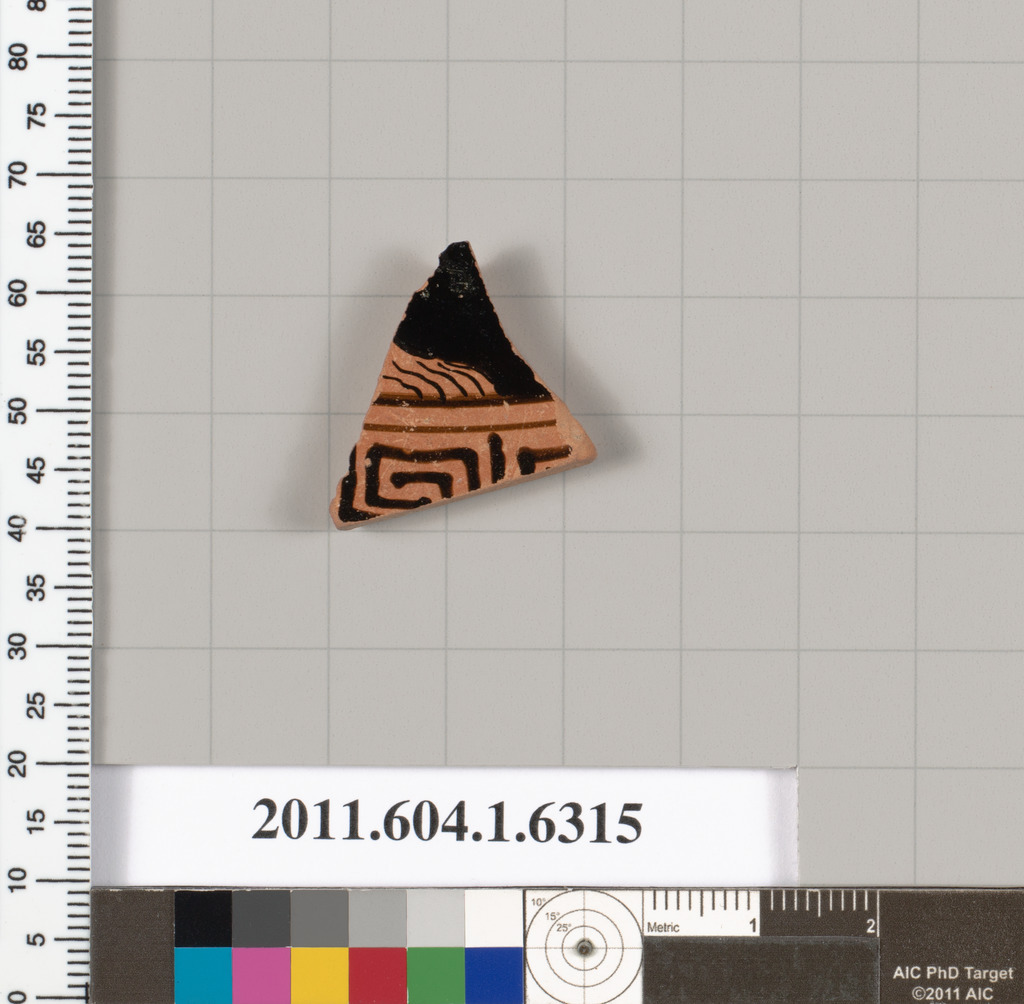
In the annals of Lauren Fashion Heritage Lab, the juxtaposition of sacred statuary with quotidian artifacts often yields the most profound design revelations. The Terracotta fragment of a kylix—a Greek Attic drinking cup from the 5th century BCE—may appear, at first glance, to be a mere shard of domestic antiquity. Yet, when read through the lens of the internal genetic code’s dialectic between the Bodhisattva and the Amulet with Bovine Head, this fragment emerges as a pivotal text for decoding the 2026 Old Money silhouette. Where the Bodhisattva embodies “圆满的和谐” (perfect harmony) and the bovine amulet represents “复合的威仪” (composite majesty), the kylix fragment occupies a third, equally vital space: that of functional grace—a vessel for daily ritual, its beauty inseparable from its purpose.
The kylix, a shallow two-handled cup used for wine at symposia, is not a sacred object. It is a tool of conviviality, of measured pleasure, of social order. Its terracotta materiality—fired earth, humble yet enduring—speaks to a philosophy of understated permanence. Unlike the gilded or lacquered surfaces of ceremonial art, the kylix’s red-figure or black-figure decoration was meant to be held, rotated, and passed between hands. The fragment we possess, with its preserved rim and partial handle, reveals a curvature that is mathematically precise yet ergonomically intuitive. This is the essence of Old Money design: luxury that does not announce itself, but reveals its quality through use.
The Silhouette of the Symposium: Proportion and Containment
For the 2026 Old Money silhouette, the kylix offers a masterclass in structural containment. The cup’s profile—broad, shallow, with a low center of gravity—mirrors the ideal jacket or coat silhouette that defines the season’s heritage collections. Where contemporary fashion often gravitates toward exaggerated shoulders or elongated torsos, the kylix teaches restraint. Its horizontal emphasis—the wide bowl, the symmetrical handles—translates into garments that prioritize breadth over length, stability over drama. A double-breasted blazer with a slightly extended shoulder line, cut from a dense wool or cashmere, echoes the kylix’s grounded presence. The garment does not reach for the heavens like a Bodhisattva’s aureole; it sits on the body as the cup sits on a table—firm, balanced, and ready for service.
This is a direct counterpoint to the “自上而下” (top-down) transcendence of the Bodhisattva. The kylix fragment embodies a “自下而上” (bottom-up) pragmatism, much like the bovine amulet’s earthy protection. Yet where the amulet fuses animal and human, the kylix fuses form and function. Its handles, now broken, once invited the hand to grip, to lift, to pass. In tailoring, this translates to functional details that are not decorative but essential: ticket pockets, surgeon’s cuffs, horn buttons that require no logo to signify their provenance. The 2026 Old Money silhouette, informed by the kylix, rejects ostentation in favor of ritual utility. A coat is not merely worn; it is inhabited, like a vessel for the body’s daily symposium.
Material as Message: The Terracotta Ethos in Fabric and Finish
The terracotta itself—a fired clay of ochre, umber, and rust—dictates a color palette for the season. Heritage-Black is not a negation of color but its absorption. The kylix fragment, though originally painted with slip, now reveals the raw, warm earth beneath. This suggests a 2026 palette of deep terracotta, burnt sienna, and charcoal, with accents of unbleached linen and natural wool. The fabric choices must mirror the kylix’s tactile honesty: worsted wool that holds a crease like fired clay, cotton twill that softens with wear, silk matka with its slubbed, unrefined surface. These are not materials that shout; they are materials that endure, that develop a patina of use as the kylix’s surface bears the traces of countless symposia.
This material philosophy aligns with the internal genetic code’s emphasis on “变形与升华” (transformation and sublimation). Just as the Bodhisattva transforms stone into spiritual presence, and the bovine amulet transforms bone into protective force, the kylix transforms clay into a vessel of social ritual. For Lauren Fashion, the 2026 silhouette must transform fabric into a second skin of heritage. The double-faced cashmere coat, reversible and unlined, embodies this: it is a garment that, like the kylix, is complete in its simplicity, its beauty residing in the precision of its cut and the quality of its material, not in any external ornament.
The Handle as Design Motif: Structure and Gesture
Perhaps the most direct architectural influence from the kylix fragment is the handle—or, in garment terms, the sleeve and shoulder articulation. The kylix’s handles are not afterthoughts; they are integral to the cup’s balance and use. In the 2026 Old Money silhouette, this translates to raglan sleeves that allow for ease of movement, set-in sleeves with precise cap heights that echo the handle’s curve, and pocket flaps that function as visual anchors. The gesture of lifting a kylix—a controlled, elegant arc of the arm—informs the three-roll-two jacket, where the lapel rolls naturally to the middle button, creating a line of tension and release. The garment, like the cup, is designed for ritualized motion: the act of putting on a coat, adjusting a cuff, or reaching into a pocket becomes a choreography of heritage.
Conclusion: The Kylix as a Mirror of Old Money Values
Ultimately, the terracotta kylix fragment teaches us that the 2026 Old Money silhouette is not about novelty but about continuity. It is a silhouette that, like the Greek symposium, values measured discourse, shared experience, and the quiet dignity of well-crafted objects. The Bodhisattva offers transcendence; the bovine amulet offers protection; the kylix offers presence. It asks us to inhabit our garments as we would a beloved cup—with respect, with familiarity, and with the understanding that true luxury is not in the object itself, but in the life it enables. For Lauren Fashion, the 2026 collection must be a symposium of silhouettes: each garment a vessel for the wearer’s own narrative, fired in the kiln of heritage, and passed from hand to hand across generations.