← BACK TO ARCHIVES
Heritage-Black
Heritage Synthesis: Terracotta fragment of a kylix (drinking cup)
Curated on Jun 30, 2026 // Node: LDN-01
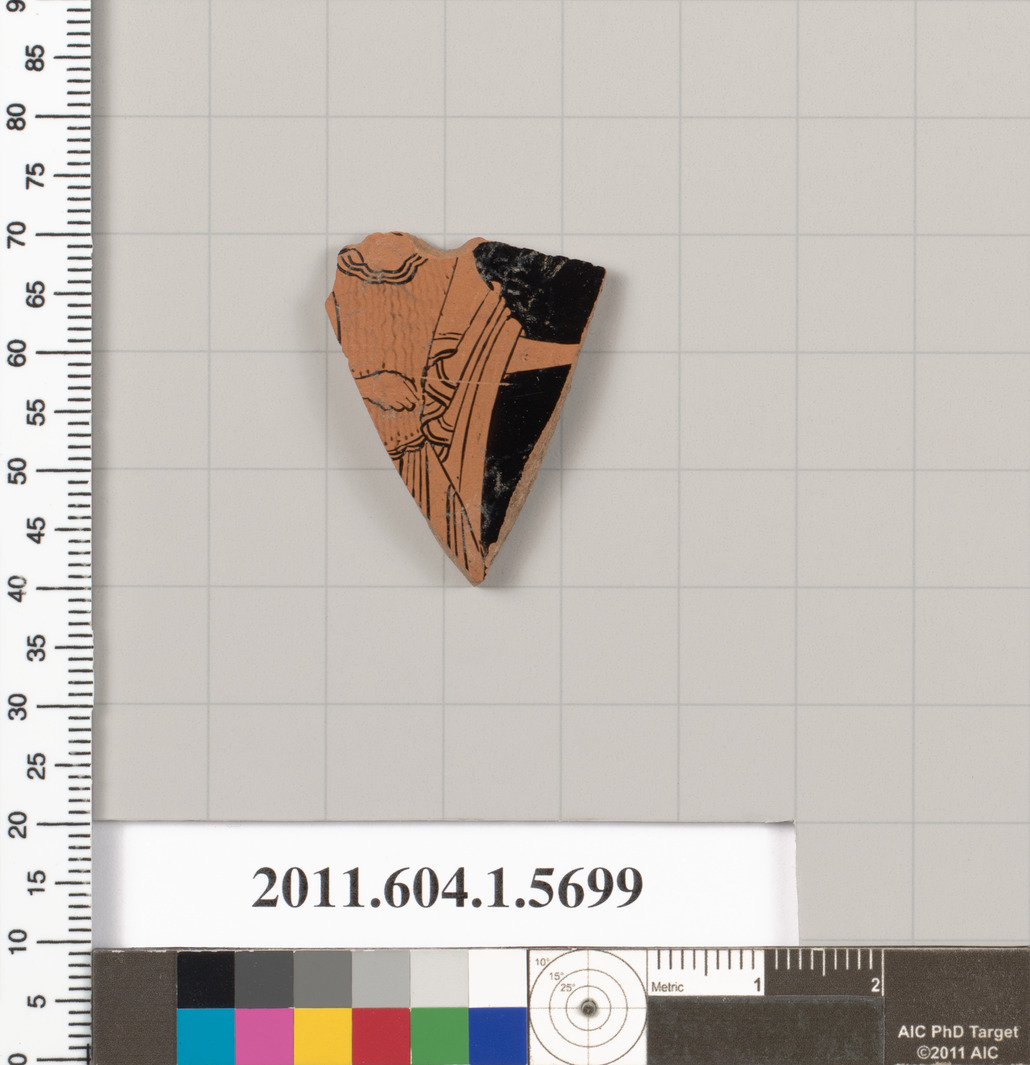
The Dialectics of Absence and Presence: Terracotta Fragments and the 2026 Old Money Silhouette
The internal genetic code of Lauren Fashion Heritage Lab identifies a profound dialectic within Eastern aesthetics: the spiritual “emptiness” (*kū*) of the mind and the material “fullness” (*man*) of the object are not opposing forces but complementary mirrors. This principle, articulated through the Zen匾额 “Udumbara Flower” at Myōshin-ji and the Tang-dynasty bronze mirror of *Divine Beasts, Chariot, and White Tiger* at Shōsōin, reveals a shared strategy of metaphorical expression—where ultimate truth is accessed not through direct representation but through the deliberate interplay of concealment and revelation. This paper argues that a seemingly unrelated artifact—a terracotta fragment of an Attic kylix (drinking cup)—offers a critical, non-Western lens through which to reimagine the 2026 Old Money silhouette for Lauren Fashion. By synthesizing the kylix’s material and symbolic logic with the Eastern concept of “veiling and unveiling,” we can decode a new heritage-informed design language that privileges restraint, patina, and the power of the unseen.
The Terracotta Kylix: A Fragment of Wholeness
The terracotta fragment, a shard of a Greek Attic kylix from the 5th century BCE, is not a pristine object. It is a broken piece of a once-complete vessel used for symposia—ritualized drinking parties central to Athenian social and political life. Its surface, fired to a warm, earthy orange-red, bears traces of black-figure or red-figure decoration, now partially effaced by time, soil, and fracture. To the modern eye, it is a ruin. Yet, within the framework of the heritage lab’s genetic code, this fragment is not a deficit but a strategic asset. The kylix’s incompleteness mirrors the *Udumbara*匾额’s refusal to depict the flower: both artifacts demand that the viewer complete the image through imagination and cultural memory. The kylix does not show the full symposium, the full god, or the full myth; it offers a synecdoche—a part that stands for a lost whole. This is the essence of “emptiness as fullness”: the missing sections of the cup are not voids but invitations to intellectual and sensory participation.
Crucially, the terracotta’s materiality reinforces this principle. Unlike the polished bronze of the Tang mirror, which dazzles with reflective light, terracotta is porous, matte, and absorptive. It does not assert itself; it receives. The fragment’s edges are rough, its glaze chipped, its colors muted by centuries of burial. This is not a surface of “fullness” in the sense of the mirror’s dense iconography, but a surface of “fullness” in its historical weight. Every scratch, every crack, every patch of discoloration is a record of use, of touch, of time. The kylix was held, passed, drunk from, and dropped. Its patina is not decorative but existential. In the language of the heritage lab, this is the *物象之满* (fullness of the object’s image) achieved not through ornament but through authenticity.
From Fragment to Silhouette: The 2026 Old Money Aesthetic
The 2026 Old Money silhouette, as informed by this artifact, must reject the overt luxury of logos, embellishment, and pristine newness. Instead, it must embrace the *heritage-black* of the category tag—a color that is not merely absence but a container for depth, history, and the unseen. The terracotta fragment teaches us that the most powerful statement is often the incomplete one. For the silhouette, this translates into three key design principles:
1. The Power of the Unfinished Line. Just as the kylix’s broken edge creates a dynamic, unresolved contour, the 2026 silhouette should feature asymmetrical hems, raw edges, and deliberately unfinished seams. A wool overcoat, for example, might have a hem that is slightly frayed or a collar that appears to have been cut and left unbound. This is not carelessness but a deliberate nod to the *以言破相* (breaking form through language) of the匾额. The garment’s “incompleteness” forces the wearer and observer to mentally complete the line, engaging the imagination rather than passively consuming a perfect form. This is the Old Money equivalent of the *Udumbara*: the flower is not shown, but its rarity is felt through the gesture of withholding.
2. Patina as Ornament. The terracotta’s surface is its story. For the 2026 silhouette, this means prioritizing materials that age gracefully and visibly—linen that softens and wrinkles, cashmere that pills slightly, leather that develops a rich, uneven patina. The *heritage-black* of the category tag is not a flat, synthetic black but a deep, nuanced black that reveals brown or grey undertones with wear. This aligns with the Tang mirror’s *以满为显* (showing through fullness), but transposed: the “fullness” is not of carved beasts but of lived experience. A double-breasted blazer in a heavy, unlined wool might show the faint impressions of a pocket watch or the slight sheen at the elbows. These are the *神兽* (divine beasts) of the modern wardrobe—marks of time that signify lineage, not novelty.
3. The Void as Structure. The kylix fragment is defined as much by what is missing as by what remains. In silhouette construction, this translates to strategic negative space. A dress might have a large, asymmetrical cutout at the shoulder, not for skin exposure but to create a visual “gap” that echoes the匾额’s *空* (emptiness). A trouser leg might be deliberately cropped above the ankle, leaving a void between fabric and shoe. This void is not absence but potential—a space for the mind to dwell. It is the *心之花* (flower of the mind) that the *Udumbara*匾额 seeks to cultivate. In the 2026 Old Money wardrobe, such voids are the ultimate luxury: they signal a confidence that does not need to fill every inch with material.
Conclusion: The Shared Metaphor of Concealment
The terracotta fragment, the *Udumbara*匾额, and the Tang mirror converge on a single, radical insight: the most profound truths are accessed through veiling, not unveiling. The kylix’s brokenness, the匾额’s word-based abstraction, and the mirror’s dense iconography all serve to *遮蔽* (conceal) in order to *通达* (reach through). For the 2026 Old Money silhouette, this means that heritage is not about displaying wealth or status but about embodying a relationship with time, material, and absence. The *heritage-black* garment is not a canvas for decoration but a vessel for memory—a fragment of a larger narrative that the wearer carries forward. In an era of digital saturation and visual overload, the most radical act of luxury is to leave something unsaid, unfinished, and unseen. The terracotta kylix, in its silent, broken dignity, shows us the way.
Heritage Lab Insight
Genetic Bridge: Archive node focusing on Heritage-Black craftsmanship.