The Transmutation of Form: From Attic Kyathos to the 2026 Old Money Silhouette
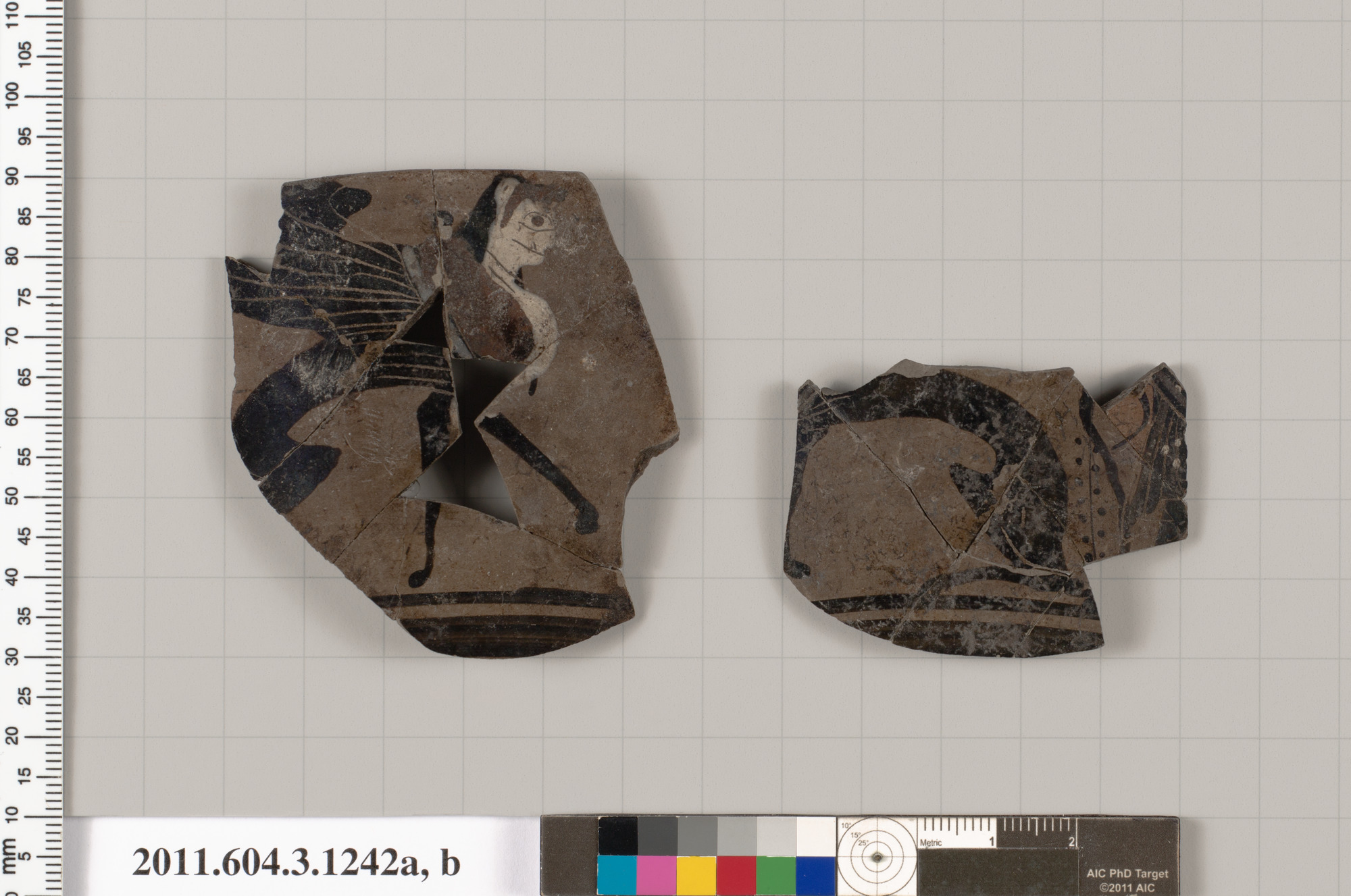
The Lauren Fashion Heritage Lab’s internal genetic code, drawn from the Chinese aesthetic principles of “object-image transformation” (物象转换) and “spiritual habitation” (精神寄寓), provides a profound lens through which to examine a seemingly unrelated artifact: the terracotta fragments of a Greek Attic kyathos (cup-shaped ladle). This vessel, a humble serving implement from the 6th–5th century BCE, is not a direct precursor to any garment. Yet, when analyzed through the dual frameworks of material transposition and cultural memory, it reveals a resonant blueprint for the 2026 Old Money silhouette—a style defined not by novelty, but by the quiet authority of inherited form.
I. The Kyathos as a Study in “Object-Image Transformation”
The kyathos, in its fragmented state, embodies a critical tension: it is a utilitarian object (a ladle for wine) that simultaneously aspires to the status of a ritual artifact. Its terracotta body, fired from common clay, mimics the elegant, elongated profile of bronze or silver prototypes used in aristocratic symposia. This is not mere imitation; it is a deliberate act of “form translation”—the same principle that guided the Chinese scholar’s stone (Rock in the form of a fantastic mountain) and the ceramic jar mimicking a bronze hu. The kyathos takes the “spirit” of the precious metal—its reflective surfaces, its crisp contours, its ceremonial weight—and renders it in a humble, accessible material. The terracotta’s porosity and fragility become a counterpoint to the imagined permanence of the metal original, creating a dialectic between aspiration and actuality, between the ideal and the everyday.
This mirrors the Chinese aesthetic of “不似之似” (likeness in unlikeness) and “材异神同” (different material, same spirit). The kyathos is not a bronze ladle; it is a terracotta ladle that remembers bronze. Its value lies not in its material worth, but in its ability to evoke a lost world of ritualized consumption, social hierarchy, and artistic refinement. The fragments we possess—a handle, a rim, a curve of the bowl—are not ruins; they are semiotic vessels, carrying the encoded gestures of a civilization’s aesthetic order.
II. The 2026 Old Money Silhouette: A Lexicon of Inherited Forms
The Old Money aesthetic, particularly as it evolves into 2026, rejects the transient spectacle of fast fashion in favor of “permanent style”. It is a wardrobe built on silhouettes that have been proven by time: the tailored blazer, the straight-leg trouser, the cashmere crewneck, the trench coat. These are not inventions; they are reiterations of forms that have already achieved cultural canonization. The 2026 iteration, however, deepens this principle by embracing the “fragmentary” nature of heritage. It does not seek to perfectly reconstruct a bygone era, but to evoke its essence through selective, almost archaeological, cues.
Consider the kyathos’s defining formal characteristics: its elongated, gently flaring handle; its rounded, deep bowl; its clean, unadorned profile punctuated by a single, subtle curve. These elements translate directly into the 2026 Old Money silhouette:
- The Elongated Handle → The Extended Shoulder: The kyathos handle, which extends outward and then curves back, finds its analogue in the softly extended shoulder of a 2026 overcoat or blazer. This is not the aggressive, padded shoulder of the 1980s, but a fluid, almost organic extension that suggests a lineage from equestrian or naval tailoring—a form that has been refined for utility and grace, not spectacle.
- The Deep Bowl → The Voluminous Torso: The kyathos’s bowl, capacious yet controlled, mirrors the “quiet volume” of the 2026 silhouette. Think of a double-breasted jacket with a subtle drape, or a wide-leg trouser that falls without breaking. This is not the exaggerated volume of avant-garde design, but a measured fullness that suggests ease and confidence—the ease of a form that has been worn and understood for generations.
- The Clean Profile → The Unbroken Line: The kyathos’s terracotta surface, though textured, is uninterrupted by extraneous decoration. Similarly, the 2026 Old Money silhouette prioritizes unbroken lines and seamless construction. A cashmere coat in Heritage-Black, for instance, achieves its impact through perfect proportion and impeccable drape, not through logos or embellishment. The form is the message.
III. Material Transposition: The “Terracotta Logic” of Luxury
The kyathos teaches us that material is not destiny. Just as the Chinese jar in the shape of a bronze hu uses humble clay to evoke ritual authority, the 2026 Old Money silhouette uses understated fabrics (flannel, cashmere, wool crepe) to evoke the authority of established wealth. The terracotta’s matte, porous surface—its refusal to shine—becomes a metaphor for the Old Money ethos: substance over spectacle. A 2026 garment in Heritage-Black does not gleam; it absorbs light. Its texture is felt, not seen. This is the “terracotta logic” of luxury: the most powerful forms are those that do not need to announce themselves.
Furthermore, the kyathos’s fragmented state—its missing pieces, its worn edges—speaks to the 2026 trend of “curated imperfection.” Old Money style has always valued patina: the soft sheen of a well-worn leather shoe, the slight fade of a perfectly broken-in denim jacket. In 2026, this extends to the silhouette itself. A jacket might be cut with a slightly asymmetrical lapel, or a trouser with a subtle, intentional twist at the hem. These are not mistakes; they are archaeological traces of a form that has been lived in, passed down, and reinterpreted.
IV. Conclusion: The Kyathos as a Spiritual Blueprint
The Attic kyathos, in its humble terracotta, is not a source of direct visual inspiration for the 2026 Old Money silhouette. It is, however, a spiritual blueprint. It demonstrates that the most enduring forms are those that transcend their original material and function, becoming vessels for cultural memory. The 2026 silhouette, like the kyathos, is a form translated: it takes the “spirit” of aristocratic ease—the unforced elegance of inherited style—and renders it in the “terracotta” of modern luxury: cashmere, wool, and Heritage-Black. It is not a copy of the past, but a reiteration of its essence. In this, it achieves the highest ambition of the Old Money aesthetic: to look as if it has always existed, and to feel as if it will never go out of style.