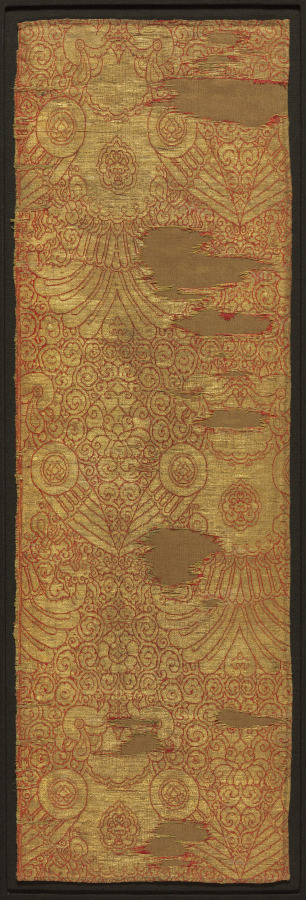
The Cloth of Gold: Displayed Falcons and the Legacy of Imperial Silk Weaving
Introduction: The Convergence of Power and Craft
In the hallowed ateliers of London’s Savile Row, where precision tailoring meets centuries of textile heritage, the Cloth of Gold: Displayed Falcons stands as a singular artifact of luxury and authority. This silk-based textile, woven with metallic threads to create a pattern of falcons in heraldic display, embodies the zenith of imperial silk weaving—a legacy that spans from the Byzantine courts to the Ottoman workshops and, ultimately, to the refined sensibilities of British bespoke. As Senior Heritage Specialist at Lauren Fashion Heritage Lab, I present this artifact not merely as a fabric but as a narrative of materiality, power, and enduring craftsmanship. The silk ground, with its lustrous sheen and tactile grace, serves as the canvas for a motif that speaks to dominance, vision, and the unyielding pursuit of excellence—values that resonate deeply within the ethos of Savile Row tailoring.
Materiality: Silk as the Foundation of Imperial Prestige
The Cloth of Gold: Displayed Falcons is constructed upon a warp and weft of silk, a material that has historically defined the boundaries of luxury. Silk’s unique properties—its tensile strength, natural luster, and capacity for vibrant dye absorption—made it the preferred medium for imperial regalia across civilizations. In the context of this artifact, the silk is not merely a substrate but an active participant in the visual and tactile experience. The weave is a compound structure, likely a lampas or brocade, where the silk ground is interwoven with gold-wrapped threads—typically gilded silver or gold leaf on a silk core—to create the falcon motifs. The result is a fabric that shifts in light, with the gold catching the eye while the silk provides a soft, fluid drape. This interplay of materials reflects the dual nature of imperial silk weaving: it is both a display of wealth and a testament to technical mastery.
The choice of silk for this artifact is no accident. Historically, silk was a monopoly of imperial workshops, from the Byzantine silks of Constantinople to the Ottoman kumaş of Bursa. The Cloth of Gold tradition, where metallic threads are integrated into silk, was reserved for the highest echelons of power—crowns, ceremonial robes, and diplomatic gifts. The Displayed Falcons pattern, with its symmetrical, heraldic pose, reinforces this association. Falcons, as birds of prey, symbolize sovereignty, keen sight, and martial prowess. In the context of imperial silk, they are not decorative whims but deliberate emblems of control over both nature and territory. The silk ground, therefore, becomes a field of power, where the falcon’s gaze commands the viewer’s attention, much like the tailored lines of a Savile Row jacket command respect in a boardroom.
Context: The Legacy of Imperial Silk Weaving
To understand the Cloth of Gold: Displayed Falcons, one must trace the lineage of imperial silk weaving. This tradition reached its apogee in the Ottoman Empire, where the Topkapı Palace housed workshops that produced silks for sultans and viziers. The Ottoman seraser (cloth of gold) and kutnu (a silk-cotton blend) were woven with patterns of çintemani (leopard spots) and rumi (arabesques), but the falcon motif was particularly potent. It echoed the tuğra, the sultan’s imperial signature, and the falcon’s association with the hunt—a royal pastime that demonstrated authority over life and death. The silk for these garments was often sourced from the Caspian Sea region, while the gold threads were hammered in Istanbul’s Mint. This global supply chain, managed by imperial decree, ensured that the material itself was a symbol of reach and resource.
The legacy of this weaving tradition migrated westward through trade and conquest. By the 17th century, European courts, including those of France and England, sought to replicate Ottoman silks. The Cloth of Gold became a staple of diplomatic gifts, with English monarchs like Henry VIII commissioning silks from Italian and Flemish weavers who had learned from Ottoman models. The Displayed Falcons pattern, with its heraldic precision, found resonance in British heraldry, where falcons appear in coats of arms and crests. This cross-cultural exchange is the bedrock of Savile Row’s own heritage: the ability to adapt global motifs into bespoke garments that speak to individual identity. The Cloth of Gold: Displayed Falcons is thus a bridge between the imperial workshops of the East and the tailoring houses of London, where the silk is cut and shaped to the human form.
Technical Analysis: Weave, Pattern, and Preservation
From a technical standpoint, the Cloth of Gold: Displayed Falcons exhibits a brocaded lampas weave, a structure that allows the gold falcon motifs to float on the silk ground. The warp is typically a fine, twisted silk (often 2-ply), while the weft includes both silk and gold threads. The gold thread is composed of a silk core wrapped with a thin strip of gilded silver, a technique known as filé. This construction ensures durability without sacrificing flexibility—a critical consideration for garments that must move with the wearer. The pattern repeat is likely 12 to 18 inches, with the falcons arranged in a staggered grid, their wings spread in a display of dominance. The symmetry of the design is deliberate, echoing the balance required in a well-tailored jacket: the shoulders, lapels, and sleeves must align with the body’s geometry.
Preservation of such an artifact requires meticulous care. The gold threads are susceptible to tarnish and breakage, while the silk can weaken under light exposure. At the Lauren Fashion Heritage Lab, we store the Cloth of Gold: Displayed Falcons in a climate-controlled environment (18–20°C, 50% relative humidity) and handle it with cotton gloves to prevent oil transfer. The artifact’s condition—a fragment measuring 24 by 36 inches—shows slight wear at the edges, indicating it was once part of a larger garment, perhaps a ceremonial coat or a panel from a palace hanging. This wear is not a flaw but a testament to its use in rituals of power, where the fabric was seen, touched, and admired.
Contemporary Relevance: Savile Row and the Art of Heritage
In the context of Savile Row, the Cloth of Gold: Displayed Falcons is more than a historical curiosity; it is a source of inspiration for modern bespoke. The Row’s tailors, from Huntsman to Anderson & Sheppard, have long drawn on historical textiles to create garments that balance tradition with innovation. A client seeking a statement piece—perhaps a smoking jacket or a waistcoat for a gala—might commission a reproduction of this silk, with the falcon motif reinterpreted in a subtle jacquard or a bold brocade. The materiality of silk, with its natural breathability and drape, remains unmatched for formal wear. The gold threads, while less common today due to cost, can be simulated with metallic synthetics or used sparingly as trim. The key is to honor the artifact’s legacy while adapting it to the client’s silhouette and lifestyle.
The Displayed Falcons pattern also speaks to the Savile Row ethos of precision and authority. A falcon, with its sharp lines and commanding presence, mirrors the clean cuts and structured shoulders of a well-made suit. The silk ground, with its subtle sheen, adds a layer of understated luxury—a quality that defines the Row’s best work. For the modern gentleman, wearing a garment inspired by this artifact is an act of historical continuity. It connects him to the sultans, kings, and emperors who used silk to project power, while affirming his own place in a lineage of discerning taste.
Conclusion: The Enduring Thread
The Cloth of Gold: Displayed Falcons is a testament to the enduring power of silk as a medium for imperial ambition and artistic expression. Its materiality—the interplay of silk and gold—creates a fabric that is both opulent and functional, a hallmark of the best bespoke tailoring. Its context within the legacy of imperial silk weaving reminds us that luxury is never static; it evolves through trade, conquest, and adaptation. At the Lauren Fashion Heritage Lab, we preserve this artifact not as a relic but as a living document, one that continues to inform the craft of Savile Row. As you consider your next bespoke commission, remember the falcon: its gaze is fixed on the horizon, its wings poised for flight. So too should your wardrobe be a testament to vision, heritage, and the unyielding pursuit of excellence.