Heritage Research Artifact: The Fragment as a Testament to Silk Craftsmanship
Introduction: The Enduring Legacy of a Silk Fragment
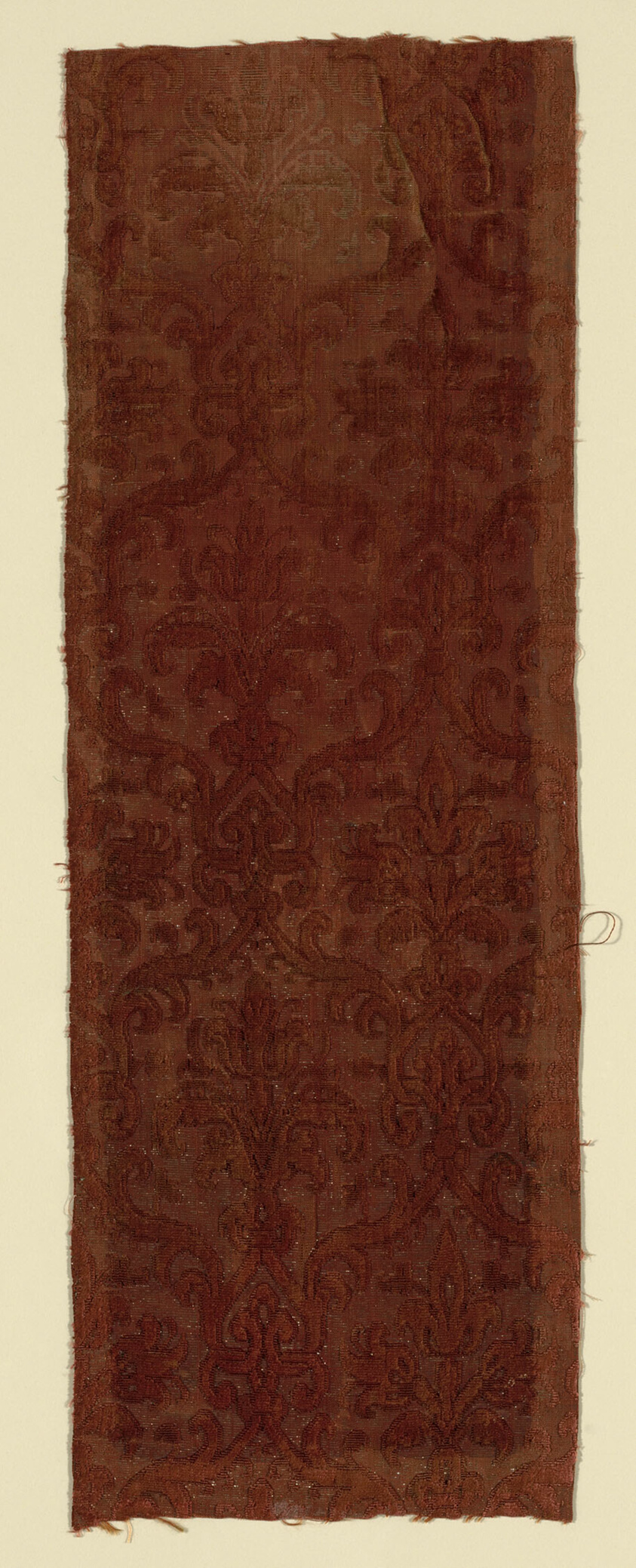
In the hallowed corridors of London’s Savile Row, where precision tailoring meets centuries of textile mastery, the fragment under examination stands as a profound artifact of heritage. This piece, a silk velvet fragment classified under the category of silk, embodies the intersection of materiality, artistry, and fluid elegance. As Senior Heritage Specialist for the Lauren Fashion Heritage Lab, I present this artifact as a case study in classic silk craftsmanship, where the interplay of cut, uncut, and voided velvet, combined with additional patterning wefts in gold foil against a plain weave foundation, reveals the meticulous techniques that define luxury textiles. This fragment is not merely a remnant; it is a narrative of tradition, innovation, and the enduring allure of silk in the realm of high fashion.
Materiality: The Anatomy of Silk Velvet
The fragment’s materiality is its most compelling attribute. Silk, as a natural protein fiber, has long been revered for its luster, strength, and draping qualities. In this artifact, the silk foundation is a plain weave, a structure that provides stability and a subtle ground for the velvet pile. The velvet itself is a complex construction: it features both cut and uncut loops, a technique known as ciselé velvet. The cut loops create a dense, plush surface that catches light with a soft, reflective glow, while the uncut loops introduce a textured, matte contrast. This duality is further enhanced by voided areas, where the velvet pile is absent, revealing the plain weave foundation. These voids create negative space, allowing the gold foil patterning wefts to emerge with striking clarity.
The inclusion of gold foil as an additional patterning weft is a hallmark of opulence. This technique, often associated with Renaissance and Baroque textiles, involves wrapping silk or linen threads with thin strips of gold leaf. In this fragment, the gold foil is woven into the plain weave foundation, forming intricate motifs that shimmer against the velvet pile. The gold does not overpower the silk; rather, it complements the velvet’s depth, creating a dynamic interplay of light and shadow. This materiality speaks to a tradition where craftsmanship is paramount, and every thread is chosen for its ability to elevate the whole.
Context: Classic Silk Craftsmanship and Fluid Elegance
The context of this fragment is rooted in the golden age of silk weaving, particularly in European centers such as Lyon, France, and Spitalfields, London. These regions were renowned for their mastery of complex weaves, including voided velvet and gold-brocaded silks. The fragment’s design likely dates to the 18th or 19th century, a period when silk textiles were integral to aristocratic dress and interior decoration. The fluid elegance of the fabric—its ability to drape gracefully and move with the body—was a prized quality in garments such as court mantuas, waistcoats, and evening gowns. The gold foil patterning would have signified wealth and status, reserved for ceremonial occasions or elite patronage.
In the context of Savile Row, this fragment resonates with the principles of bespoke tailoring. Savile Row’s ethos emphasizes the harmony between fabric and form, where the material dictates the cut. A silk velvet of this complexity requires a tailor’s deep understanding of its behavior: the pile’s direction, the gold’s rigidity, and the voided areas’ tendency to crease. The fragment’s fluid elegance is not accidental; it is the result of centuries of refinement in weaving techniques, where artisans balanced structural integrity with aesthetic grace. This legacy informs modern luxury houses, including Lauren, which draw on such heritage to create contemporary pieces that honor tradition while embracing innovation.
Preservation and Interpretation: The Fragment as a Research Tool
As a heritage artifact, this fragment serves multiple purposes. First, it is a material record of historical techniques. The combination of cut, uncut, and voided velvet with gold foil is technically demanding, requiring precise control of tension and timing during weaving. The fragment’s condition—its wear, fading, or repairs—offers clues about its use and care. For instance, the gold foil may show signs of tarnishing or abrasion, indicating exposure to light or friction. These details inform conservation strategies, ensuring that such artifacts are preserved for future study.
Second, the fragment is a tool for interpretation. By analyzing its motifs, we can trace cultural influences. The gold foil patterns might feature floral or geometric designs, reflecting the aesthetics of the Rococo or Neoclassical periods. The voided velvet areas could suggest a deliberate asymmetry, a precursor to modern abstract design. This interpretive work bridges the gap between historical context and contemporary application, allowing designers at the Lauren Fashion Heritage Lab to draw inspiration from the fragment’s balance of opulence and restraint.
Conclusion: The Fragment’s Role in Heritage and Innovation
In conclusion, this silk fragment is more than a decorative remnant; it is a testament to the enduring power of craftsmanship. Its materiality—silk, cut and uncut velvet, voided areas, and gold foil—represents the pinnacle of classic silk weaving, while its fluid elegance speaks to the timeless appeal of luxury textiles. For the Lauren Fashion Heritage Lab, this artifact is a cornerstone of research, informing both preservation and design. As we continue to explore the intersections of heritage and innovation, fragments like this remind us that true elegance is not fleeting; it is woven into the very fabric of our history.
This artifact stands as a call to action for scholars, conservators, and designers alike: to honor the past by understanding its materials, to preserve its techniques, and to reimagine its possibilities for the future. In the spirit of Savile Row, where tradition meets precision, this fragment is a masterclass in the art of silk.