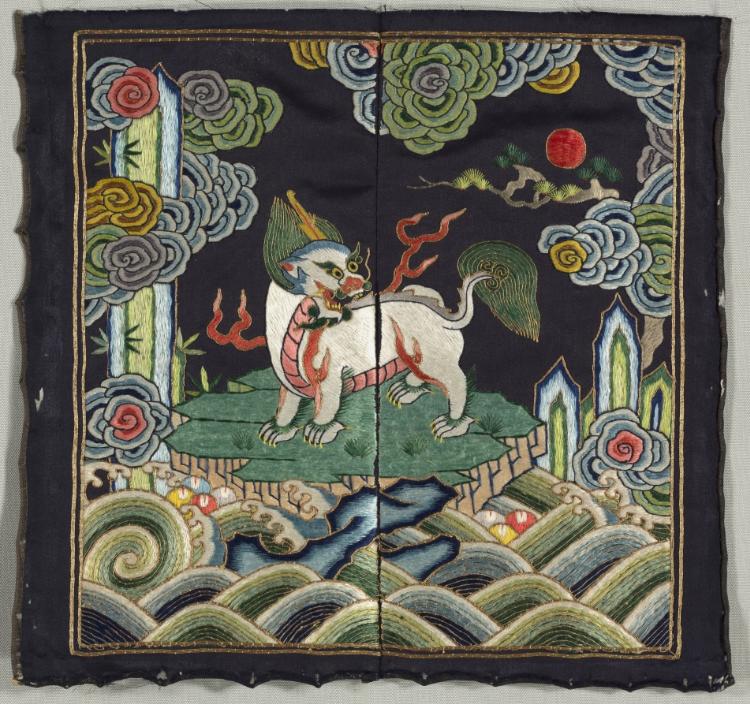
The Rank Badge (Buzi): A Study in Imperial Silk Weaving and the Materiality of Power
Introduction: The Fabric of Authority
In the annals of Chinese imperial history, few artifacts articulate the synthesis of material mastery and hierarchical governance as precisely as the Rank Badge (buzi). These woven or embroidered silk squares, affixed to the formal court robes of civil and military officials during the Ming (1368–1644) and Qing (1644–1912) dynasties, represent a pinnacle of silk weaving heritage. As a Senior Heritage Specialist at the Lauren Fashion Heritage Lab, I approach the buzi not merely as a decorative textile but as a material document—a testament to the legacy of imperial silk weaving, where silk’s inherent luxury converged with statecraft to create a visual language of rank, virtue, and celestial order. This artifact, rendered in silk, embodies a tradition where thread and power were inseparable.
The Materiality of Silk: A Foundation of Imperial Prestige
Silk, as the foundational material of the buzi, was never a neutral substrate. In imperial China, silk production was a state-controlled enterprise, with workshops in cities like Suzhou, Hangzhou, and Nanjing operating under direct imperial patronage. The materiality of silk—its lustrous sheen, its ability to hold vibrant dyes, its tactile softness—was synonymous with refinement and authority. For the buzi, the choice of silk was deliberate: it elevated the badge from a mere identifier to a symbol of the wearer’s proximity to the emperor. The weave structure, often a satin or damask ground, provided a luminous backdrop for the intricate motifs, ensuring that the badge caught light and attention, much like a heraldic crest on a Savile Row suit catches the eye with its bespoke precision.
The legacy of imperial silk weaving is embedded in the buzi’s technical execution. The kesi (silk tapestry) technique, used for the most prestigious badges, involved weaving the design directly into the fabric, creating a seamless integration of image and ground. This method required extraordinary skill: each thread was individually manipulated to form the bird or beast motif, with no room for error. The resulting textile was both durable and ethereal, a paradox that mirrors the dual nature of imperial authority—permanent yet transcendent. In contrast, embroidered buzi, while still luxurious, reflected a different hierarchy of labor, with the needlework often executed by court artisans who followed strict pattern books. Both techniques, however, relied on the inherent properties of silk—its tensile strength and dye affinity—to achieve the vivid blues, reds, and golds that signified rank.
Iconography and Hierarchy: The Buzi as a System of Signs
The buzi was not a singular artifact but a system. Civil officials wore badges depicting birds—cranes for first rank, golden pheasants for second, and peacocks for third—while military officials wore beasts, such as the qilin for first rank and the lion for second. This iconography was codified in sumptuary laws, ensuring that the silk badge functioned as a precise index of status. The crane, for instance, symbolized longevity and purity, aligning the official with Confucian virtues. The qilin, a mythical creature, represented justice and benevolence. By weaving these symbols in silk, the state imbued the material with moral weight: the badge was not just a marker of office but a reminder of the duties that office entailed.
From a heritage perspective, the buzi’s iconography also reveals the global circulation of silk weaving techniques. The use of gold-wrapped threads, often imported from Central Asia, and the incorporation of cloud patterns and waves (the lishui border) reflect a synthesis of Chinese and foreign influences. This cross-cultural exchange, facilitated by the Silk Road, underscores that the buzi was part of a larger textile economy. The legacy of imperial silk weaving thus extends beyond China’s borders, influencing textile traditions from Japan to Europe. At the Lauren Fashion Heritage Lab, we consider how this global dialogue informs contemporary luxury—much like Savile Row tailors source the finest wool from Australia or silk from Italy, the buzi represents a historical precedent for material connoisseurship.
Preservation and Interpretation: The Buzi in the Modern Context
Today, the buzi exists as a fragile artifact, its silk threads often faded or frayed by time. As a heritage specialist, my role involves not only preserving these textiles but also interpreting their materiality for a contemporary audience. The silk of the buzi is a primary source for understanding imperial weaving technologies. For instance, the use of zhi (woven characters) in some badges—where auspicious phrases like “longevity” are woven into the design—demonstrates a level of technical sophistication that rivals modern jacquard looms. By analyzing the thread count, dye composition, and weave structure, we can reconstruct the workshop practices of the Ming and Qing dynasties.
Furthermore, the buzi offers lessons in sustainable luxury. Imperial silk weaving was inherently slow and labor-intensive, prioritizing quality over quantity. This ethos resonates with the modern slow-fashion movement, where heritage techniques are valued for their craftsmanship and durability. At the Lauren Fashion Heritage Lab, we advocate for a return to such principles, arguing that the buzi’s legacy is not merely historical but a model for ethical production. The silk’s biodegradability and the badge’s modular design—sewn onto robes and easily removable—also speak to a pre-industrial approach to garment lifecycles.
Conclusion: The Enduring Thread
The Rank Badge (buzi) in silk is more than a relic; it is a material testament to the legacy of imperial silk weaving. From the controlled cultivation of silkworms to the masterful weaving of kesi, every stage of its creation reflects a civilization that understood the power of fabric. For the modern scholar, the buzi challenges us to reconsider the relationship between materiality and meaning. In the hushed corridors of Savile Row, where the cut of a jacket speaks to tradition and status, the buzi stands as an ancient counterpart—a badge woven not just with thread, but with the very fabric of authority. As we preserve these artifacts, we preserve a language of silk that continues to speak across centuries, reminding us that luxury, at its finest, is a form of heritage.