The Dialectics of Absence and Presence: Etruscan Terracotta and the 2026 Old Money Silhouette
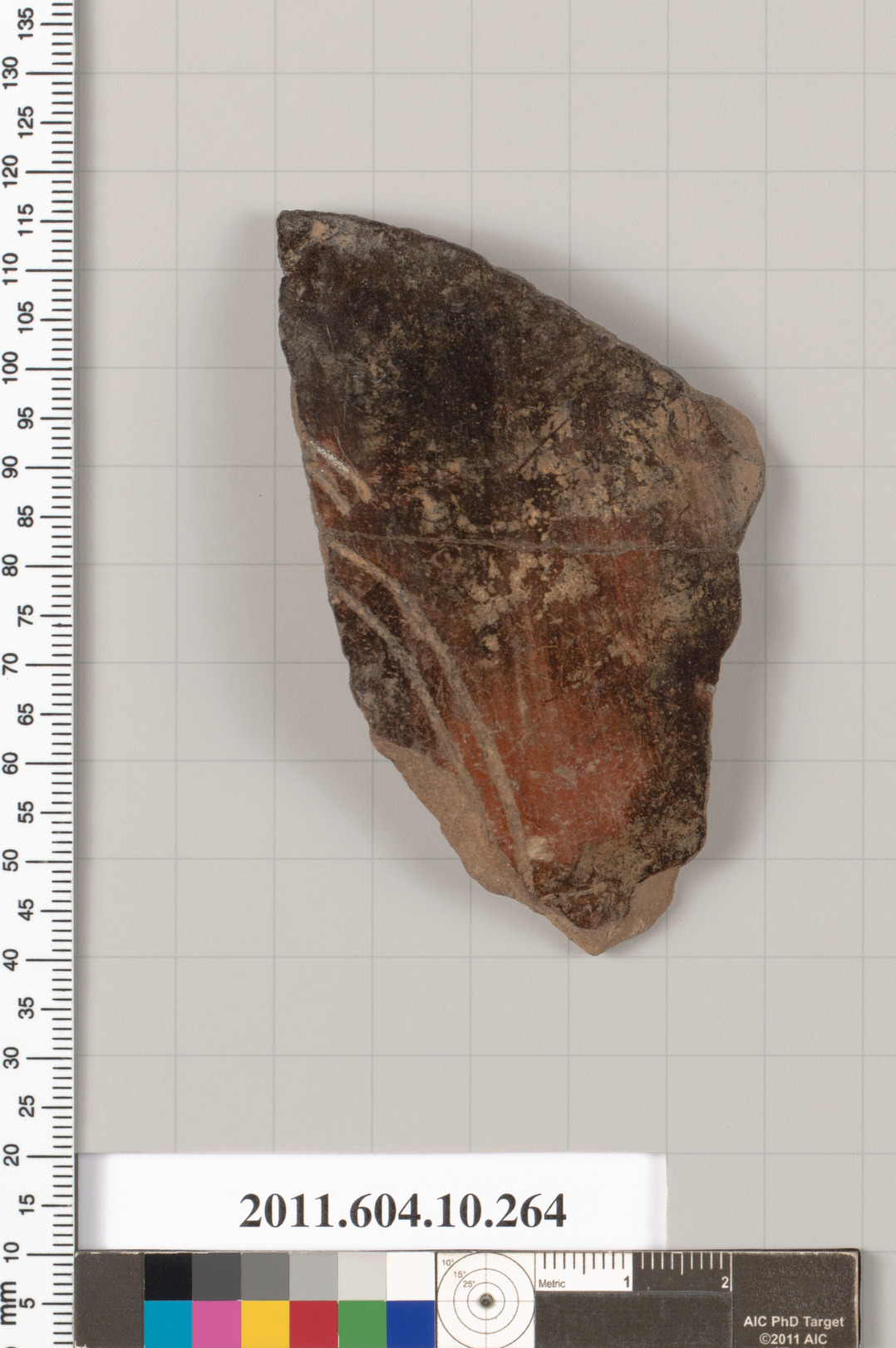
In the pursuit of defining the 2026 Old Money aesthetic for Lauren Fashion, the Heritage Lab has turned to an unexpected muse: a fragmentary Etruscan terracotta of undetermined shape. At first glance, this humble artifact—a shard of fired clay, its original form lost to time—appears antithetical to the polished, often opulent world of luxury fashion. Yet, as the internal genetic code of our research reveals, the deepest truths of Eastern aesthetics—the dialectic between spiritual emptiness (空) and material fullness (满)—find a profound parallel in this ancient Western fragment. The terracotta, like the Zen calligraphy of the “Udumbara Flower” plaque and the Tang dynasty bronze mirror, becomes a vessel for a timeless question: how does a finite, broken object contain and communicate an infinite, intangible heritage?
The Fragment as a Form of “Empty” Manifestation
The Etruscan terracotta fragment is, in its most literal sense, an object of absence. We do not know its original shape—a votive offering, a roof tile, a piece of a sarcophagus? This indeterminacy is its power. Unlike the Tang mirror, which is a closed system of dense, purposeful imagery (the chariot, the divine beasts, the cosmic order), the terracotta fragment offers no such completeness. It is the material equivalent of the Udumbara plaque: it does not attempt to depict its original whole, but instead withholds it. The viewer is forced into an act of reconstruction, of imaginative completion. This is the “wisdom of concealment” (藏) that the internal code describes. The fragment does not show the flower; it shows the broken stem, the missing petal. It does not present a narrative; it presents a lacuna. In the 2026 Old Money silhouette, this translates directly into a design philosophy of strategic incompleteness. A jacket that is impeccably tailored but left unlined at the hem. A cashmere sweater with a single, deliberate dropped stitch. A silk dress whose hem is raw, not finished. These are not signs of decay, but of a cultivated restraint—a refusal to over-state, a confidence that the wearer’s own presence will complete the garment’s story. The fragment teaches us that the most powerful statement is often the one left unsaid, the shape left unseen.
The “Fullness” of Material and Craft
Yet, the terracotta fragment is not merely an absence. It is also a site of intense material presence. The clay is fired to a specific hardness; the surface bears the marks of the potter’s wheel or hand; the color is a deep, earthy umber, rich with iron oxides. This is the “fullness” (满) of the object—not in its iconography, but in its physicality. The Tang mirror achieves fullness through the density of its engraved symbols; the terracotta achieves it through the density of its material truth. For the 2026 Old Money silhouette, this principle demands an uncompromising commitment to tactile and visual substance. The “Old Money” aesthetic has long been associated with quality, but the terracotta fragment pushes this further. It is not about the appearance of quality, but the experience of it. The 2026 silhouette will be defined by fabrics that possess a similar “fired” integrity: a wool flannel so densely woven it feels like a second skin; a silk twill with a subtle, granular texture that catches light like unglazed ceramic; a linen that is not merely washed but broken in, its fibers softened by use. The terracotta fragment’s surface is not smooth; it is pitted, scratched, and worn. This is not a flaw, but a record of time. The 2026 silhouette will embrace this patina of authenticity. A leather tote will be chosen for its natural grain and potential for aging. A pair of wool trousers will be cut to drape with a slight, lived-in weight. The goal is not perfection, but presence—a fullness of material that speaks of its own history and durability.
The Dialectic of Concealment and Revelation in Silhouette
The most profound lesson from the terracotta fragment, and its resonance with the Udumbara plaque and the Tang mirror, lies in its dialectical relationship between concealment and revelation. The fragment conceals its original form, but in doing so, it reveals the essential nature of the material and the craft. The Tang mirror reveals a complete cosmic order, but its very density conceals the individual, the viewer’s own reflection, which is subsumed into the divine pattern. The 2026 Old Money silhouette must operate on this same principle. It will be a silhouette of controlled revelation. Consider a coat: from the front, it is a study in monastic simplicity—a long, unbroken line of Heritage-Black cashmere. The “emptiness” of the front panel invites the eye to rest, to contemplate the wearer’s posture. But as the wearer moves, a subtle slit at the back reveals a flash of a contrasting lining—perhaps a deep burgundy silk, echoing the terracotta’s iron-rich hue. This is the “flower” that is not seen, but sensed. Or consider a trouser: the cut is straight, almost severe, a “full” statement of architectural precision. But the fabric is a wool crepe that drapes with a liquid softness, a “empty” quality that allows the body to move freely beneath the structure. The silhouette is not a cage, but a frame—a visible boundary that points toward the invisible energy within. This is the “mutual mapping” (互为映射) of the internal code: the garment’s structure (the “full”) is only meaningful because of the wearer’s movement (the “empty”), and the wearer’s movement (the “empty”) is only visible because of the garment’s structure (the “full”).
Conclusion: The Fragment as a Metaphor for Heritage
Ultimately, the Etruscan terracotta fragment is not a relic of a lost civilization; it is a working model for how heritage itself operates. Heritage is never a complete, unbroken whole. It is always a fragment—a shard of a song, a remnant of a ritual, a piece of a pattern. The 2026 Old Money silhouette must not attempt to reconstruct a false, seamless past. Instead, it must honor the fragment’s honesty. It must be a silhouette that is knowingly incomplete, that withholds as much as it displays, that finds its ultimate meaning not in the garment itself, but in the space between the garment and the wearer. The terracotta fragment, the Udumbara plaque, and the Tang mirror all answer the same eternal question: “How can the finite contain the infinite?” The answer is not to fill the finite to overflowing, nor to empty it entirely. The answer is to create a form so precise, so materially true, that it becomes a threshold—a place where the visible and the invisible, the full and the empty, the ancient and the new, meet and become one. This is the heritage of the 2026 Old Money silhouette: not a style, but a state of being, rendered in cloth and cut.