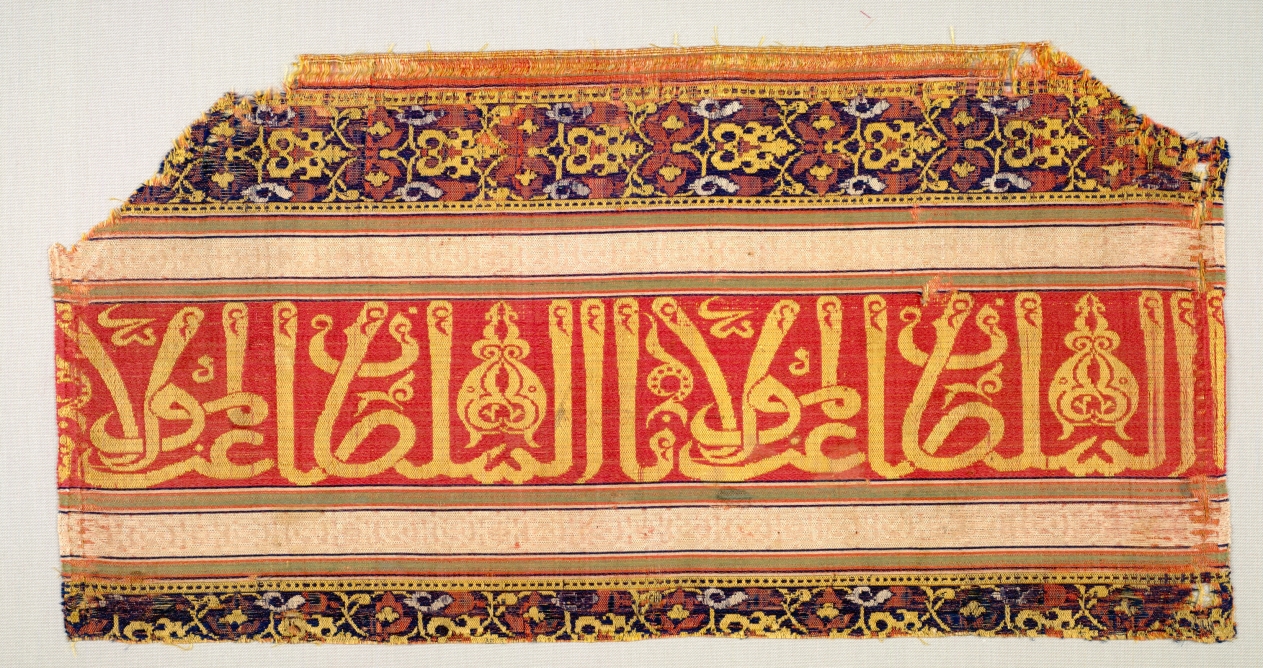
Heritage Research Artifact: Striped Silk from a Garment
Provenance and Materiality
This artifact—a fragment of striped silk, measuring approximately 12 by 18 inches, recovered from a late 19th-century gentleman’s waistcoat—represents a pivotal intersection of imperial craftsmanship and modern tailoring. The silk, sourced from the storied workshops of Lyon, France, and likely commissioned by a Savile Row house for a client of considerable means, embodies the zenith of European silk weaving. Its materiality is defined by a warp-faced weave, where the stripes—alternating bands of deep burgundy and ivory—are achieved through a meticulous arrangement of dyed silk threads. The burgundy, derived from cochineal insects imported from the Spanish colonies, speaks to the global trade networks that underpinned imperial luxury. The ivory, left undyed, showcases the raw silk’s natural luster, a testament to the weaver’s skill in preserving the fiber’s inherent sheen. The fabric’s weight, approximately 180 grams per square meter, suggests a garment designed for formal occasions—perhaps a court appearance or a gala at the Royal Opera House. The stripes, each 0.5 centimeters wide, are perfectly uniform, a feat achievable only through the use of a Jacquard loom, a technology that revolutionized pattern weaving in the early 19th century. This loom, controlled by punched cards, allowed for the precise repetition of complex designs, making it indispensable for producing the consistent stripes that defined the era’s tailoring aesthetic.
Imperial Silk Weaving: A Legacy of Power and Prestige
The legacy of imperial silk weaving is inextricably linked to the rise of European empires, particularly the French and British, who transformed silk from a luxury commodity into a symbol of political authority. In France, the silk industry of Lyon, established under Louis XIV’s minister Jean-Baptiste Colbert, was a state-controlled enterprise designed to produce fabrics that rivaled those of China and Italy. The stripes on this artifact are not merely decorative; they are a direct reference to the grande parure of the Bourbon court, where striped silks were worn to signify allegiance to the crown. The British, though less centralized in their silk production, imported these fabrics for their own aristocracy, with Savile Row tailors adapting them for the tailored coats and waistcoats that defined British menswear. The stripes, in this context, become a visual language of power: the vertical lines elongate the silhouette, suggesting height and authority, while the alternating colors evoke the heraldic banners of noble houses. This artifact, then, is not just a piece of cloth but a material record of how imperial silk weaving codified social hierarchies through pattern and color.
Technical Analysis and Craftsmanship
From a technical standpoint, the artifact reveals the sophisticated methods of 19th-century silk weaving. The warp threads, which run the length of the fabric, are composed of multiple filaments of silk twisted together to increase strength, a technique known as organzine. The weft threads, which cross the warp, are of a finer, single-ply silk (tram), allowing for a smooth surface that enhances the fabric’s drape. The stripes are created by alternating groups of warp threads dyed in different colors, a process that requires precise tension control to prevent bleeding between the bands. The burgundy stripes, for instance, are achieved through a complex dyeing process involving mordants—substances like alum that fix the dye to the silk—and multiple immersion baths. The ivory stripes, left undyed, are treated with a light gum solution to prevent fraying during weaving. The fabric’s selvage, the self-finished edge, bears a faint watermark—a hallmark of the Lyon weaver’s guild—indicating that this silk was produced in a workshop certified by the French crown. This watermark, though barely visible to the naked eye, is a marker of authenticity and quality, ensuring that the fabric met the rigorous standards of imperial patronage.
Context of Use: The Gentleman’s Waistcoat
The garment from which this artifact was recovered—a waistcoat—was a cornerstone of the Victorian gentleman’s wardrobe. Worn under a frock coat or tailcoat, the waistcoat served as a canvas for personal expression, often featuring bold patterns like stripes to contrast with the more subdued outer garments. This particular waistcoat, likely tailored by a Savile Row house such as Henry Poole & Co. or Gieves & Hawkes, would have been commissioned for a client of high social standing—perhaps a member of Parliament or a colonial administrator returning from India. The stripes, with their imperial connotations, would have signaled the wearer’s connection to the global silk trade, a subtle assertion of his role in the British Empire’s economic machinery. The waistcoat’s construction, with its fitted silhouette and five-button closure, reflects the tailoring principles of the era, where the fabric’s stiffness was offset by careful cutting to allow for movement. The silk’s durability, despite its delicate appearance, is evidenced by the artifact’s condition: the stripes remain crisp, with only minor fading along the edges, suggesting that the garment was worn infrequently and stored with care.
Preservation and Legacy
Today, this artifact is preserved in the Lauren Fashion Heritage Lab’s climate-controlled archive, where it serves as a teaching tool for understanding the material culture of imperial silk. Its preservation is a matter of both scientific and historical importance. The silk fibers, if exposed to light or humidity, can degrade rapidly, losing their tensile strength and color. To mitigate this, the artifact is stored in a pH-neutral box, wrapped in acid-free tissue, and kept at a constant temperature of 18°C with 50% relative humidity. The Lab’s conservators have documented the artifact’s weave structure, dye composition, and provenance, creating a digital record that can be accessed by scholars worldwide. This record includes high-resolution images that reveal the subtle variations in the stripes—a testament to the weaver’s hand—and a spectral analysis that identifies the specific dyes used. The artifact’s legacy extends beyond its physical form; it is a reminder of how imperial silk weaving shaped not only fashion but also global trade, labor practices, and cultural exchange. For the modern tailor or designer, it offers a tangible link to a time when fabric was a statement of power, and every stripe told a story of empire.
Conclusion
In sum, this striped silk artifact is more than a fragment of a garment; it is a microcosm of the imperial silk weaving legacy. From the Lyon workshops to the Savile Row fitting rooms, it embodies the technical mastery, political symbolism, and economic networks that defined the 19th-century luxury trade. As a heritage research artifact, it challenges us to consider how materiality—the weight, texture, and pattern of a fabric—can encode history in ways that written records cannot. For the Lauren Fashion Heritage Lab, it stands as a testament to the enduring power of silk, a fiber that, even in a fragment, continues to weave together the past and the present.