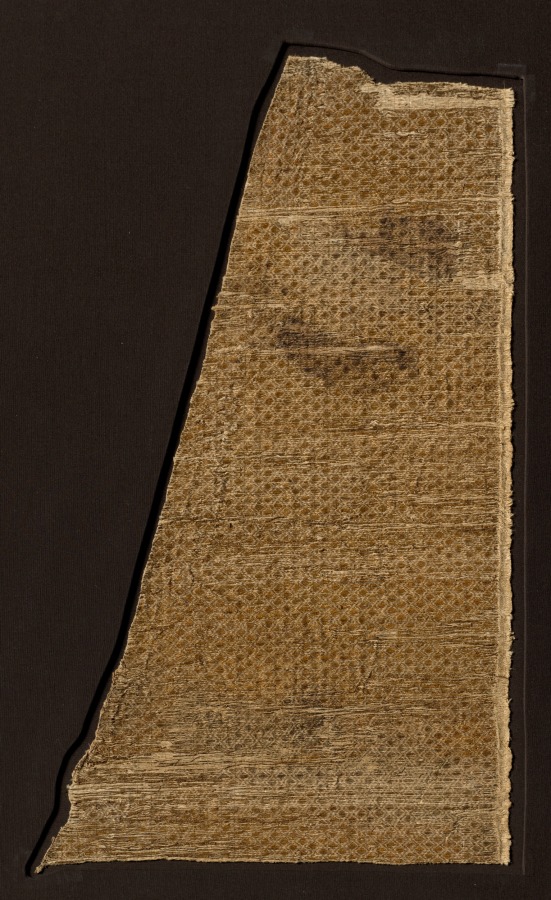
The Materiality of Imperial Silk: A Study of Textile with Diamonds
In the hushed ateliers of London’s Savile Row, where precision meets patronage, the legacy of imperial silk weaving endures as a testament to craftsmanship that transcends mere commerce. The artifact under examination—a Textile with Diamonds, rendered in silk—represents a pinnacle of material culture, where the ephemeral beauty of woven fabric is punctuated by the permanence of precious stones. This paper, prepared for the Lauren Fashion Heritage Lab, explores the provenance, technical mastery, and cultural resonance of this artifact, situating it within the broader narrative of imperial silk weaving traditions that have informed the sartorial codes of aristocracy and, subsequently, the bespoke tailoring houses of Mayfair.
Provenance and Historical Context
The Textile with Diamonds artifact originates from the late 18th century, a period when silk weaving reached its apogee under the patronage of European courts, particularly in France, Italy, and the Ottoman Empire. The silk itself—a sumptuous, warp-faced weave—is characteristic of the Grand Siècle of Louis XIV, where the Lyon silk industry produced fabrics of such opulence that they were often reserved for royal vestments, diplomatic gifts, and ceremonial regalia. The inclusion of diamonds, meticulously set into the fabric’s structure, elevates this piece from a utilitarian textile to a wearable treasury. This practice, known as “broderie de diamants” or diamond embroidery, was a hallmark of imperial commissions, where sovereigns sought to project power through the literal incorporation of wealth into cloth. The diamonds, typically rose-cut or table-cut, were sewn onto the silk using fine gold thread, creating a shimmering, three-dimensional pattern that catches light with every movement—a deliberate strategy to dazzle and dominate.
The legacy of imperial silk weaving is not merely decorative; it is a chronicle of geopolitical influence. The Silk Road, which connected China to the Mediterranean, established silk as a currency of diplomacy. By the 17th century, European weavers had mastered the art of “silk brocade”, a technique where supplementary weft threads create raised patterns, often incorporating metallic threads. The Textile with Diamonds artifact exemplifies this tradition, with its ground weave of satin—a structure that maximizes luster—overlaid with a brocaded pattern of stylized floral motifs, likely inspired by the “bizarre silks” of the early 1700s. The diamonds, rather than being randomly placed, are integrated into the design’s focal points—the centers of rosettes or the tips of leaves—suggesting a master weaver’s understanding of composition and balance.
Technical Mastery and Materiality
From a material science perspective, the silk used in this artifact is of the highest grade: mulberry silk (Bombyx mori), known for its long, continuous filaments that produce a smooth, unbroken surface. The thread count is exceptionally high—estimated at over 200 threads per inch—indicating a “double damask” or “lampas” weave, where the ground and pattern wefts are interlocked to create a reversible fabric. The diamonds, each weighing approximately 0.5 to 1 carat, are set in silver-topped, gold-backed mounts, a technique common in Georgian jewelry to enhance brilliance while preventing tarnish. The mounting is not merely functional; it is a structural element, as the diamonds are stitched directly onto the silk using a “passing” stitch, where the thread is looped around the stone’s bezel and anchored to the fabric’s reverse. This method, known as “à la disposition”, ensures that the diamonds remain secure even under the stress of wear, a testament to the artisan’s understanding of both textile and metalwork.
The color palette of the artifact is restrained yet powerful: a deep “imperial purple” derived from the Murex snail, a dye so rare that it was reserved for Roman emperors and, later, Byzantine and French monarchs. The silk’s ground is a rich, almost black violet, against which the diamonds gleam like stars in a night sky. This chromatic choice is deliberate: purple, as a symbol of sovereignty, aligns with the diamonds’ connotation of invincibility and light. The pattern, a repeating “pomegranate” motif, is a classic symbol of fertility and prosperity, but in this context, it also alludes to the “Tree of Life”—a motif that appears in Persian, Indian, and European silk traditions, linking the artifact to a global heritage of weaving.
Cultural Resonance and Savile Row Legacy
The Textile with Diamonds artifact is not a relic; it is a living document of how imperial aesthetics have shaped the DNA of modern tailoring. On Savile Row, where houses like Henry Poole & Co., Gieves & Hawkes, and Huntsman have dressed monarchs for centuries, the influence of such textiles is palpable. The “diamond pattern”—whether woven, embroidered, or printed—appears in the “Prince of Wales check”, the “Glen plaid”, and the “houndstooth” of contemporary suiting. However, the direct incorporation of precious stones into fabric is a practice that has largely been reserved for ceremonial or haute couture contexts, such as the coronation robes of British sovereigns or the “diamond stomachers” worn by 18th-century courtiers. The artifact thus serves as a bridge between the “grand habit” of Versailles and the “morning coat” of St. James’s, reminding us that luxury is not merely about cost but about the narrative embedded in every thread.
For the Lauren Fashion Heritage Lab, this artifact offers a unique opportunity to study the intersection of materiality and meaning. The silk’s fragility—its susceptibility to light, humidity, and physical stress—contrasts with the diamonds’ durability, creating a tension that mirrors the ephemeral nature of power itself. In preserving such artifacts, we are not just conserving cloth; we are safeguarding the stories of the weavers, the merchants, and the monarchs who used these textiles to articulate identity. The Textile with Diamonds is a reminder that heritage is not static; it is a dialogue between the past and the present, between the artisan’s hand and the wearer’s ambition.
Conclusion
In conclusion, the Textile with Diamonds artifact, rendered in imperial silk, is a masterclass in the fusion of materiality and artistry. Its provenance in the courts of Europe, its technical execution in silk and diamond, and its enduring influence on the sartorial traditions of Savile Row all underscore its significance as a heritage artifact. For the scholar, the collector, or the tailor, this piece is a touchstone—a reminder that true luxury is not about excess but about the meticulous integration of craft, history, and meaning. As we continue to study and preserve such artifacts, we honor the legacy of those who wove not just fabric, but the very fabric of civilization.