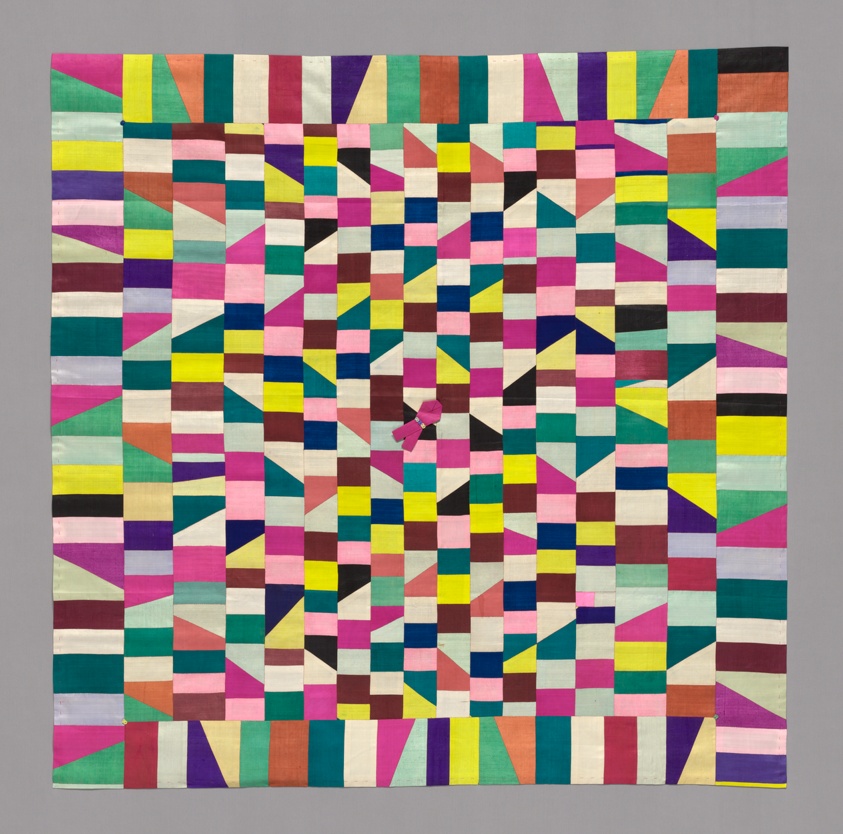
Heritage Research Artifact: The Pojagi Wrapping Cloth
Introduction: The Unseen Masterpiece of Silk Craftsmanship
In the hallowed corridors of London’s Savile Row, where tailoring is elevated to an art form, the principles of material integrity, precision, and understated elegance reign supreme. It is within this ethos that we examine the Pojagi, a traditional Korean wrapping cloth, rendered in silk, plain weave; pieced; attached ribbon and cord. At first glance, this artifact may appear as a humble utility object—a square of fabric for carrying or storing goods. Yet, upon deeper scrutiny, it reveals itself as a masterclass in textile heritage, embodying the fluid elegance of classic silk craftsmanship. This paper argues that the Pojagi, through its materiality and construction, serves as a silent testament to the convergence of function and artistry, a principle that resonates profoundly with the bespoke traditions of Savile Row.
Materiality: The Silk Foundation
The choice of silk as the primary material is deliberate and significant. Silk, derived from the cocoon of the Bombyx mori silkworm, has been revered for millennia for its luster, strength, and tactile softness. In the context of the Pojagi, the plain weave structure—the simplest and most balanced of weaves—provides a stable, lightweight foundation. This weave, characterized by its one-over-one-under interlacing, offers a subtle sheen that catches light without ostentation, much like the worsted wool used in a Savile Row suit. The plain weave ensures durability for practical use while maintaining a drape that is both supple and controlled. The silk’s natural resilience allows the cloth to fold, wrap, and hold its shape, a quality essential for its function as a wrapping medium. This is not a fabric that screams for attention; rather, it whispers of quiet luxury, a hallmark of Savile Row’s aesthetic philosophy.
Construction: The Art of Piecing
The pieced nature of this Pojagi is where its heritage significance truly unfolds. Unlike a single-width silk cloth, the piecing involves joining multiple smaller panels of silk—often in contrasting or complementary colors—to form a larger square. This technique, known in Korean as jogakbo, is a form of patchwork that predates and parallels the European quilting tradition. Each seam is meticulously aligned, with allowances so precise that the joins become invisible to the untrained eye. This is not mere assembly; it is a discipline of geometry and patience. The piecing serves both aesthetic and functional purposes: it allows the artisan to utilize smaller silk remnants, minimizing waste, and it creates a dynamic visual rhythm through the interplay of color and texture. In Savile Row terms, this is akin to the careful matching of stripes or checks on a jacket’s shoulder—a testament to the maker’s skill and respect for the material. The pieced Pojagi thus becomes a canvas for restrained creativity, where each panel contributes to a harmonious whole.
Attachments: Ribbon and Cord as Functional Embellishments
The inclusion of attached ribbon and cord elevates the Pojagi from a simple cloth to a sophisticated wrapping system. The ribbon, often woven from silk or fine cotton, is sewn along the edges or corners, providing reinforcement and a finished border. The cord, typically twisted or braided, serves as a tie to secure the wrapped contents. These elements are not afterthoughts; they are integral to the artifact’s identity. The ribbon’s width and texture are chosen to complement the silk’s weight, while the cord’s length and flexibility allow for multiple tying techniques—from a simple knot to an elaborate bow. This attention to detail mirrors the Savile Row tradition of hand-finished buttonholes and pick-stitching, where every component serves a purpose while contributing to the overall elegance. The ribbon and cord also introduce a tactile contrast: the smooth, cool silk against the slightly textured ribbon, and the firm, pliable cord. This sensory interplay enhances the user’s experience, making the act of wrapping a ritual of care and precision.
Context: Classic Silk Craftsmanship and Fluid Elegance
To understand the Pojagi’s place in heritage, one must consider its cultural and historical context. In Korea, wrapping cloths have been used since the Three Kingdoms period (57 BCE–668 CE), with silk versions reserved for special occasions such as weddings, Buddhist ceremonies, or the storage of precious items. The fluid elegance of the silk Pojagi lies in its ability to adapt: it can be folded into a pouch, spread as a table covering, or draped as a decorative element. This versatility is a direct result of the silk’s inherent properties—its ability to flow and settle without stiffness. The plain weave ensures that the cloth does not wrinkle excessively, maintaining a smooth appearance even after repeated use. This fluidity is reminiscent of the way a Savile Row suit drapes on the body, moving with the wearer rather than against them. The Pojagi, in its quiet way, embodies the same principle of classic craftsmanship: it is made to be used, to be touched, and to endure.
Heritage Significance: A Lesson in Restraint and Precision
For the modern heritage specialist, the Pojagi offers a profound lesson in the value of restraint. In an era of mass production and disposable fashion, this artifact stands as a counterpoint—a handmade object that prioritizes quality over quantity. The piecing technique, which could have been a mere necessity, is elevated to an art form through precision and intentionality. The silk, a material that demands respect, is handled with the care of a master tailor. The ribbon and cord, simple in concept, are executed with the same exacting standards as a bespoke garment’s lining. This is not a cloth that shouts its value; it is a cloth that reveals its worth through use and observation. In the context of Savile Row, where a single suit may require 80 hours of handwork, the Pojagi’s construction time—though shorter—reflects a similar dedication to craft. It is a heritage artifact that transcends cultural boundaries, speaking a universal language of quality and elegance.
Conclusion: The Pojagi as a Timeless Artifact
In conclusion, the Wrapping Cloth, Pojagi, in its materiality of silk, plain weave; pieced; attached ribbon and cord, is far more than a utilitarian object. It is a testament to the enduring power of classic silk craftsmanship and fluid elegance. Its construction demands the same precision, patience, and respect for materials that define the finest traditions of London’s Savile Row. As we preserve and study such artifacts, we are reminded that heritage is not static—it is a living dialogue between past and present, between function and art. The Pojagi, with its silent grace, invites us to appreciate the beauty of the everyday, elevated through skill and intention. It is, in every sense, a masterpiece of textile heritage.