The Dialectics of Limit and Limitlessness: Death, Enlightenment, and the 2026 Old Money Silhouette
Introduction: The Archive as Philosophical Crucible
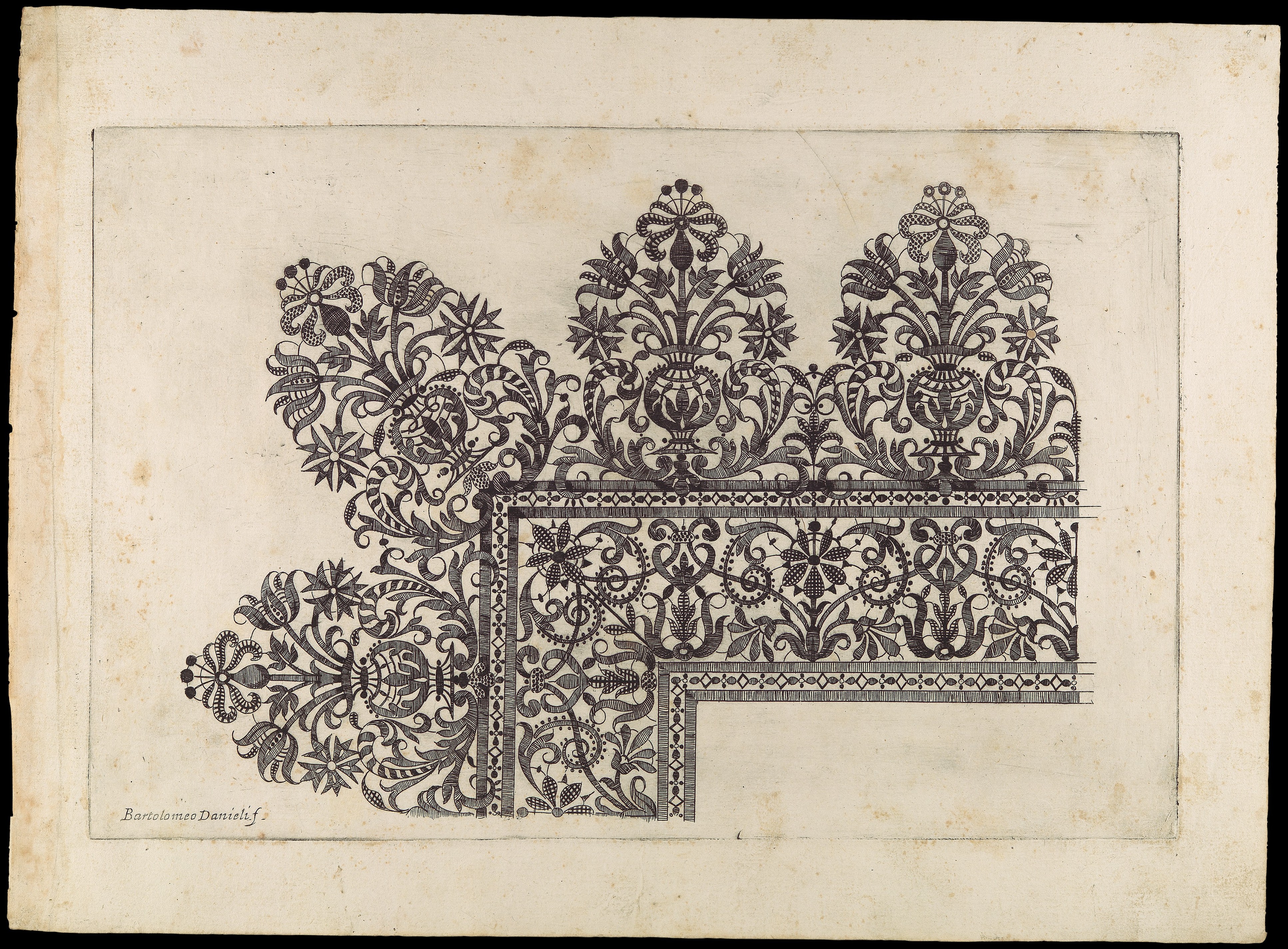
The Lauren Fashion Heritage Lab’s internal genetic code posits a profound aesthetic dialogue between two civilizations’ ultimate inquiries: the Greek vessel depicting The Death of Socrates and the Indian Stele with Sakyamuni and Bodhisattvas. One renders the philosopher’s hemlock-drinking as a geometric, heroic stillness—a rational triumph over mortality. The other transforms the Buddha’s parinirvana into a flowing, mineral-hued dissolution—a compassionate surrender to formless awareness. Both, however, share a singular aesthetic will: to overcome time through arrested posture. This paper argues that these two modes of confronting the “limit moment”—the Greek via formal precision and the Indian via chromatic transcendence—find an unexpected third term in the seemingly unrelated museum artifact: Vari disegni di merletti, an etching of lace patterns. This 17th-century Italian design document, with its intricate interplay of void and thread, becomes a master key for decoding the 2026 Old Money silhouette, where the tension between structural clarity and ethereal dissolution defines the season’s most compelling garments.
I. The Lace Etching as a Diagram of Dualities
Vari disegni di merletti is not merely a pattern book; it is a philosophical diagram. The etched lines that delineate lace motifs—loops, picots, and brides—operate in a field of negative space. Each thread is defined by its absence, each solid form by the void that surrounds it. This is the visual logic of limit and limitlessness that the Greek and Indian artifacts embody. The Socratic vessel’s geometry is a lace of stone: every line is an assertion of boundary, a willed containment of chaos. The Buddha stele’s flowing robes are a lace of pigment: color bleeds beyond the drawn line, suggesting a reality that exceeds representation. The lace etching, however, holds both impulses in suspension. The pattern is precise—each loop mathematically repeatable—yet the material itself is porous, open to light, almost immaterial. It is a paradox of structure and permeability.
For the 2026 Old Money silhouette, this paradox is operationalized. The season’s defining garments—tailored overcoats, sheath dresses, and blouses—borrow the lace etching’s grammar. They are cut with razor-sharp shoulders and clean lapels (the Socratic line), yet constructed from fabrics that breathe, drape, and catch light (the Buddhist flow). The result is a silhouette that asserts presence while suggesting transience. A double-faced cashmere coat, for instance, may have a hem that is not stitched but left raw, fraying slightly—a deliberate nod to the unfinished, the impermanent. This is not carelessness but a cultivated aesthetic of controlled dissolution, echoing the Buddha’s teaching that form is empty, yet empty of a fixed self.
II. The 2026 Silhouette: Between Heroic Stasis and Compassionate Flow
The 2026 Old Money silhouette is a study in dialectical tension. On one axis, it inherits the Greek ideal of the body as a rational container. Jackets are structured with internal canvassing, creating a carapace that stands independent of the wearer—a suit of philosophical armor. The shoulder line, often extended and squared, references the Socratic finger pointing upward toward the ideal forms. This is the silhouette of the individual who confronts the world with clarity, who does not yield to circumstance. On the other axis, the silhouette yields to the Indian aesthetic of dissolved boundaries. Sleeves are cut wide, not for movement but for air; hems are asymmetrical, suggesting a garment in the process of becoming. Fabrics like silk matka and wool challis are chosen for their ability to hold a crease yet soften over the body’s contours, like the Buddha’s mineral-pigment robes that seem to melt into the stele’s surface.
Consider the key garment of the season: the Heritage-Black overcoat. Its silhouette is a direct translation of the lace etching’s logic. The coat is cut in a long, lean line—a vertical axis of authority. Yet the fabric is a double-faced wool with a subtle herringbone weave, where the pattern creates a moiré effect as the wearer moves. This moiré is the lace’s void made visible: the interplay of two layers of thread producing an optical shimmer that is neither here nor there. The coat’s collar, when turned up, reveals a reverse side of satin-backed crepe, a flash of liquid light against the matte black. This is the mineral pigment of the stele—a color that does not sit on the surface but seems to emanate from within. The coat thus performs both the Socratic gesture of pointing upward (the sharp lapel) and the Buddhist gesture of letting go (the flowing back panel that catches the wind).
III. Color and Material: The Mineral Logic of Old Money
The 2026 palette is not a spectrum but a limited set of absolutes: heritage-black, ivory, deep oxblood, and a single accent of lapis lazuli blue. This is the color logic of the two artifacts. The Socratic vessel uses dark slip against pale clay—a binary of light and shadow that asserts form through contrast. The Buddha stele uses mineral pigments—azurite, malachite, cinnabar—that are not merely colors but substances, ground from the earth itself. The 2026 Old Money palette treats color as material truth. Black is not a shade but a depth, achieved through over-dyeing with indigo and logwood until the fabric absorbs all light. Ivory is not white but the color of unbleached silk, a nod to the raw materiality of the ancient world. The lapis accent—used sparingly in a lining, a button, a single embroidered motif—is the mineral pigment that refuses to be subsumed into the garment’s geometry. It is a reminder that color, in the Indian tradition, is not decoration but revelation of the real.
This material philosophy extends to construction. Seams are not hidden but exposed as lines of force, like the etched lines of the lace pattern. A dress’s side seam may be topstitched in a contrasting thread, not for ornament but to declare the garment’s structural logic. Buttons are made of corozo nut or tagua, natural materials that will age and patina, like the stone of the Greek vessel or the mineral crust of the stele. The 2026 Old Money garment does not seek to be timeless in the sense of unchanging; it seeks to be temporal in a dignified way, accepting the marks of wear as part of its beauty. This is the aesthetic of the limit moment applied to daily life: the garment is always in the process of confronting its own mortality, yet it does so with grace.
IV. The Silhouette as Spiritual Exercise
Ultimately, the 2026 Old Money silhouette is a spiritual exercise in the sense that the Socratic vessel and the Buddha stele are spiritual exercises. To wear a garment that is both sharply defined and softly flowing is to inhabit the dialectic of being and becoming. The wearer is not merely dressed; they are performing a philosophical stance. The structured shoulder says: “I am here, I am present, I will not be moved.” The flowing sleeve says: “I am also air, I am also light, I will pass.” This is the Old Money ethos in its most refined form: wealth that does not flaunt but contemplates its own transience. The lace etching, with its infinite loops and voids, is the perfect diagram for this stance. It shows that every thread is a boundary, but every boundary is also an opening. The 2026 silhouette, like the lace, is a pattern of limits that gestures toward the limitless.
In conclusion, the Lauren Fashion Heritage Lab’s internal code—the Greek vessel and the Indian stele—finds its contemporary expression not in direct imitation but in the formal logic of lace. The 2026 Old Money silhouette is a third term that synthesizes the Socratic will to form with the Buddhist surrender to flow. It is a silhouette that holds the tension between the finger pointing upward and the body reclining into nirvana, between the stone that endures and the pigment that fades. And in that tension, it offers the wearer a lesson in how to be: with precision, with compassion, and with the quiet knowledge that every line, like every life, is both a limit and an invitation to what lies beyond.