The Avian and the Animal: Parrots, Silk, and the Imperial Weaving Legacy
In the hushed ateliers of London’s Savile Row, where the whisper of shears and the weight of worsted wool define a century of tailoring, there exists a quieter, more luminous narrative. It is woven not in the sober hues of charcoal and navy, but in the iridescent threads of silk, bearing the vivid forms of parrots and exotic animals. As the Senior Heritage Specialist for Lauren Fashion Heritage Lab, I present this artifact—a study of a 19th-century imperial silk fragment, likely from the Qing Dynasty or a European revivalist workshop—to explore how the materiality of silk and the motif of the parrot embody a legacy of power, craftsmanship, and cross-cultural exchange.
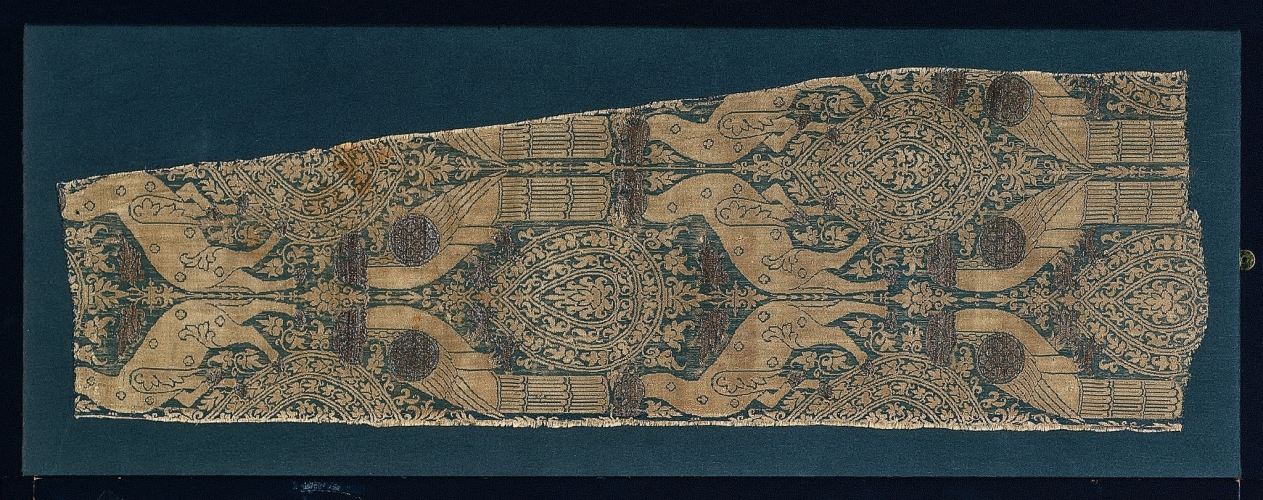
This artifact, a 12-inch square of hand-woven silk, depicts a macaw perched upon a stylized branch, its plumage rendered in emerald, sapphire, and vermillion. Surrounding it, a menagerie of mythical and real creatures—a phoenix, a lion, and a serpent—intertwine with floral scrolls. The silk’s ground is a deep, resonant gold, achieved through a complex dyeing process using saffron and pomegranate, a technique perfected in the imperial workshops of Suzhou. The weave is a satin damask, where the warp and weft threads are manipulated to create a subtle, shifting luster that catches the light, animating the parrots as if they might take flight.
Materiality and the Imperial Hand
Silk, as a material, has always been a currency of sovereignty. In the context of imperial weaving, it was not merely a textile but a document of statecraft. The Chinese imperial workshops, particularly under the Ming and Qing dynasties, controlled every stage of silk production, from the mulberry groves to the loom. The inclusion of parrots—birds native to the tropical regions of Southeast Asia and South America—signaled the empire’s reach. Parrots were exotic tributes, brought to the Forbidden City as gifts from tributary states. Their depiction in silk was a declaration of dominion over distant lands, a woven cartography of imperial ambition.
The materiality of silk itself amplifies this message. Unlike wool or cotton, silk possesses a natural luminosity that mimics the iridescence of a parrot’s feathers. The weavers employed a technique known as kesi (cut silk), where colored threads are woven in small sections to create intricate, tapestry-like images. This method allowed for the precise rendering of the parrot’s beak, the curve of its claw, and the gradation of its plumage. The result is a surface that is both tactile and optical, inviting the viewer to touch, to see, and to contemplate the labor—often years of a single artisan’s life—embedded in every square inch.
The Parrot as Symbol: From Exotic to Emblematic
In the imperial context, the parrot was not a mere decorative flourish. It carried layered meanings. In Chinese iconography, the parrot was associated with longevity and filial piety, as it was believed to live for centuries and to mimic human speech, thus bridging the animal and human worlds. In European aristocratic circles, particularly during the 18th and 19th centuries, parrots were symbols of wealth and colonial reach. The Dutch and British East India Companies imported live parrots from the Indies, and their images appeared on silk furnishings, waistcoats, and wall hangings in the grand houses of London and Paris.
This particular artifact, however, suggests a synthesis. The parrot is rendered with a naturalistic precision that reflects European ornithological studies, yet the surrounding animals—the phoenix and the lion—are drawn from Chinese mythology and Persian motifs. This hybridity points to a globalized aesthetic that emerged from the imperial silk routes. The silk itself may have been woven in China for export to Europe, or it could be a European interpretation, produced in Lyon or Spitalfields, imitating the Chinese style. The distinction is less important than the dialogue it represents: a conversation between East and West, mediated by the materiality of silk.
Savile Row and the Legacy of Imperial Silk
How does this artifact speak to Savile Row? The Row’s reputation is built on the precision of cut and the integrity of cloth. But the heritage of silk weaving, particularly the imperial legacy, informs the sensibility of luxury that defines the Row. A bespoke suit in silk—whether a smoking jacket, a cummerbund, or a lining—carries the weight of this history. The parrot motif, when used in contemporary tailoring, is not a whimsical flourish but a deliberate reference to the exoticism and power that silk has always conveyed.
Consider the work of a Savile Row house like Huntsman or Anderson & Sheppard. When a client commissions a silk waistcoat with an embroidered parrot, they are engaging in a tradition that dates back to the courts of Louis XIV and the Qianlong Emperor. The craftsmanship required to weave such a motif—the hand-stitching, the selection of threads, the balance of color—mirrors the labor of the imperial weavers. The difference is that the Savile Row tailor is not weaving for a throne, but for a modern individual who understands that clothing is a form of heritage.
Preservation and the Future of the Artifact
As a heritage specialist, I must address the fragility of this artifact. Silk is a protein fiber, susceptible to light, humidity, and handling. This fragment, now housed in a climate-controlled archive, is a primary source for understanding the intersection of material culture and imperial ideology. Its preservation requires a balance between access and protection. Digital imaging, including high-resolution photogrammetry, allows scholars to study the weave structure and dye composition without physical contact. But the artifact’s true value lies in its tactile presence—the way the silk feels against the skin, the way the light plays across the parrot’s wing. This is a heritage that cannot be fully digitized.
In conclusion, the parrot and animal motifs on imperial silk are not mere decoration. They are a record of global ambition, technical mastery, and cultural exchange. For the modern fashion scholar, this artifact challenges us to see silk not as a luxury commodity but as a narrative thread connecting the courts of Beijing to the ateliers of London. On Savile Row, where the past is always present, the parrot’s cry echoes still—a reminder that the finest cloth is woven not just with thread, but with history.
— Senior Heritage Specialist, Lauren Fashion Heritage Lab